Home
+
Published : 12 Jun 2026, 05:59 PM
The pre-World Cup frenzy has begun and manifested in several ways – flag sellers at most important traffic intersections, talk shows on television, surges in sales of jerseys from street side stalls to up market sports stores and, of course, the race to put up flags on the roof to nail one’s colours to the mast.
As always, Bangladesh is basically divided between Argentina and Brazil, the two Latin nations whose football teams have always thrilled fans in Bangladesh and, across the world.
In recent times, the Argentina fan base has swollen as the team won the last World Cup, with supporters optimistic of back-to-back victories.
In fact, Argentina once came very close to winning two straight cups.
After winning the World Cup in 1986, the team returned in 1990, once again led by Diego Maradona. But their opening match was not fortuitous, as the world champions were humbled by Cameroon.
But the Maradona magic eventually kicked in, taking them all the way to the final where a controversial penalty in the 85th minute robbed the Argentines of a chance at matching their Brazilian rivals for the “two in a row” honours.
Whether the penalty call in the 1990 final was too harsh, the record states Germany won and that’s that.
While there’s a lot of friendly banter between Argentina and Brazil fans in Bangladesh and, unfortunately, some unsavoury confrontations, the World Cup is not just about big teams but also about small nations that can humble the giants.
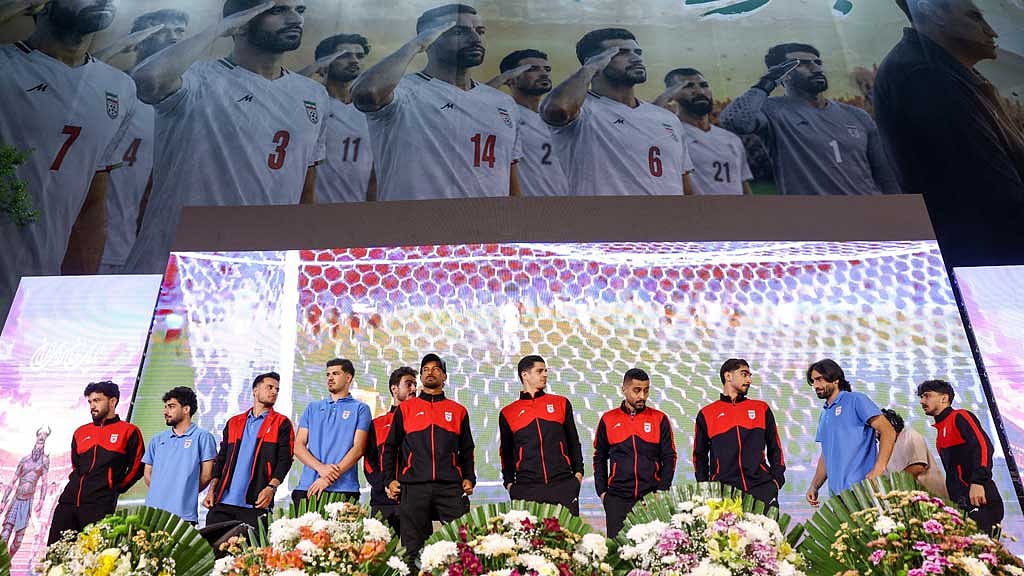
From Asia, a record number of eight teams are taking part, which certainly needs appreciation and a detailed discussion.
Football by Asian sides has come a long way from the time when they were whipping boys or, to put it politely, mere participants to ensure pluralism.
Here’s a tribute to Asian teams which have, arguably, grown in strength.
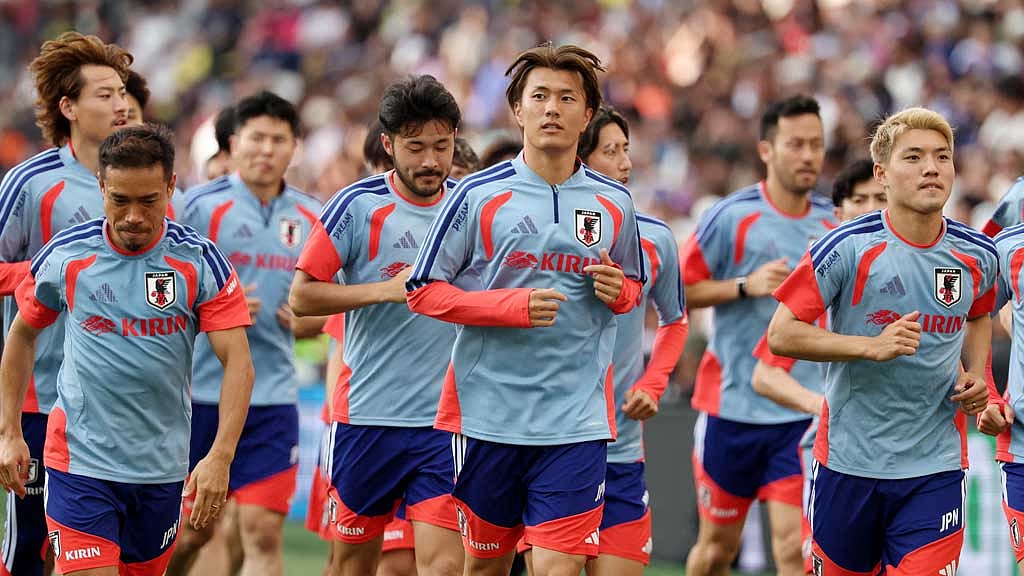
South Korea, Japan Can Beat Any Side, But…
South Korea’s first appearance in 1986 ended with a solitary point, courtesy of a draw with Bulgaria.
By 2002, they were in the semi-finals, although the debate about refereeing decisions at the 2002 World Cup still rages.
In short, both South Korea and Japan will be taking part not only with the aim of eking out a few draws, but to take their national teams to the next level.
While both these teams have the experience and the talent, it still seems as if getting too far in the tournament will still be a major challenge, feels Mazhar Mithun, special sports correspondent for Independent TV and a famed sports vlogger.
Of course, these teams can win back-to-back games, but they still do not have what it takes to maintain the same form for six to seven matches in a row, feels Mazhar.
These teams play a fast-paced game but in the latter stages of the tournament, nerves of steel become essential when matches move to penalties.
In the 2022 World Cup, South Korea drew with Uruguay, beat Portugal and moved to the next stage to be beaten comprehensively by Brazil while Japan, beating both Spain and Germany, finally lost to Croatia on penalties.
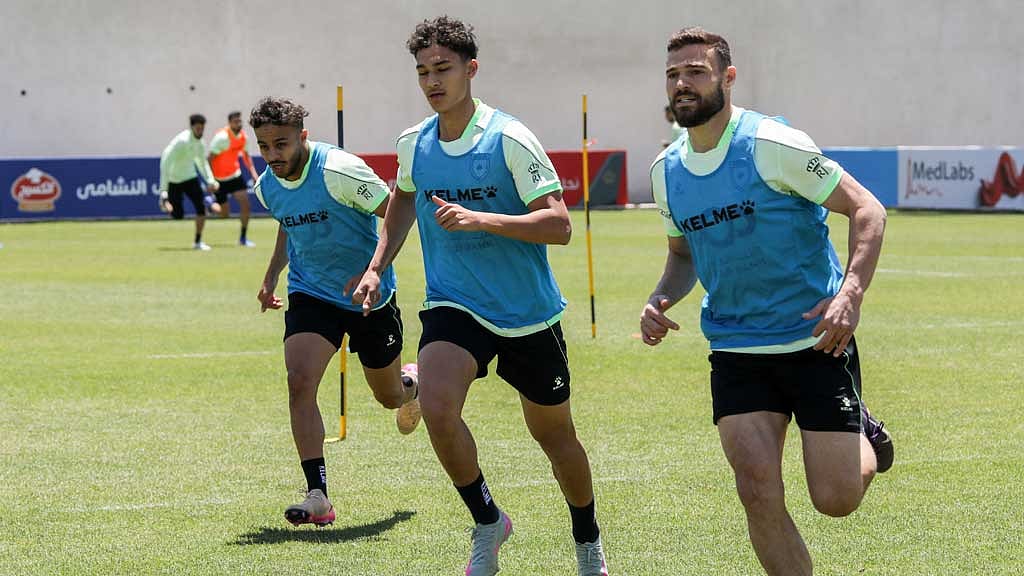
Quite commendable indeed, but going to the semifinals will be quite an undertaking.
On Jun 10, during a BBC special programme on the World Cup, moderated by Mariko Oi, participants acknowledged the skills of both Japan and South Korea but stated that they were still not the teams most likely to win the cup.
Iran, Qatar, Iraq, Saudi Arabia Bring West Asian Flair
Long before South Korea and Japan, a team that qualified for the 1978 World Cup was Iran.
At that time, only one side from Asia was selected to take part in the tournament.
Of course, in 1966, another other Asian side had beaten Italy in a moment of wild surprise that saw them move on to the second round – North Korea.
Since then, North Korea has slowly faded from the top tier of Asian football.
But Iran went into the political tinderbox of Argentina in 1978 with their ace goal-keeper, the “Eagle of Asia” Nasser Hejazi.
Iran drew 1-1 with Scotland, losing the other games to emerge from the tournament with a point – something to feel proud of.
An interesting fact - Naseer Hejazi came to Bangladesh in 1987, a decade later, and became the coach of the local club Mohammedan, taking the outfit to the final stages of the Asian Club Cup tournament in 1988-89.
Later, under Hejazi, Bangladesh national team won silver at the 1989 SAF Games held in Pakistan.
Pitted against New Zealand, Belgium and Egypt, Iran may pull off some spectacular performances that could see them progress.
Speaking about the Iranian side, football lover and former Victoria Sporting player Kazi Shamsu says: “Iran will be eager to make a point at the World Cup to show that the ongoing war with the USA and Israel hasn’t dampened their sporting prowess.”
For a team that has travelled to the tournament with so many uncertainties and impediments, the actual matches will be the place to attain redemption and respect, adds Shamsu.
Iraq was the team that went to Mexico 1986, but lost all their games. Ignominiously, their defender Samir Shaker got a red card in their 2-1 loss against Belgium for spitting at the referee.
Shaker eventually became the coach of the Bangladesh team which won the first SAF Games football gold in Kathmandu in 1999, beating the hosts in the final.
Shaker also played for Bangladeshi club Abahani KC in 1987 alongside his compatriot Karim Md Alawi.
Now Iraq is back at the tournament after 40 years – a period that saw the country undergo several upheavals.
So what can they do?
Shahriar Feroze, a senior journalist at Daily Observer, says Iraq are a dark horse, adding: “In today’s football, there’s nothing called a total favourite; it’s 11 players versus 11 and the games have reached such a level that underdogs can even beat top sides.”
Even then, Iraq have a tough group, facing Norway, France and Senegal.
Most would say that Iraq will not progress to the next round. That may be true, but it may not be their target. Even a point will be celebrated by the team.
Qatar, the hosts of the previous World Cup, will want to shed the memory of their dismal run last time and prove a point.
They may just overcome Canada and Bosnia, hopes Mamun Ahmad, former Farashganj footballer.
Saudi Arabia dazzled in 1994 when they got to the second stage, beating Morocco and Belgium.
It made headlines in Bangladesh, with Saudi player Al Owairan’s goal against Belgium cherished across Asia.
They will face Uruguay, Cape Verde and Spain in 2026 – not impossible, but no piece of cake either.
Jordan and Uzbekistan - The New Kids on the Block
Jordan will play the World Cup for the first time, facing Austria, Argentina, Algeria.
For the newcomers, it may prove a baptism by fire because their competitors have been at the premier stage for quite some time.
Despite this, as a football enthusiast, this writer will be following Jordan’s journey closely.
That leaves us with Uzbekistan, the team which should have played the World Cup long before.
However, better late than never. Like Jordan they will also face tough competition in the form of Portugal, DR Congo and Colombia.
DR Congo last came to the World Cup in 1974 under its former name Zaire. The memories of that time are not very pleasant because reportedly, the financial bonus sent for the team by the country’s the then government was embezzled by officials, leaving the players demoralised.
Sadly, this led them to a 9-0 drubbing by Yugoslavia.
Anyway, there we have it!
Eight Asian sides for World Cup 2026, each looking to create ripples.
If you ask me, I will say, there will be surprises and some wild celebrations too.
Hopefully, the band of eight will go at their opponents all guns blazing.
Of course, in the bigger picture, Argentina and Brazil will dominate the minds of Bangladeshis but as far as this writer is concerned, in the beginning, and as long as they remain in the tournament, my support will be for the Asian teams.
Go, Asia!
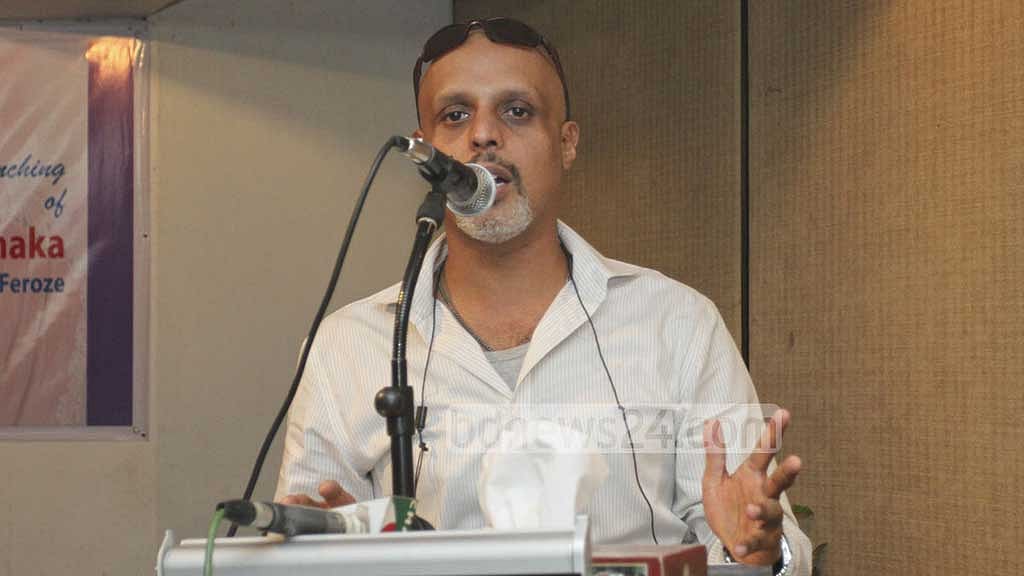
[Towheed Feroze is a journalist]