Published : 13 Jun 2026, 06:50 AM
Updated : 08 Sep 2026, 09:15 AM


A director-general-level “Border Meeting” has been held between Bangladesh’s Border Guard Bangladesh (BGB) and India’s Border Security Force (BSF) in New Delhi amid heightened tensions over “push-ins”, in which people are forced across the border into a neighbouring country.
In response to the BGB's call at the conference to stop “push-in” attempts, the BSF said it will give “top priority based on bilateral arrangements”.
In a press release on Friday, the BGB said that Director General Maj Gen Mohammad Ashrafuzzaman Siddiqui expressed “deep concern” at the conference over the “push-in” of Indians, including Rohingya or Myanmar nationals, by the BSF.
The BGB described these incidents and attempts as a violation of the joint guidelines on border matters, integrated border management plans, mutual decisions at previous director general-level meetings, and existing bilateral policies and protocols.
The BGB director general led a 14-member Bangladesh delegation to the 57th BGB-BSF conference in Delhi from Monday to Thursday.
On the other hand, the 12-member Indian delegation was led by BSF Director General Praveen Kumar.
At the 56th “Border Conference” in Dhaka last August, the BGB had also “expressed concern” about the “
“push-ins”.
Then BSF director general Daljit Singh Chowdhury had assured that Bangladeshi nationals illegally staying in India would be sent back per a “mutually agreed process”.
The BGB says that the BSF has been trying to push people into Bangladesh at various borders along the border recently. In view of this, the BGB once again objected to the “push-ins” at the border conference.
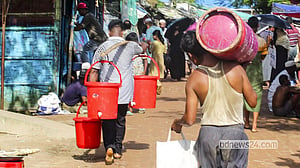
The BGB director general said these “pushed-in” people suffer immensely at the border, with many of them in extreme distress, some suffering from hunger and disease, and even elderly people who need urgent medical care.
He urged the BSF to "follow the prevailing laws and diplomatic procedures" to send any person who is a Bangladeshi citizen "through the prevailing bilateral repatriation mechanism."
In this regard, the BSF director general called on the Bangladesh government to quickly complete all outstanding nationality verification issues and ensure speedy repatriations, the press release said.
At the conference, both sides agreed to give "highest priority based on the adopted procedures and existing bilateral mechanisms" in discharging their duties.
As at every border conference, discussions were also held on border killings. And, as always, both sides agreed to find "humanitarian solutions" to stop border killings.
During the conference, the BGB director general expressed deep concern over the deaths of unarmed and innocent Bangladeshi citizens due to the use of lethal and non-lethal weapons by BSF personnel and Indian citizens at the border, the release said.
He called on the BSF chief to “take effective measures” to reduce killings in the border areas to zero, citing human rights violations.
The BGB also said that both sides “agreed” to resolve these issues through sincere, honest and coordinated effort while following the prevailing law and guided by a humanitarian perspective.
Apart from this, both sides agreed to strengthen border security measures, increase joint patrols and surveillance in border areas and undertake public awareness activities to prevent illegal crossing of the international border.
The BGB chief expressed concern about the possible presence of separatist and armed terrorist groups in the hilly regions of India’s Mizoram and their anti-Bangladesh activities. He sought India’s cooperation in taking necessary measures against these groups.