Published : 17 Jul 2026, 08:16 AM
Updated : 08 Sep 2026, 09:25 AM


One recurring theme in Bangladesh over the past couple of years has been the demand for justice. Justice for the hundreds of people killed in July and August 2024, during the students-led protests that led to the fall of the Awami League government.
The previous interim government headed by Muhammad Yunus was committed to prosecute those responsible for the 2024 killings. However, a torrent of dubious cases and arbitrary arrests created the impression that there was greater motivation for political revenge than justice.
The current BNP government has also signalled its commitment to justice, but it has hardly veered from the course set by Yunus, allowing hundreds of political opponents to remain in jail without trial or even formal charges.
It seems justice can only be applied “selectively”, where it serves the political interests of the ruling elite. But nowhere is the selective nature of this quest for justice more pronounced than in the case of the Gopalganj Five.
A year ago, five men were shot dead by security forces in Gopalganj town, during widespread violence targeting a rally organised by the National Citizen Party (NCP).
Ramzan Kazi, Dipto Saha, Sohel Molla and Imon Talukder died on the spot. Ramzan Munshi passed away the next day in a hospital in Dhaka. Only Munshi had a confirmed post-mortem, showing bullet wounds to the body.
At the time, families of the other four victims alleged to investigators from Ain o Salish Kendra that they were pressured by hospital authorities into taking the bodies away without any post-mortem.
Birthplace of Bangabandhu
Almost immediately after the incident, Yunus issued a statement blaming the Awami League for what it called “this heinous act”. In the statement, the attack on the NCP rally was referred to as the “heinous act”. The killing of citizens was not even acknowledged by Yunus.
The statement from the head of the government, even before any investigation had begun, was tantamount to “a direction” as to where a probe should go. From that point onwards, “justice” for the Gopalganj Five would appear to be nothing more than a mirage.
Gopalganj, the birthplace of Bangabandhu Sheikh Mujibur Rahman and his last resting place, was apparently targeted by NCP for that special reason. During the party’s organisational tour of the country in 2025, the NCP’s programme in this one district assumed a militant tone. It was titled “March to Gopalganj”, almost like a campaign to capture or liberate the district.
A great deal of inflammatory messages were seen on social media, calling for Mujib’s mausoleum in Tungipara to be destroyed. Not surprisingly, feelings ran high in the district where people revere Bangabandhu. It remains the only district in the country where Mujib’s murals and sculptures were not removed after August, 2024.
The incident, on Jul 16, occurred when the NCP attempted to stage a rally in the town centre. Enraged by their rumoured plans to march to Tungipara, thousands of townsfolk, led by local Awami League workers, converged on the meeting place, triggering running battles with police.
Army’s Telling Statement
The NCP leaders, who feared for their lives, had to be whisked away from the town by the Army. Local journalists think most of those who lost their lives were bystanders, not involved in the protests against the NCP meeting.
The big question was how they died? It was soon established that they were shot dead. Three of the bodies hastily buried earlier were later exhumed on Jul 21 and examination confirmed bullet wounds as the cause of death.
But what remained elusive was who pulled the trigger under whose order.
This is where the story gets murky.
The Inter-services Public Relations or ISPR, the military’s media wing, issued a statement in which protesters -- whom they called “groups of disorderly people” -- were blamed for initiating the violence, which they called “terrorist activities” such as “vandalising important installations and government vehicles”.
The statement spoke of protesters throwing “large numbers of cocktails and brickbats”. It said nothing about any firearms used by the protesters.
Tellingly, the ISPR statement acknowledged that the Army used “force” for “self-defence”. It would be perfectly legitimate to assume that use of “force” by the Army could mean soldiers had opened fire.
A television station covering the incident live from the location showed a group of soldiers firing with their semi-automatic rifles. Video clips of the firing went viral, making it difficult for the military to deny any use of force by the troops.
The military took an undoubtedly bold step to acknowledge its “use of force”, but stopped short of holding itself accountable for the deaths.
Over the following days and months, things got murkier still.
Murder Cases against Locals
Police have since filed multiple cases, including at least four murder cases, and accused the protesters themselves of killing those five men. Police alleged that the protesters opened fire on the victims.
The cases have well over 10,000 suspects -- mostly anonymous. The number of cases and suspects continued to increase, but the finger was always pointing in the direction of the protesters.
There is ample evidence to show the NCP leaders were driven from town through violent protests. Police do have strong grounds to hold organisers of the protests accountable for the violence using, as the ISPR reported, “cocktails and brickbats”.
But the use of firearms, which resulted in the five deaths, remains an issue that has not been satisfactorily resolved.
Police accused the protesters of removing the bodies from the hospital and hastily carrying out their burial and cremation. This would leave anyone familiar with street protests in Bangladesh incredulous.
It is true Bangladeshi protesters have been known to snatch fallen comrades from hospitals. But they don’t do that to hastily and secretly bury them. They do that to protect the bodies from the authorities, or sometimes carry them at the head of processions to mourn and inspire further protests.
The government did set up an official enquiry committee, but that was headed by a top bureaucrat in the Ministry of Home Affairs. The call for an independent enquiry by human rights groups such as the Ain o Salish Kendra went unheeded.
Without an independent enquiry, accountability for the killing of the Gopalganj Five remains elusive.
License to Arrest
The cases filed by the police remain on the books. There does not appear to be any effort to frame formal charges to test these accusations in court.
In the meantime, police have a free hand to arrest anyone. In the Bangladeshi context, this is not just an abuse of the law and denial of justice, but also creation of opportunities for corruption. Not surprisingly, allegations of extortion by police, using these cases as leverage, are rife.
This has caused thousands of local men, particularly those with Awami League associations, in the town as well as surrounding villages, to live away from home. Anyone can be detained and simply “shown arrested” as one of those suspects anonymously.
The families of the victims remain silent, for fear of retribution. During the Feb 12 election campaign, major candidates were unwilling to commit to taking up the issue, if elected to parliament.
The BNP, having won all three seats in the district, seem content to let the issue remain unresolved, while police enjoy a free hand to arrest Awami League supporters.
It seems a “conspiracy of silence” has fallen on the Gopalganj Five. In their case, justice is not just being delayed, it is literally being denied.
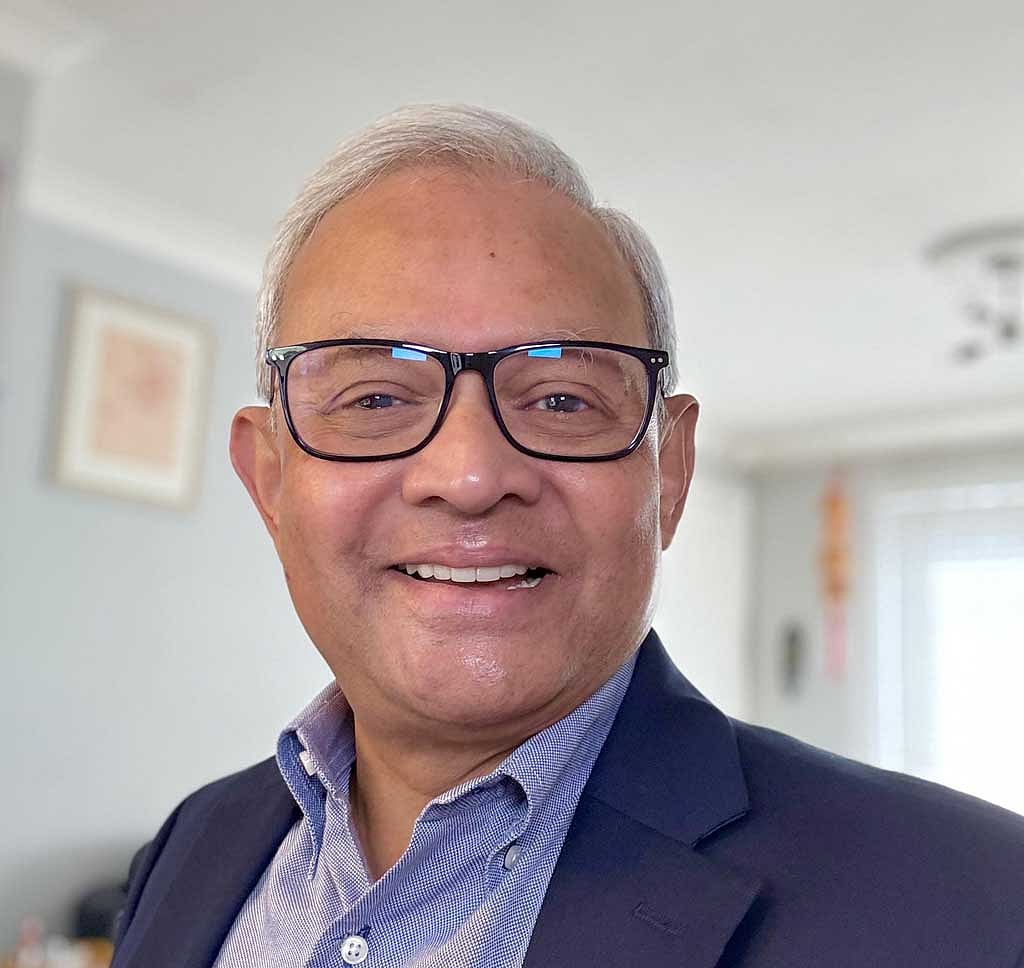
[Sabir Mustafa is a journalist, writer and podcaster. He is a former head of the BBC Bangla service and a former managing editor at VoA Bangla.]
He can be contacted at: sabir.mustafa@gmail.com