Home
+
Published : 08 Jul 2026, 10:13 AM
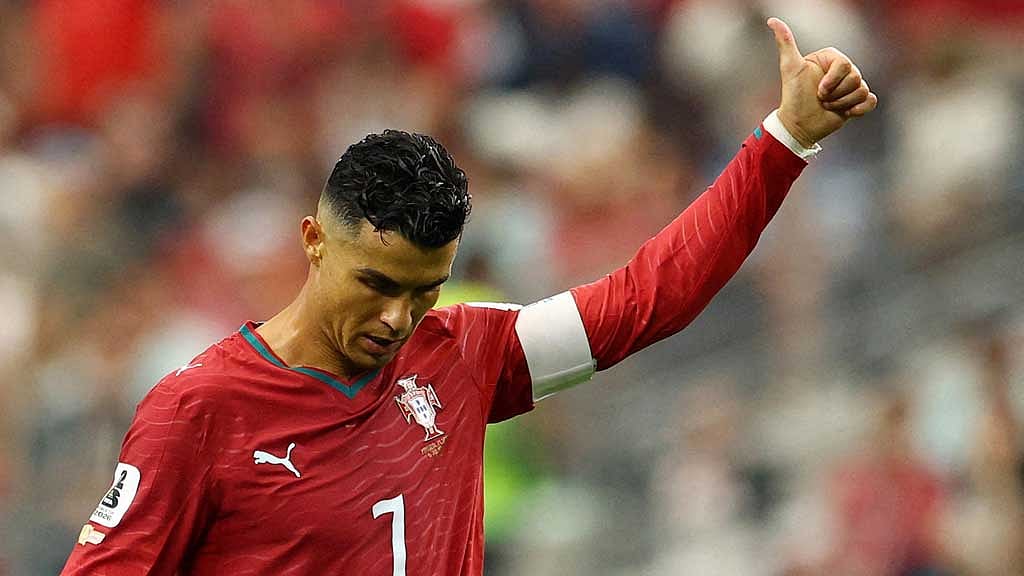
In the end, there was no dignified exit for one of the greatest footballers ever to grace a stadium. Portugal’s tame defeat to Spain on Monday brought down the curtain on Cristiano Ronaldo’s World Cup career, even possibly his 23-year long international career.
This clearly was not the ending the man known as CR7 had in mind.
The 2026 tournament was Ronaldo’s sixth and last World Cup, and he clearly wanted to go out in a blaze of glory. Portugal certainly had a team talented enough to challenge for the trophy. But ironically, it was possibly Ronaldo’s inclusion in the team that became a liability.
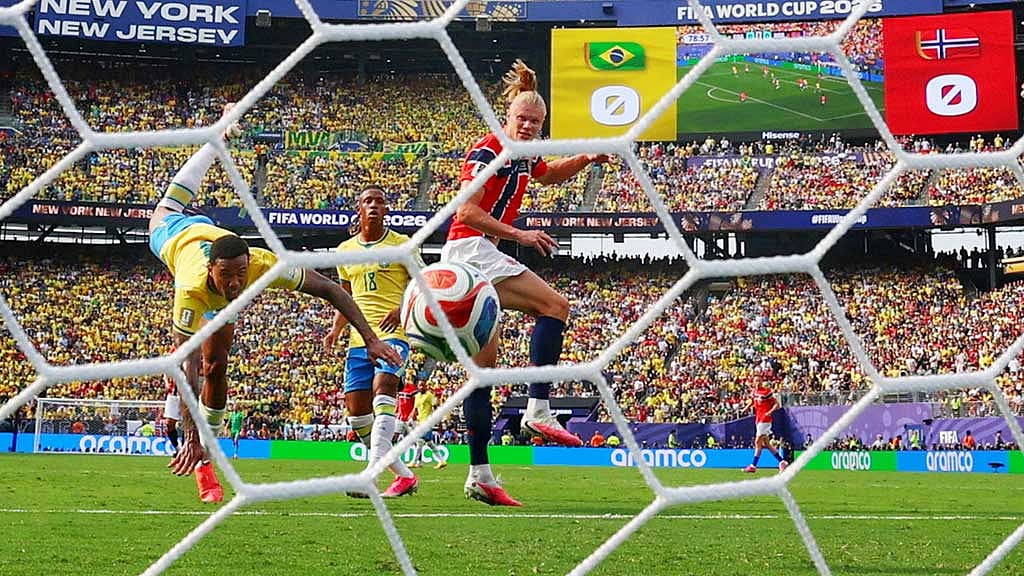
He no longer had the sharpness in front of goal of his golden years; his movement inside the opposition penalty area appeared pedestrian without the explosive final surge of an Erling Haaland.
Worst of all, Ronaldo remained static most of the game, offering little in terms of link-up with the midfield, hold-up play or any threat from the wide areas. At times it appeared Portugal were playing with 10 men.
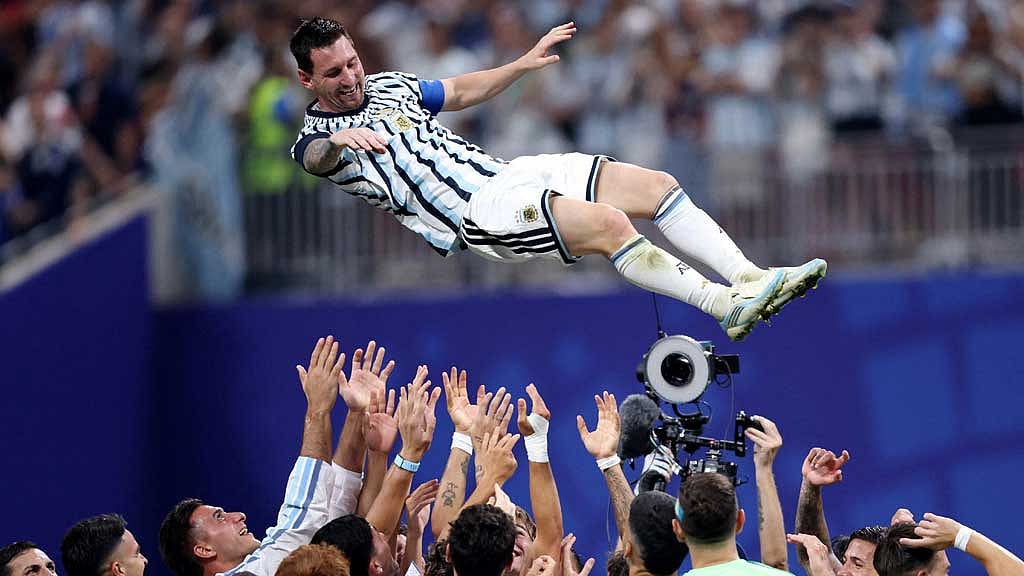
This was quite the humiliating exit for the striker who has scored more international goals - 146 in 233 matches - than any other, including the Argentine Lionel Messi who has 124.
This is the man who has scored a mind-boggling 976 goals for clubs and country in a professional career stretching back to 2002 when he debuted for Lisbon’s Sporting Club.
Elusive World Cup fame
He became an instant hit with fans at home and abroad during a six-year stint at Manchester United, scoring 84 goals in 196 matches. Ronaldo reached his peak at Real Madrid where he scored 311 goals in 292 matches.
By the time Ronaldo joined Juventus in Italy in 2018, he had already become a global footballing icon.
On the other hand, the World Cup has never been a happy hunting ground for Ronaldo.
Although Ronaldo holds a record, of a sort, by scoring in all the six World Cups in which he has played, his total tally of 11 goals in 27 matches does not mark him out as one of the truly great strikers in this 96-year-old tournament. It may shock some fans to learn that his first goal in the knockout stage of a World Cup was the penalty he scored against Croatia on Jul 6 in Miami.
His failure to stamp his mark in World Cups even in his prime should have stood as a warning that, at a time when he is far less agile, lacks pace and lethality, he could be a dead wood in 2026.
Throughout the tournament Ronaldo looked a shadow of his former self. But given that he is 41 years old, one would expect that to be the case. The big question always was, why Ronaldo was in the squad at all, let alone in the starting XI in most matches.
The answer, of course, is the manager, who has the responsibility to pick the side, decide strategy and assign roles to individuals to carry out the plan. Perhaps the stature of Ronaldo in Portugal - and in world football - is such that the Spaniard Roberto Martinez felt unable to drop the nation’s footballing talisman. Or perhaps, Martinez believed in miracles.
Messi’s mentality
There is ground to believe that a trophy-winning run from Portugal was within the realms of possibility. The debate that has raged over the whole period of the tournament is whether that was possible with an immobile, virtually statuesque Ronaldo leading the line.
One could argue that Ronaldo was delusional, thinking he could still be the first-choice striker for his country; at the same time, that delusion was fed by a manager who allowed popular sentiment to colour his judgement.
While Ronaldo departs the scene under a cloud, his rival for the best part of the past two decades continues to excite fans, taking on defenders down the flank, drifting inside and setting up attacks, and always on the lookout for that lethal finish.
At 39 years of age, Lionel Messi retains the ability to contribute to the team’s overall play in the toughest circumstances. He is no bystander, as he demonstrated in Argentina’s stunning comeback against Egypt.
Despite missing a penalty, Messi had the mental toughness to comeback with the equalising goal.
The current World Cup is also likely to be the last for Messi and, like Ronaldo, he too will become a stellar name in the pantheon of footballing gods. But Messi will depart the scene with his head held much higher than his arch rival.
This World Cup is not just saying goodbye to two icons who have dominated football for two decades. The current tournament is cementing the reputation of one unsung hero, raising another player to iconic status and welcoming another who might outshine all strikers that have graced World Cups past.
Haaland Arrives, Mbappe Rises
The last name is, of course, that of Erling Haaland, the Norwegian striker who strikes fear into the hearts of the best of defenders. The 25-year-old Haaland has at least two more World Cups ahead of him - provided his country, Norway qualifies for them.
Judging by the frightening rate at which he is scoring at his first World Cup, there is no telling how far Haaland might go. The only thing that can hold him back is the quality of the service he receives from the team’s playmakers.
Unlike Messi, the 6-foot-5-inch tall Norwegian is not surrounded by creative geniuses.
Talking of creative geniuses, that takes the topic straight to the team with the most inventive players - France. Here, the icon has already risen and this World Cup is yet another stage for Kylian Mbappe to cement his reputation as the most accomplished footballer in the post-Ronaldo and post-Messi era.
Unlike Haaland who is essentially a striker, the 27-year-old Mbappe is a speedster down the wing; he is a playmaker who can set up other forwards for goals; and he is a lethal finisher who is already the second-highest goalscorer in World Cup history.
The Paris-born French captain is in his third World Cup and can plausibly consider playing in two more. Mbappe is a coach’s delight, as he is a tireless grafter as well as being full of the finer tricks of the game.
He can outpace most fullbacks while central defenders never find it easy to muscle him off the ball.
Kane’s Moment
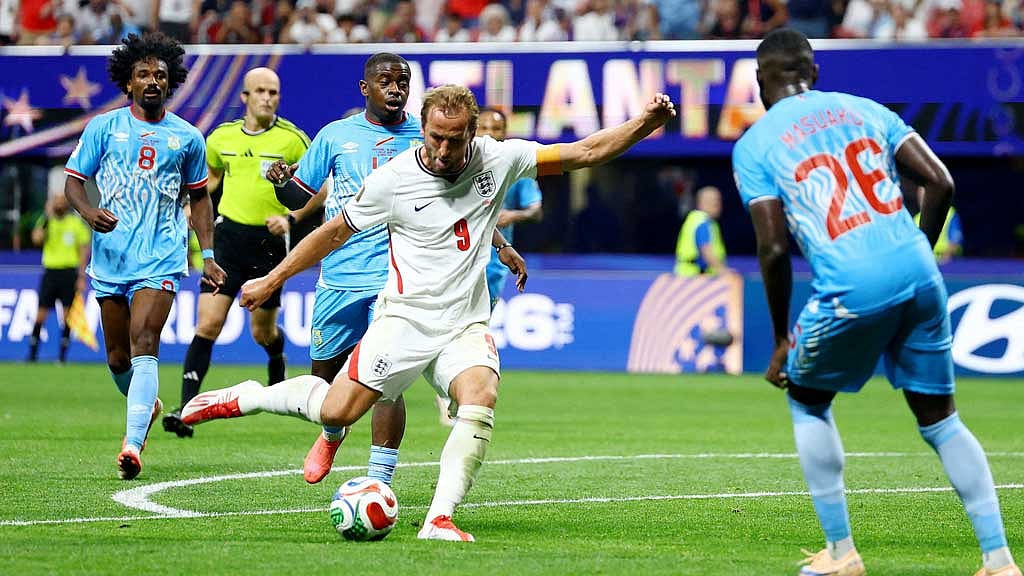
Then there is the humble captain of England, Harry Kane. Being English and playing mostly for Tottenham Hotspur, a rather unfashionable club in north London, Kane never received the global recognition he deserved.
His move to Bayern Munich in 2023 opened up new horizons for Kane, but even after scoring 98 goals in 94 matches, football’s elite commentators continued to shy away from uttering his name in the same breath as Mbappe, Ronaldo, or even Haaland.
This World Cup is set to change all that.
At the age of 32, Kane is not a rising star. He is a genuine superstar whose glow has been obscured by the dust cloud of the “unsexiness” of his two clubs. A performer at the level of Harry Kane, if he was playing at Barcelona or Real Madrid or PSG, even Inter Milan or Juventus, would be in competition for the Ballon d’Or every season.
The last time an English footballer won the award was 25 years ago. During this quarter of a century, only three other Englishmen have been in the top 3, with Steven Gerard and Frank Lampard missing out in 2005.
Whether the European elite have an inherent bias against English footballers and the English league or not, there is little doubt that Harry Kane’s time has come to be recognised as one of the greats. Not just as a scorer of goals, but as an inspiring captain and playmaker.
[Sabir Mustafa is a journalist and podcaster.]