Home
+
Published : 26 Jul 2026, 01:53 AM
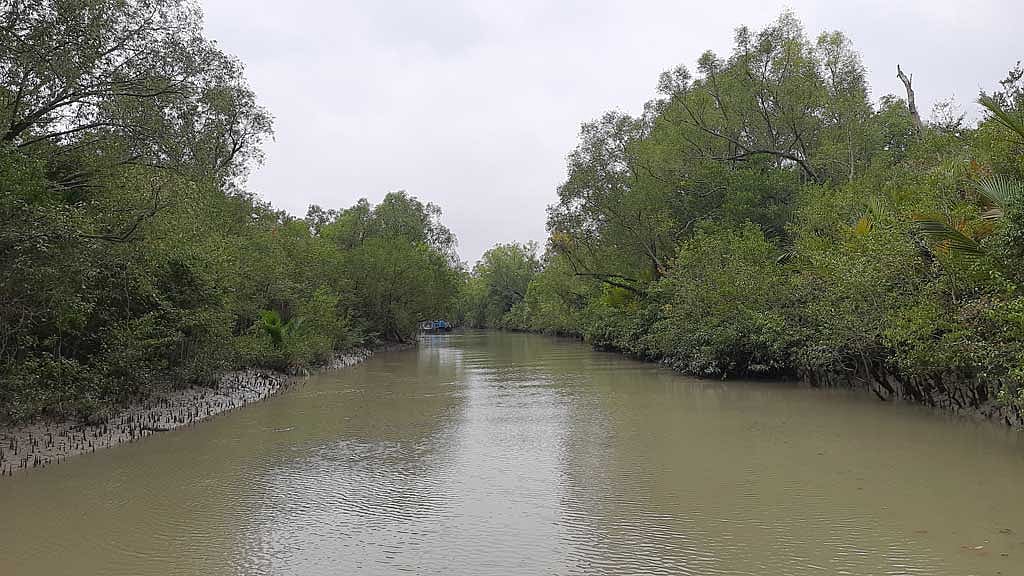
The Sundarbans, the world's largest mangrove forest, is facing mounting threats from industrial pollution, climate change and a range of human activities that conservationists warn are steadily degrading its fragile ecosystem.
From illegal logging, wildlife poaching and poisoning fish to plastic pollution, unchecked tourism and industrial expansion, environmentalists and experts say the UNESCO World Heritage Site continues to suffer despite repeated calls for stronger protection.
The International Day for the Conservation of the Mangrove Ecosystem is observed on Jul 26 each year to raise awareness of the importance of mangrove forests.
Bangladesh also marks the day, but campaigners say efforts to stop the activities driving the destruction of the Sundarbans remain inadequate.
Abdullah Harun Chowdhury, a professor at the Environmental Science Discipline of Khulna University, said nearly 50 heavy industries, including cement factories, LPG plants and oil refineries, had been established near the Sundarbans over the past decade.
He also pointed to the construction of a large government food warehouse close to the forest.
"Untreated liquid waste from these factories is discharged directly into rivers, from where it spreads into the Sundarbans through smaller canals, polluting water and soil," he told bdnews24.com.
"As a result, natural regeneration has declined in many parts of the forest. Rising levels of oil pollution in rivers are also threatening aquatic life."
More than 2,000 of Bangladesh's over 11,000 recorded animal species are found in the Sundarbans, alongside 334 plant species.
Experts say climate change and direct human pollution are placing increasing pressure on the forest's biodiversity.
Quoting a 2015 assessment by the International Union for Conservation of Nature (IUCN), the World Bank says 19 bird species, 11 mammal species and one reptile species have become regionally extinct in the Sundarbans. Fish and tree species are also facing the risk of extinction.
Environmental specialists say industries near the forest, the Rampal power plant and nearby resorts have become major sources of environmental damage.
They also cite uncontrolled tourism, plastic pollution, commercial shipping through the forest, cargo vessel accidents, poisoning fish, excessive extraction of natural resources, illegal logging, arson and wildlife poaching as major threats.
These activities are affecting the forest's rivers, soil, vegetation and wildlife.
The government has declared 52 percent of the Sundarbans a wildlife sanctuary and designated a 10-kilometre surrounding zone as an Ecologically Critical Area (ECA).
However, Prof Abdullah said the Rampal coal-fired power plant, which began operations in December 2022, has become one of the forest's most significant threats.
"The plant is discharging polluted water into the Maidara and Pashur rivers without treatment. Its emissions and wastewater are causing serious damage to the Sundarbans," he said.
Tourism-Driven Pollution
Resorts and holiday cottages have sprung up along the edge of the Sundarbans, adding a new source of environmental pressure to the fragile ecosystem.
At least 30 cottages and resorts have been built beside the forest without approval from the Department of Environment (DoE), according to environmental campaigners.
These are located in Kailashganj, Dhangmari and Banishanta in Dacope, Mongla in Bagerhat, and Shyamnagar in Satkhira.
Many of the facilities have been built after clearing forest vegetation and filling canals adjacent to the Sundarbans.
Most are air-conditioned and rely on noisy diesel generators during power outages. At night, the brightly lit resorts play loud music, adding to noise and light pollution in the forest.
Md Babul Howlader, Khulna divisional coordinator of Bangladesh Poribesh Andolon (BAPA), said the forest was already under severe pressure from multiple threats.
"Now another disturbance has emerged in the form of resorts and cottages built right beside the Sundarbans," he said.
Fazlul Haque, director of the DoE Khulna divisional office, said action would be taken against environmentally harmful resorts and cottages.
The Forest Department says more than 200,000 local and foreign tourists visit the Sundarbans every year.
Experts say tourist launches and vessels contribute to environmental degradation through engine noise, hydraulic horns, oil discharge and artificial lighting.
They also warn that unrestricted movement of tourists, fishermen, wood collectors and honey gatherers inside the forest threatens wildlife habitats.
Wildlife Under Pressure
Conservationists working to protect the Bengal tiger say poaching remains one of the biggest threats facing the species in the Sundarbans.
Poachers continue to target tigers for their skins, bones and other body parts, while law enforcement agencies say several organised gangs remain active in the forest, hunting tigers with firearms and traps.
Deer are also frequently poached, while crocodiles, snakes, geckos and turtles are illegally hunted for trafficking.
Imran Ahmed, conservator of forests for the Khulna region, said isolated incidents of deer poaching still occur but are far fewer than before.
"The tougher stance against poachers has resulted in more arrests, including suspects caught with venison," he said.
Poison is also being used by some fishermen to catch fish in rivers and canals inside the Sundarbans, killing other aquatic species in the process.
Khulna Civil Surgeon Mahfuza Khatun warned that consuming fish caught from poisoned waters could cause stomach illnesses, kidney and liver damage, and increase the risk of cancer.
However, Hasanur Rahman, divisional forest officer of the Sundarbans West Forest Division, said poisoning to catch fish had declined as regular patrols continued throughout the year.
Illegal logging also remains a concern, with organised groups as well as some fishermen, wood collectors and honey gatherers cutting trees whenever opportunities arise.
Imran said forest officials and guards remained committed to tackling crimes despite manpower shortages and other limitations.
He said authorities regularly seized pesticides, fish caught using poison, banned fine-mesh nets, deer traps and venison, and rejected allegations that forest officials were assisting offenders.
"There is no opportunity for illegal logging inside the Sundarbans," he said. "The Forest Department, Rapid Action Battalion, police and Coast Guard are working jointly to arrest offenders, while patrols have been strengthened at river and canal entry and exit points to prevent the smuggling of wildlife and forest resources."
Shipping Adds to Forest Damage
Commercial shipping through the Sundarbans has become another major source of environmental concern, with experts warning that vessel traffic is damaging the forest's fragile ecosystem.
The 131-kilometre Pashur River channel, which runs through the Sundarbans from the Bay of Bengal to Mongla Port, serves as a key shipping route. Vessels travelling between India and Bangladesh also navigate rivers including the Kalinchi, Raimangal, Kachikhata, Arpangashia, Bajbaja, Arua Shibsa, Shibsa and Pashur through the forest.
Besides the regular movement of large and small vessels, shipwrecks have also occurred inside the Sundarbans over the years, further threatening the ecosystem.
Noor Alam Sheikh, an environmental activist from Mongla in Bagerhat, said engine noise and hydraulic horns from ships passing through the forest disturbed wildlife, while oil leaks and waste discharged from vessels polluted rivers and soil.
He also said propellers of passing vessels had killed dolphins inhabiting the forest's waterways.
Plastic Emerges as Another Major Threat
Researchers have found alarming levels of microplastics in the soil and water of the Sundarbans, adding another layer of concern over the forest's future.
West Sundarbans Divisional Forest Officer AZM Hasanur Rahman said vessels travelling through the forest routinely discarded polythene bags, snack wrappers, biscuit packets, plastic bottles, cups, glasses and plates into surrounding waterways.
He said plastic waste from around 80 villages adjoining the forest was also being carried into the Sundarbans through 52 rivers and canals during tidal flows.
A study by Khulna University's Environmental Science Discipline between 2020 and 2022 found widespread plastic contamination across six locations in the Sundarbans.
Researchers detected an average of 2.22 microplastic particles per litre of water and 734 particles per kilogramme of soil.
Prof Abdullah Harun said plastic pollution posed growing risks to both terrestrial and aquatic wildlife, as well as vegetation.
He warned that microplastics were also entering the human food chain through fish and called for further research into the long-term impacts.
Despite the threats, Chief Conservator of Forests Amir Hossain Chowdhury said the overall population of plants and wildlife in the Sundarbans had increased over the past five years.
"Alongside the increase in tiger numbers, populations of prey species have also grown," he said.
He added that the Forest Department was expanding community-based protection programmes and planned to make greater use of digital technology to strengthen conservation efforts.