


Published : 08 Jul 2021, 10:54 AM
Updated : 14 Oct 2022, 06:54 PM


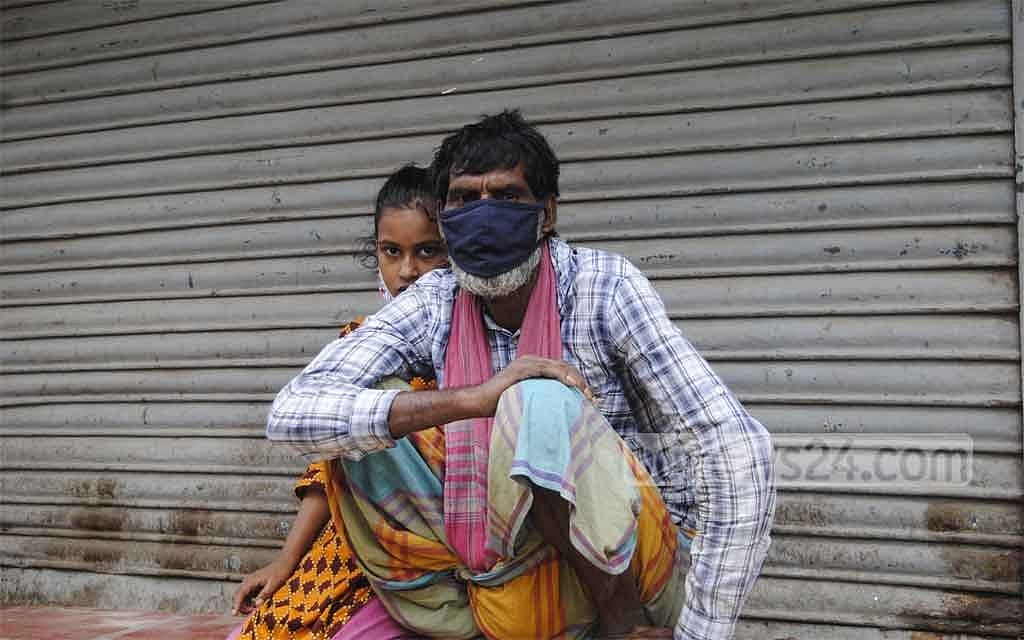
“Some people gave us groceries last year. But we’ve got nothing this time,” Hai said.
He was alone when he sought aid last year. Now he has his seven-year-old daughter with him. As they waited, the little girl felt quite awkward being unaccustomed to such a situation.
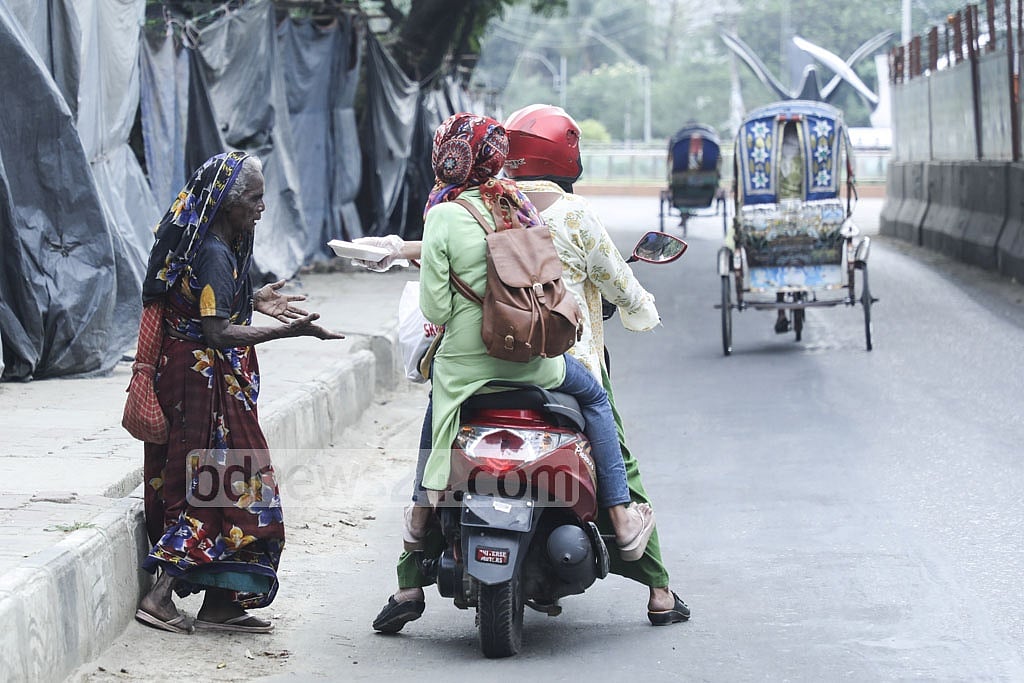
Then there was Md Shakil, a driver living in West Agargaon. Just a year ago when the coronavirus pandemic had hit Bangladesh, an affluent neighbour showed up at Shakil’s home with a bag full of groceries. The authorities have now reimposed another harsh lockdown to prevent the pathogen from spreading at an alarming rate. This time no one came to help him.
“He suddenly came with a big pouch of groceries and also gave a pack of powdered milk when they heard we had a child at home. Not only me, but our neighbours also got aid. "But to Shakil's disappointment, "No one came this year, although we are in bigger trouble.”
Income has dropped sharply for the families of people like Shakil and Hai, who have hardly enough food or money to live, as economic activities are mostly on hold in Bangladesh.
Abdul Hai and his daughter are waiting on the footpath for food aid; but they never got any.
This year the volunteers say they are facing constraints to continue their humanitarian services due to a fund crunch.
Julum Bosti, an organisation of young volunteers in Thakurgaon, had raised as much as Tk 900,000 last year to distribute food and groceries at heavily subsidised prices, and special groceries for Eid. They had provided the poor with food and groceries worth Tk 430 at only Tk 5.
Their services are now hamstrung by a lack of funds, said Farook Hossain Julu, member of the advisory board at Julum Bosti.
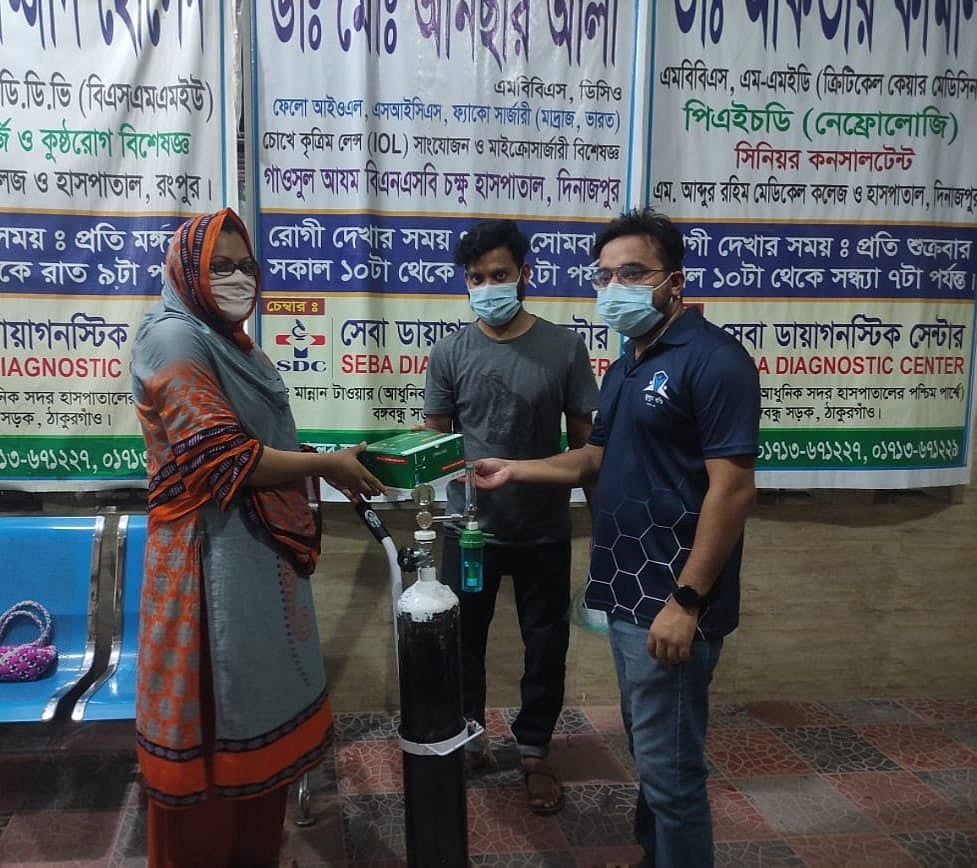
All Julum Bosti could do this year is to buy seven oxygen cylinders, which they let the poor use for free as coronavirus infections are on the rise in rural areas.
And raising the fund to buy the oxygen cylinders proved to be quite a tough job, said Farook.
Mostly, acquaintances, rich people and politicians were among their donors last time. This year the response from them for the Julum Bosti initiatives has been lackadaisical.
Julum Bosti, an organisation of volunteers in Thakurgaon, has only been able to buy seven oxygen cylinders for the poor this year. Last year, the volunteers had collected hundreds of thousands of takas to feed the poor.
Another online platform, ‘Chal Dal Alu. Bachar Jonyo. 450 Takay Ek Soptaho’, had provided the poor with rice, lentil and potato in Dhaka for months last year during the virus lockdown.
They had divided the provision with each portion worth Tk 450, enough for a family to survive a week. A package included 5 kg of rice, 2 kg of potatoes, 1 kg of lentil, 500 grams of cooking oil and a bar of soap.
The total amount spent by the organisation last year was Tk 1.2 million in cash and food aid to 1,200 families, said Fardous Ahmed Ujjal, coordinator of the group.
They had received donations from people from across a broad social spectrum, including professionals and students. “We could continue our services with donations from people. This year we hardly have any response.”
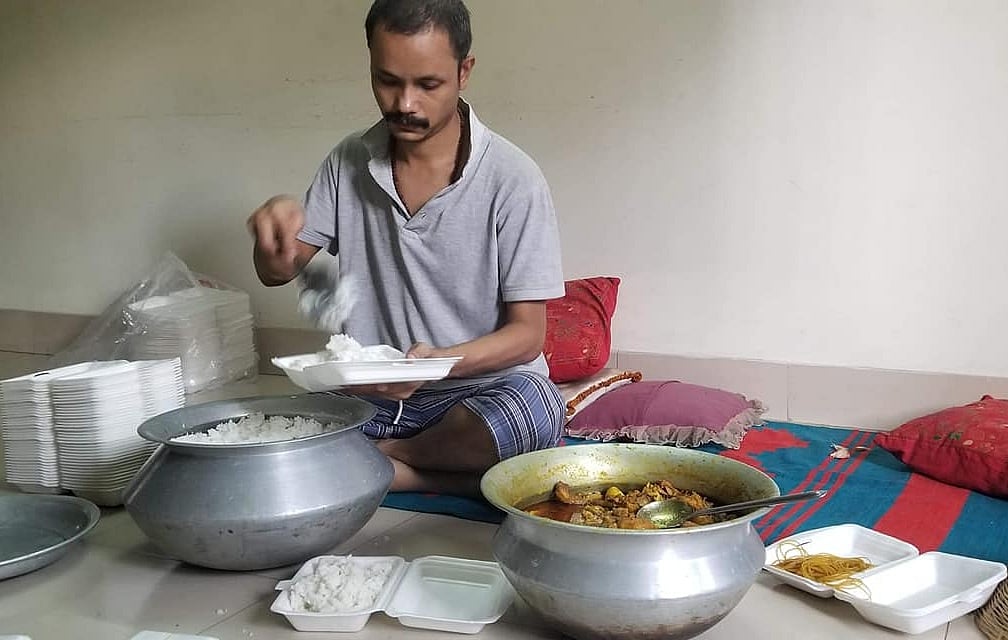
During Ramadan last year, Ujjal’s team distributed cooked food instead of groceries. They fed 200 people from 52 families for one and a half months. Also, they gave nutritious food to 20 pregnant women for four months and paid the bill of childbirth for four of them.
Fardous Ahmed Uzzal and his friends fed 200 people from 52 families in Dhaka for one and a half months.
“This year we haven’t had any big donation but have some unused funds from last year. We’ll start our services with that and provide rice and lentil to some people from Wednesday.”
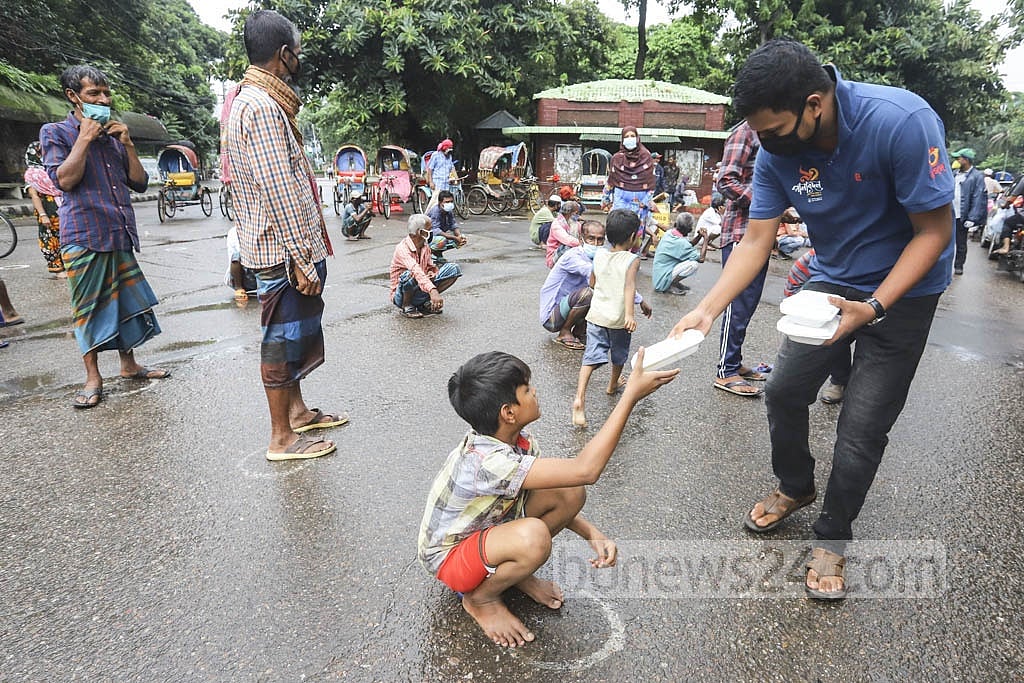
Tanbir Hassan Shaikat, deputy social welfare secretary of Bangladesh Chhatra League, and his friends fed the homeless people near Dhaka University’s TSC for four months last year.
They resumed the initiative on the campus and near Suhrawardy Udyan on Saturday.
Last year they were able to feed 500 people twice a day, but had to scale it down to 250 people once a day this time, again for a lack of money.
“We rolled out our services again with whatever little savings we had. We’re not getting any assistance like we used to,” Shaikat said.
Slum-dwellers in Dhaka are also getting no aid, with the middle-income groups, according to surveys, affected by the ripples of the pandemic crisis.
Recently, a man in Narayanganj called the government’s food assistance helpline for aid. Officials had thought him to be solvent and fined him, but later it came out that he indeed needed help, a sign that many middle-class families are suffering silently.
Amid the lockdown, people from the middle-income groups in Dhaka are queuing for hours braving rains to buy staples offered by the government at low prices under schemes for the poor.
Former DUCSU member Tanbir Hassan Shaikat and his friends fed the homeless people last year. They resumed the services a few days ago.
At least 77 percent of families in Bangladesh suffered a drop in their average monthly income while borrowings increased for 31 percent families, according to BRAC.
In fact, many of those who used to help the poor are themselves suffering from the financial crisis that dried up the funds destined for the poor through volunteer organisations.
The government will provide humanitarian assistance worth Tk 117 million and 23,630 tonnes of rice among the needy, the Ministry of Disaster Management and Relief announced on Monday. It is still unclear when the aid will reach them.
Last year, some NGOs helped the poor with aid and cash. This time around, though, they have not got started. Three NGOs, however, say they have started raising funds and distributing them.













