



Published : 03 Nov 2014, 05:16 PM
Updated : 08 Aug 2022, 07:18 PM


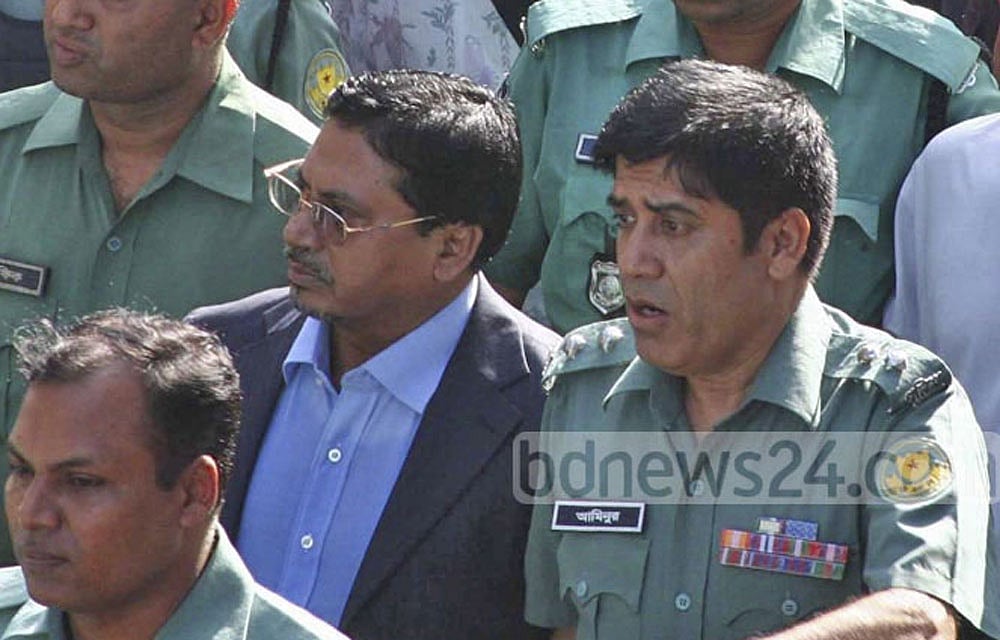
The four-strong Appellate Division bench headed by Justice Surendra Kumar Sinha upheld former Al-Badr commander Mohammad Kamaruzzaman's death sentence, for war crimes committed in 1971, on Monday.
On May 9 last year, the war crimes tribunal awarded death to Jamaat’s assistant secretary general, who was the chief of the vigilante militia in greater Mymensingh region at the time of the Liberation War.
The state says that there's no scope for reviewing the verdict.
Speaking to reporters on Monday, Attorney General Mahbubey Alam said: “I don’t think there is a scope to file a review petition. The court rejected the review petition filed by (Abdul) Quader Molla. So there is no chance for that anymore.”
Asked whether Section 105 of the Constitution can provide a provision for a review, he said, “The trials are being held under special laws, protected by the Constitution. Section 105 did not apply to Quader Molla, and I will say the same in this case."
The section says the Appellate Division has the power to review any of its own judgment.
In regular cases, the defence can file for a review of the Appellate Division's verdict upon finding a new legal ground.
Alam, the country's top legal official who represented the state against Kamaruzzaman's appeal, said the defence might have various kinds of pleas and those may or may not have any legal grounds.
The defence, however, says it will appeal for a review.
“Review is a constitutional right. The prosecution has been saying that a review isn’t possible. But there was a review in Quader Molla’s case.
“We’ll file a review, and there will be a hearing and the judges then can decide either way. It can be scrapped if it is not sustainable,” Kamaruzzaman's lawyer Tajul Islam told reporters after the verdict.
He, however, said the sentence could not be executed 'without giving a chance for review'.
The ambiguity over the review first surfaced when the Supreme Court awarded death sentence to war criminal Molla.
Molla's lawyer sought a review for the verdict as well as acquittal.











