


Published : 16 Dec 2013, 11:10 AM
Updated : 20 Oct 2022, 03:43 PM


Also Read:
At crossroads, Bangladesh celebrates V-DayOn Monday, the country observes its 42nd Victory, significantly three days after the first hanging of a war criminal, Abdul Quader Molla, in what many would say is a case of justice delayed but not denied.
A 31-gun salute at the break of dawn heralded the Victory Day celebrations at the National Parade Ground in the capital.
The national flag is now fluttering atop all government, semi-government and other important establishments.
Numerous buildings and Dhaka's several main roads, scarred by violence unleashed by Jamaat-e-Islami after their leader Quader Molla was hanged on Thursday, have also been decorated to mark the occasion.
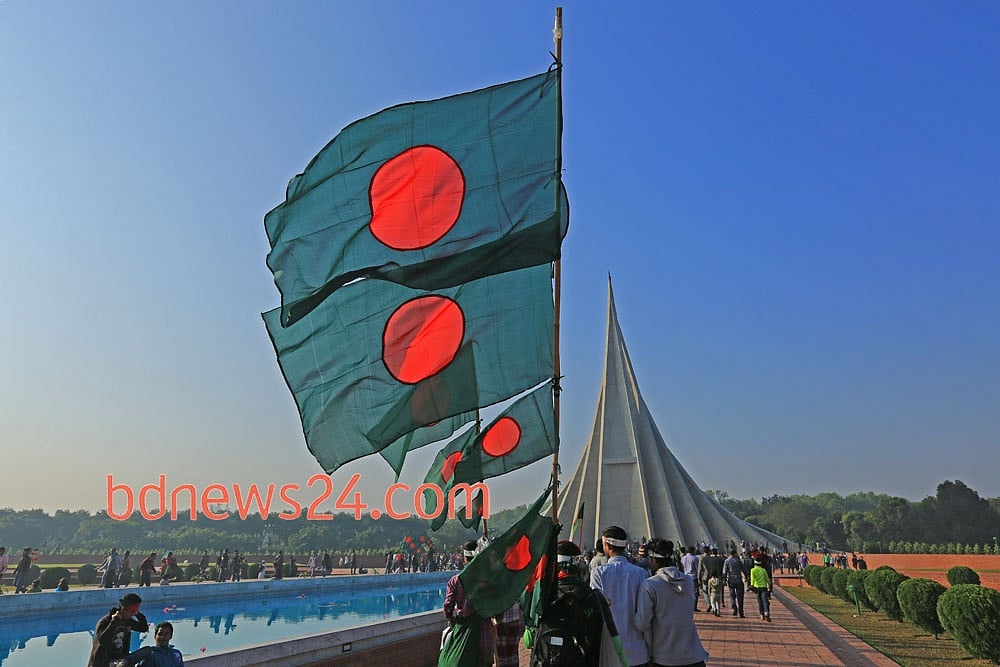
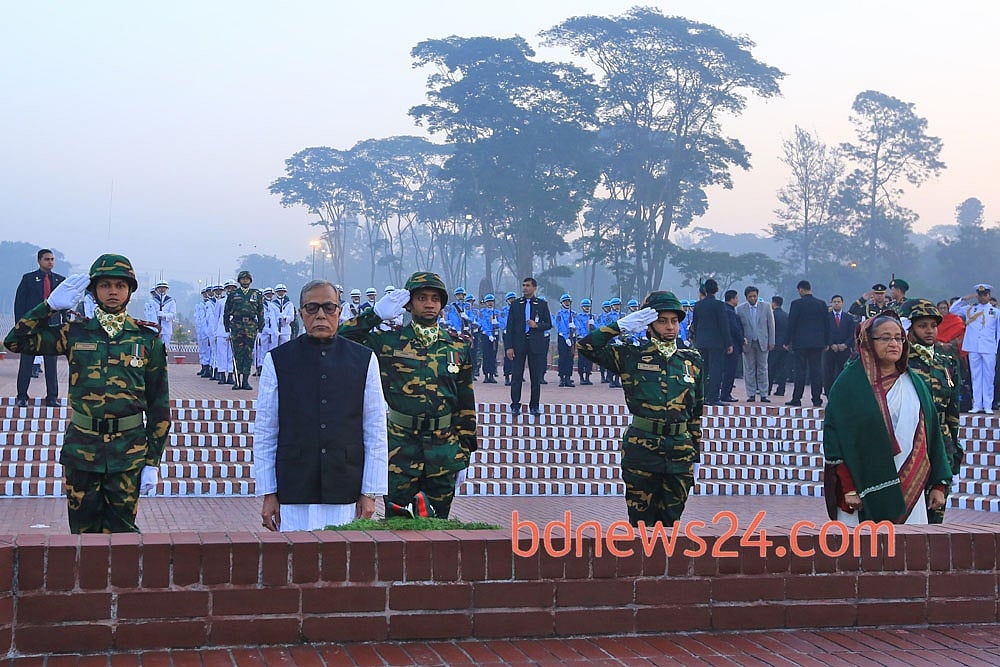
President Md Abdul Hamid, Prime Minister Sheikh Hasina and Opposition Leader Khaleda Zia paid homage to the martyrs of the 1971 war at the National Memorial in Savar.
The Memorial is flooded with wreaths of flowers placed there by several political parties, social and cultural organisations and citizens.
Millions of Bangladeshis are recalling the emergence of a free country, with its distinct and rich heritage, after an epic struggle for freedom, dignity and justice on Dec 16, 1971.
On this day 42 years ago, Bangladesh gained independence when the Pakistan military surrendered, ending a brutal nine-month freedom struggle sparked by Pakistani army crackdown on unarmed Bangalees on March 25 that year.
Bugles played melancholic tunes when the President and the Prime Minister paid their homage at the Memorial around 6:30 am on Monday
A smart contingent from the three services presented a state salute in honour of the martyrs.
Later Sheikh Hasina placed wreath for the second time on behalf of Awami League. Several AL front group leaders followed to pay their respects.
The National Memorial was open to public after the Deputy Speaker of the House Shawkat Ali, chiefs of the armed services and diplomats paid their respects.
Leader of the Opposition and BNP Chairperson Khaleda Zia along with leaders of her party paid respects around 8am.
Thousands gathered at the Savar National Memorial to honour those who gave away their lives to free the country from the brutal Pakistani military.
On this day in 1971, the military commander of East Pakistan, General Amir Abdullah Khan Niazi, surrendered with 93,000 troops to the joint forces of Mukti Bahini and Mitra Bahini, led by India's eastern army commander General Jagjit Singh Aurora, at the Ramna Race Course Ground (now the Suhrawardy Udyan) in Dhaka.
At the same venue on Mar 7, 1971, Father of the Nation Bangabandhu Sheikh Mujibur Rahman had asked Bangalees to start their struggle for independence, "with whatever you have".
A few days later on Mar 25, he was arrested and taken to West Pakistan and the army crackdown started on the same night.
The nine-month struggle of freedom was characterised by one of the worst genocides in contemporary history.













