


Published : 27 Dec 2012, 06:59 PM
Updated : 09 Aug 2022, 04:36 PM


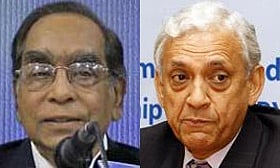
Two Advisors to the Prime Minister have advocated continuing with contractual hiring in bureaucratic jobs but the civil servants have opposed the provision of such 'outsourcing' proposed in the draft Civil Servants Law 2012.
The draft law is expected to be finalised soon.
Bureaucrats at a dissemination seminar on the law said on Thursday keeping the provision would encourage 'malpractice'.
But the Prime Minister's Advisors for Public Administration and International Affairs said the government would need to outsource people for their expertise that incumbent bureaucrats might lack.
Prime Minister's Advisor for Public Administration HT Imam said the provision should be there so that skilled people can contribute.
"At the same time civil servants should work in the private sector for at least six months to learn beyond their own jobs," he said. "It will help both public and private sectors."
He also said that as long as Bangladesh receives foreign aid, 'there is no way to ignore outsourcing.'
"When the World Bank starts a project, they first appoint consultants for a pre-feasibility study and then again for feasibility study and finally during the finalisation of the project."
International Affairs Advisor Rizvi said, "Whether you keep the provision or not, government requires certain expertise that might not be available within the government."
Though it is mandated by the Constitution that a law should be in place to regulate the appointment and conditions of public servants, there has been no such law in Bangladesh since independence.
The incumbent government started formulating the civil servants law soon after assuming power in 2009 as part of its public administration reforms.
The draft says: "If it feels it necessary, Government can outsource services in certain classes and types of work fully or partially to the private sector and may dissolve certain grades in phases."
"We want to abolish the provision," said Md Firoz Khan, Secretary General of BCS Somonnoy Committee. "The provision can be misused," he feared.
Secretary to the Local Government Division Abu Alam Md Shahid Khan also opposed the outsourcing provision in the law. "Government can outsource, if they need. But keeping it in the law will pave the way for its misuse."
The draft law proposed keeping the provision of classifying government officials and employees in the existing four categories – class I, class II, class III and class IV. It stressed the need for considering merit, skills and innovations for promotion instead of seniority only.
Imam said only seniority should not be considered during promotion. "We have to consider merit, skills, production and delivery," he said.
He also stressed on training.
Advisor Rizvi said the law had been 'long overdue.'
"We started the process nearly four years ago. We heard from all. It should not be delayed further," he said.
As opinions have been elicited from all levels of the civil service, the advisers hoped that it would not take much time to finalise the law.







