



Published : 29 Jan 2019, 10:02 PM
Updated : 05 Aug 2022, 05:49 PM


Questioning the methodology used to make the index and asking the Berlin-based organisation for the “facts and figures”, Iqbal Mahmood says rise or fall of corruption cannot be perceived through the position of a country on the index.
“We will be happy if TI names any government official or politician who was found to have used (illegal) powers to do something,” the chairman of the Anti-Corruption Commission, or ACC, said on Tuesday after the release of the index for the year 2018.
“But they only say that government properties have been grabbed illegally,” he said about the TI report, which comes at a time when the ruling Awami League, having formed government for the third straight time, says it is prioritising efforts to put an end to corruption this time.
“We had told the TI earlier to provide the methodology of their report and facts and figures,” Iqbal told reporters.
“We have seen the number in newspapers, but it’s not enough. You must provide facts and figures and say how the corruption incidents took place,” he added.
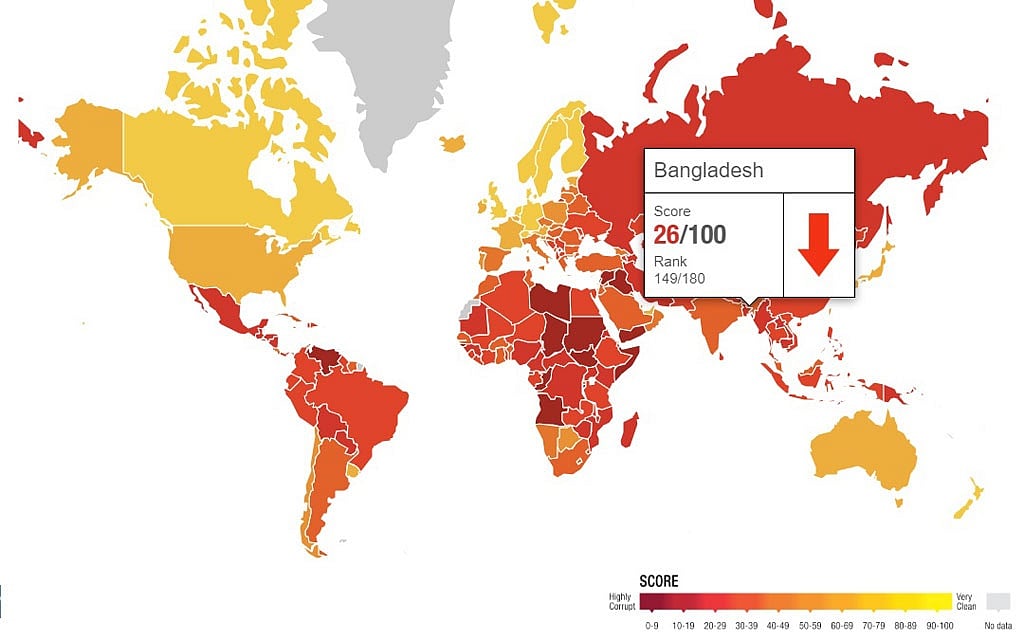
The CPI scores 180 countries and territories by their perceived levels of public sector corruption.
Bangladesh is positioned at 149 among 180 countries in the latest rankings, compared to 143 a year earlier.
The CPI uses a scale of 0 to 100, which means 100 is very clean and 0 is most corrupt. Bangladesh’s score in the latest CPI report is 26, down from 28 in the previous report.
Describing the fall of Bangladesh on the index as “embarrassing”, Iftekharuzzaman, the executive director of the TI’s Bangladesh chapter, said: “Bangladesh has been unable to make progress as it has taken measures against corruption in the lower and middle levels by overlooking the top level corrupts.”
He described Prime Minister Sheikh Hasina's announcement on “zero tolerance” policy against corruption as a positive step.
The TI says its index never gives the real scenario of corruption, but a perception. The ranking of Bangladesh in 2018 is based on 13 surveys on corruption in public sector and evaluation of experts.
ACC chief Iqbal said the TI should carry out separate researches based on every country’s context as its reports have global impact on the nations.
“The methodology you use blindly for international research is not the best one,” he told the local chapter of the group.
“If the TI report misses these, it won’t be acceptable to us in anyway,” he added.
Iqbal, a former bureaucrat, also claimed that situation about corruption was getting better in Bangladesh as government employees, who have maximum opportunities to earn money through corruption, are much aware about the social menace now.
He dismissed the TIB allegation that the ACC cannot work independently.
He, however, admitted the commission’s failure to catch the corruption-riddled people in top levels of society.
“It’s true. For example, Lutfar Rahman Badal (former IFIC Bank director) is abroad. How can we catch him? But at least we prosecuted him. It’s an action,” he said, urging the TI also to mention the commission’s achievements in its reports.
“It’s impossible for the Anti-Corruption Commission alone to reduce corruption. We all must work together,” he added.










