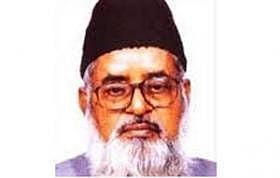
Abdus Subhan bail plea verdict Tuesday
The defence argues that the accused had been an elected representative in the provincial assembly when Bangladesh used to be East Pakistan.
bdnews24.com News Service
bdnews24.com
Published :
01 Oct 2012, 09:18 AM
Updated :
09 Aug 2022, 04:19 PM
Dhaka, Oct 1 (bdnews24.com) — The first war crimes tribunal will give its verdict regarding Jamaat-e-Islami leader Abdus Subhan's bail on Tuesday.
The three-judge International Crimes Tribunal – 1, set up to try crimes against humanity during the 1971 Liberation War, had ordered on Sep 23 that the Jamaat Vice President be produced before it on Monday.
The chief defence counsel of Jamaat, Abdur Razzaq, argued that the accused had been an elected representative in the provincial assembly when Bangladesh used to be East Pakistan. He later went on to become an MP in Bangladesh in 1991 and 2001.
The counsel's contention was that the prosecution had ill intentions behind implicating Subhan for war crimes. "He is the ninth Jamaat leader to have been arrested."
The defence counsel went a step ahead and said, "The tribunal is being used as a tool to suppress and oppress political opponents of the government."
Razzaq pointed out that the accused was not on the run, as had been suggested, but merely on his way home in Pabna from Dhaka when he was stopped at the toll plaza of the Jamuna Bridge.
The senior lawyer also countered the prosecution's claim that his client might disrupt national stability by instigating extremist elements and tamper with evidence and witness at home and abroad. He said such statements only showed prosecution's "mala fide intentions".
Prosecutor Hrishikesh Saha said that it was necessary to keep the accused in detention in order to ensure effective investigation against Subhan.
He said that the investigation agency had found mass graves around a number of spots in Pabna from where Subhan hails. However, the prosecutor was not able to clarify whether all those mass graves — he had mentioned at least 15 of them — were linked to Subhan's activities when the tribunal asked him.
The prosecutor said that the accused had been in the forefront actively collaborating with the Pakistani Army during the Liberation War, often identifying the pro-liberation forces.
Tribunal Chairman Justice Mohammad Nizamul Huq asked the prosecutor whether he admitted that the accused was of 84 years. "May be," said Saha.
Justice Huq also asked whether he was an influential person and the prosecutor said he was.
The court then took up Ghulam Azam's case resuming cross-examination of the 13th prosecution witness who had been deposed on Monday. The proceedings continued in camera as had been requested by the prosecution.
The second war crimes tribunal fixed Awami League's deputy leader in parliament, Syeda Sajeda Chowdhury's contempt hearing on Oct 18, after her lawyer Abdul Baset Majumdar, a former President of the Supreme Court Bar Association, submitted a written reply as ordered by the tribunal.
The tribunal had given the order in response to a defence petition pleading the court to begin contempt proceedings against the Awami League leader for her comments in public.
The defence counsel said that his reply had illustrated the context and manner of Sajeda Chowdhury's remarks.
bdnews24.com/ta/nir/1507h