Published : 24 May 2026, 08:16 AM
Updated : 21 Aug 2026, 03:46 PM


Key Highlights:
• Policy doubt: New hawker policy introduces digital IDs, zoning and night markets, but doubts persist over implementation and space limits.
• Partial rollout: Only a small number of hawkers have been relocated so far, despite thousands being listed under the drive.
• List dispute: Allegations of irregularities in hawker listing continue, though authorities say police verified the records on the ground.
• Relocation fears: Many hawkers seek more time and fear losses after relocation, while experts warn deeper structural issues remain unaddressed.
The newly formed BNP government has launched a structured initiative to enforce urban order and achieve the "sustainable rehabilitation" of street vendors who have occupied city pavements for decades.
For the first time, a comprehensive framework titled the Dhaka City Hawker Management Policy has been drafted.
The guideline introduces biometric registration, designated operating hours, specific vending zones, and strict administrative supervision.
However, scepticism remains over whether this latest push will succeed.
Experts warn the initiative could collapse if it fails to secure the full cooperation of the hawkers or if the city corporations falter in enforcement.
When asked about the initiative's viability, Syed Rakibul Hasan, chief engineer of Dhaka North City Corporation (DNCC) and a member of the central hawker management committee, told bdnews24.com: “The city corporation's plan prioritises keeping main roads clear of hawkers.
“However, there is a severe shortage of space when it comes to building dedicated markets or rehabilitation zones.”
He emphasised that mutual understanding is vital.
“A one-sided plan will not yield results as it requires consent from both parties,” Rakibul added.
What Does the New Policy Mandate?
Issued by the Local Government Division, the new policy heavily emphasises ensuring the safe movement of pedestrians, improving the livelihoods of street vendors, and restoring discipline to urban management.
Under the framework, a Hawker Management Committee formed within the city corporations will issue formal registrations along with digital identity cards for a fixed term.
Applicants must be Bangladeshi citizens aged 18 or above.
The registration process will conclude within one month of application.
To prevent commercial hoarding, only one non-transferable license will be issued per family.
The policy contains provisions to cancel registration if a vendor violates conditions, damages public or private property, or fails to renew the permit before it expires.
The mandatory application form requires vendors to provide their name, address, date of birth, educational qualifications, type of goods to be sold, preferred vending area, and family size.
In terms of zoning, priority will be given to internal or access roads while completely avoiding major thoroughfares.
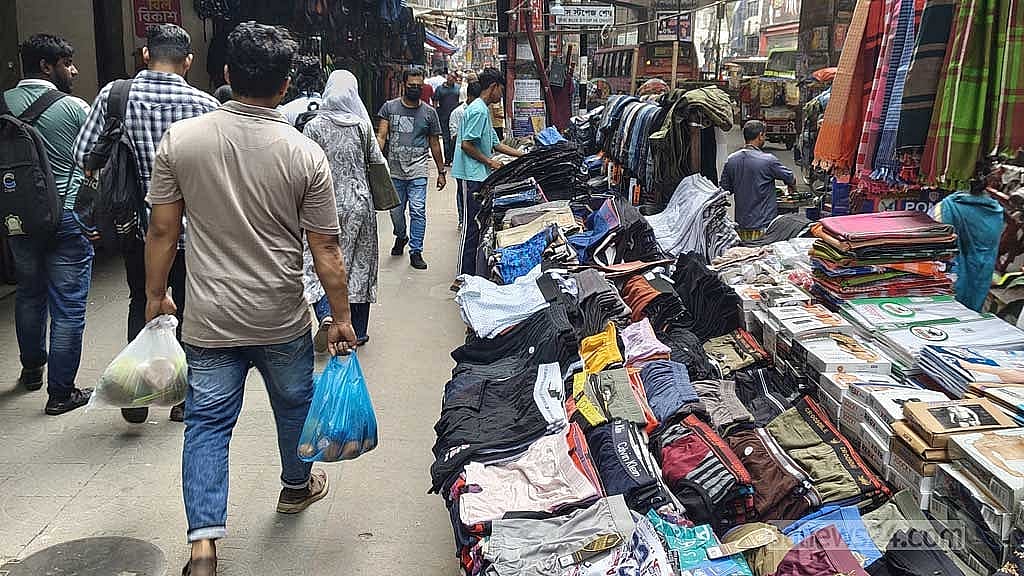
To prevent severe traffic congestion, hawker zones must be mapped out at least 30 to 40 feet away from metro stations, bus stops, and major intersections.
The policy strictly prohibits the complete occupation of pavements, mandating that a five-to-eight-foot walkway must be left entirely clear for pedestrians.
Moreover, day-time hawking is completely banned in Dhaka’s highly congested zones.
Instead, "Night Markets" will be permitted from 6pm to 10pm after office hours in major commercial hubs like Mirpur, Gulistan, New Market, Sadarghat, and the Baitul Mukarram National Mosque area.
Specified lanes in commercial zones that experience heavy daytime crowds but become deserted at night can also host these night markets.
The policy also introduces "Holiday Markets" on Fridays, Saturdays, and public holidays from 7am to 5pm.
These weekend markets will be set up on wide streets in front of government offices, educational institution plazas, or locations pre-determined by the city corporations.
Designed for family shopping, these holiday markets will primarily feature handicrafts, household items, and foodstuffs.
Digital ID Distribution Begins
In line with the newly minted policy, the city corporations have commenced issuing QR-code-enabled digital ID cards under the supervision of the management committee.
On Apr 30, 2026, digital identity cards were formally handed over to an initial batch of 302 hawkers across Dhaka North and South.
Both city corporations confirmed that remaining hawkers will receive their cards in phases.
Speaking at the distribution ceremony, Dhaka South City Corporation (DSCC) Chief Executive Officer Md Zahirul Islam said: “Today, 100 hawkers were provided with digital identity cards containing QR codes. All eligible hawkers will eventually receive them in accordance with the policy guidelines."
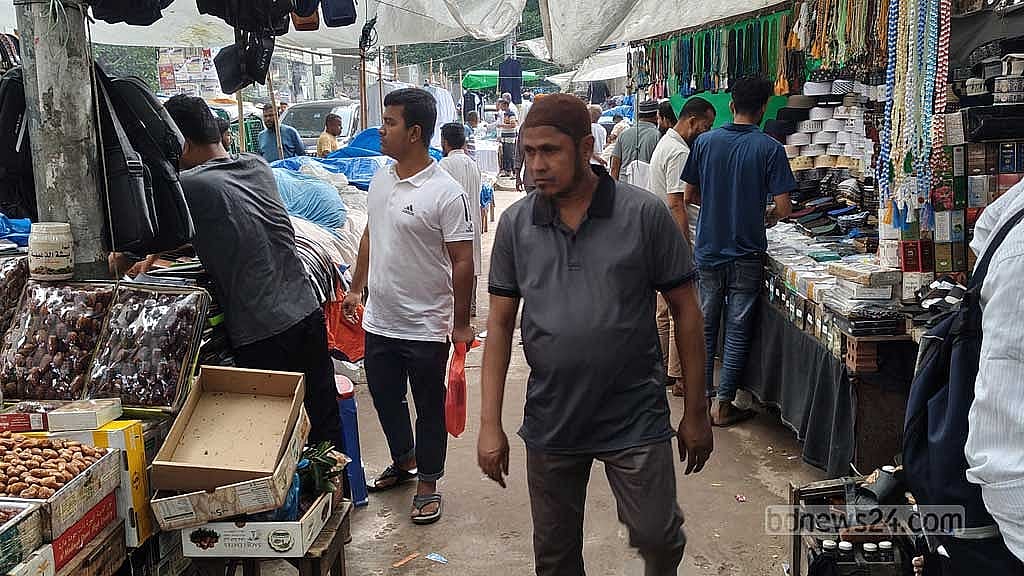
"This mechanism will ensure transparency and accountability, allowing the traffic police to easily verify a vendor's legitimacy and designated sitting spot," Zahirul added.
The DSCC has already designated seven permanent locations for hawkers.
Daily vending will be permitted on the link road of Ramna Bhaban in Gulistan, Gulistan Twin Tower alley, the link road adjacent to the eastern gate of Baitul Mukarram, one side of the southern gate of New Market, and the road adjacent to the field inside the Shahjahanpur Railway Colony.
Meanwhile, evening trade will be restricted to the AGB Colony field opposite Motijheel Ideal School, the open space in front of Islam Chamber in Motijheel, and the area behind the RAJUK Bhaban.
Notably, most of these locations had been earmarked for hawker rehabilitation years ago and already host active street markets.
On the other hand, the DNCC distributed identity cards to 202 hawkers on Apr 30 out of a listed 829 vendors operating along the main roads of Mirpur Sections 1, 10, and 2.
DNCC Chief Executive Officer Muhammad Asaduzzaman confirmed that 102 of these vendors will be relocated from Mirpur-10 to the Mirpur-13 WASA Road.
The remaining 100 vendors from Mirpur-1 are being moved to an open space adjacent to the Gabtoli kitchen market.
He added that the remaining listed hawkers will be systematically relocated as they receive their ID cards.
Inaugurating the rehabilitation drive, DNCC Administrator Md Shafiqul Islam Khan Milton said: “We discussed this with the hawkers beforehand and took their opinions into account.
“They themselves do not wish to operate illegally. This list has been meticulously prepared with the full cooperation of the police administration.”
Allegations of Irregularities Over Identity Cards
Abdul Hashim Kabir, president of the Bangladesh Hawkers Union, has raised serious allegations of corruption over the issuance of the digital identity cards.
"Whoever goes to the police is getting their name inserted into the list. There is absolutely no verification to check who the actual hawkers are," he claimed.
A vendor named Md Shahin shared a similar grievance, saying, "Even those who received official phone calls did not get their cards upon arrival. We know nothing about who made the list or how it was compiled."
When confronted with these allegations, DSCC Administrator Abdus Salam said it is impossible to satisfy everyone entirely during a rehabilitation drive.
"The city corporation did not draft this list. The police went to the field, conducted on-ground verifications, and prepared the final roster," Salam clarified.
DNCC Administrator Milton added that several rounds of discussions were held with the vendors before initiating the relocation drive in Mirpur-1 and Mirpur-10.
Although a combined list prepared by the administration, police, and traffic department identified 825 hawkers, severe space constraints meant only 202 could be relocated in the first phase.
"We did not take any unilateral steps. On the day they were summoned, those 204 individuals were physically present," Milton said.
No Relocation Until After Eid
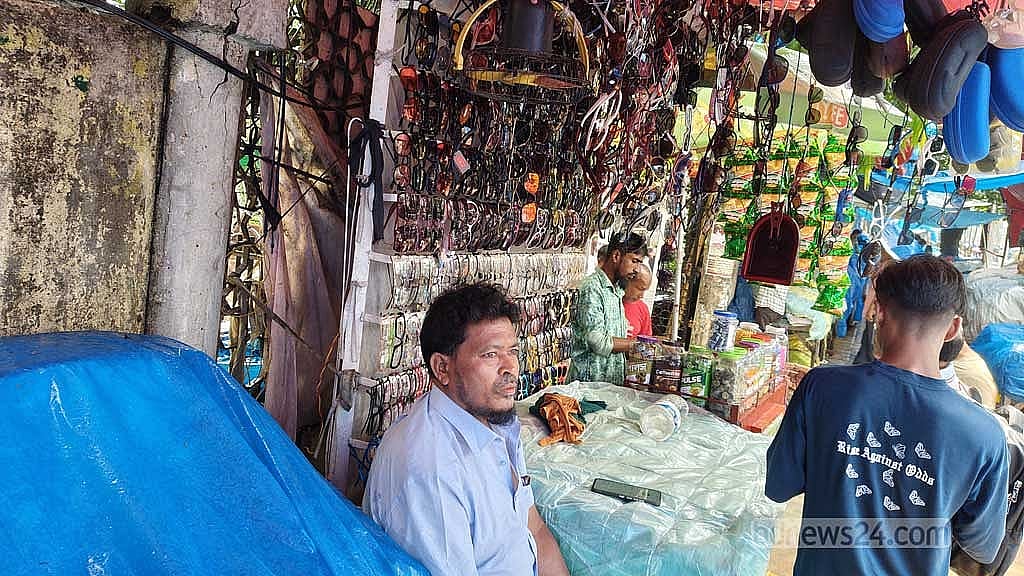
Md Rajib, a vendor from the Mirpur-10 who was among the 102 to receive an ID card, recently told bdnews24.com that they are currently operating from their old spots.
"We took some time from the mayor; we secured an extension until the upcoming Eid-ul-Azha. We haven't faced any trouble so far," he said, adding that no disruptions or resistance have come from the police or the administration yet.
When asked if he would move to the designated Mirpur-13 area after Eid, Rajib replied evasively: "That is a future decision. There are many hawkers here; this cannot be decided by a single person."
Mizanur Rahman, another vendor from Mirpur-10, corroborated the timeline: "We took an extension before coming here. No one is bothering us at the moment."
Explaining their deep reluctance to move to Mirpur-13, Mizanur noted: "There are already hawkers operating over there. The street doesn't have endless space. The authorities should first observe where the real problems are occurring."
Mizanur fears his business will collapse if he moves to the city corporation's designated zone.
He told bdnews24.com, "We won't get any customers there. Besides, how many people can they realistically accommodate?"
Having traded in Mirpur-10 for seven years, Mizanur explained that his child studies at a local school, and relocation would destabilise his family.
"If I can't afford to educate my child, where will they end up?" he asked.
Milton confirmed the temporary truce: "The hawkers requested time until Eid-ul-Azha, and the matter stands at that stage for now."
When questioned about the post-Eid strategy, DNCC Chief Engineer Rakibul warned that efforts to restore discipline to designated areas will continue as per administrative decisions, and legal action will be enforced if necessary.
Meanwhile, in the south, many vendors are flatly refusing to move to Ershad Road -- the link road adjacent to the eastern gate of Baitul Mukarram designated by the DSCC.
One vendor said rampant drug abuse and anti-social activities in that spot would make it "extremely difficult to do business".
Responding to these security concerns, DSCC Administrator Abdus Salam asserted, "If there are drug dens there, they will be wiped out."
‘We Don't Know What the Future Holds’
Past hawker rehabilitation attempts have repeatedly devolved into eviction drives, protests, and violent clashes.
Haunted by those experiences, vendors are deeply anxious about the days ahead.
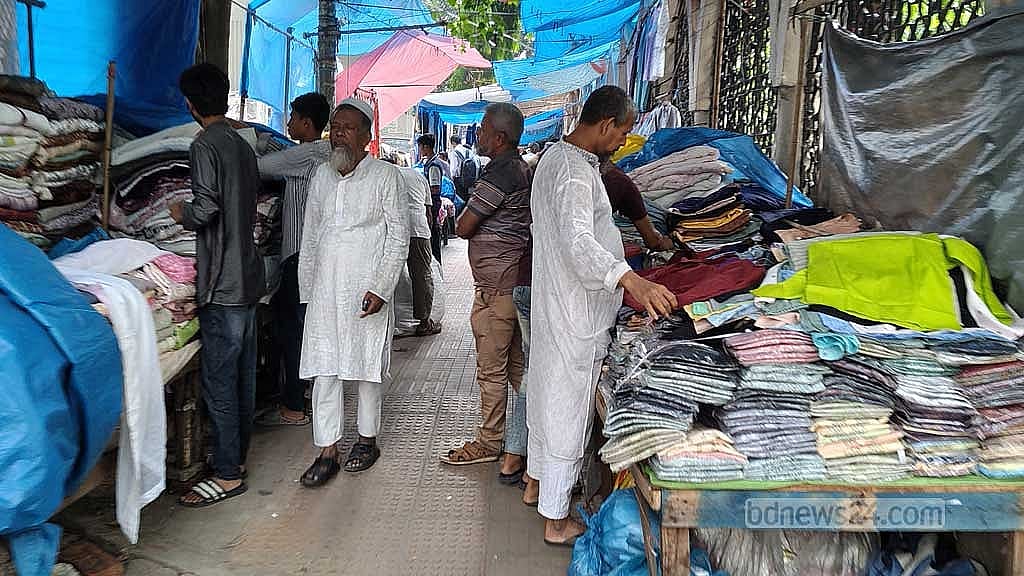
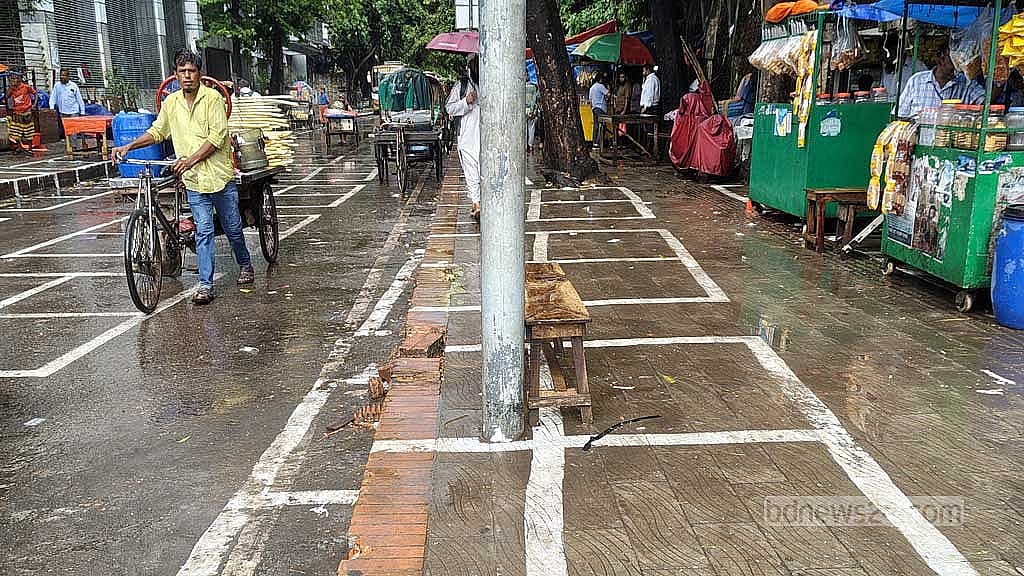
At Abrar Fahad Avenue (formerly Bangabandhu Avenue), hawkers continue to operate from permanent wooden stalls just as before.
In some spots, vendors have occupied nearly half of the main road alongside the pavements to run their businesses.
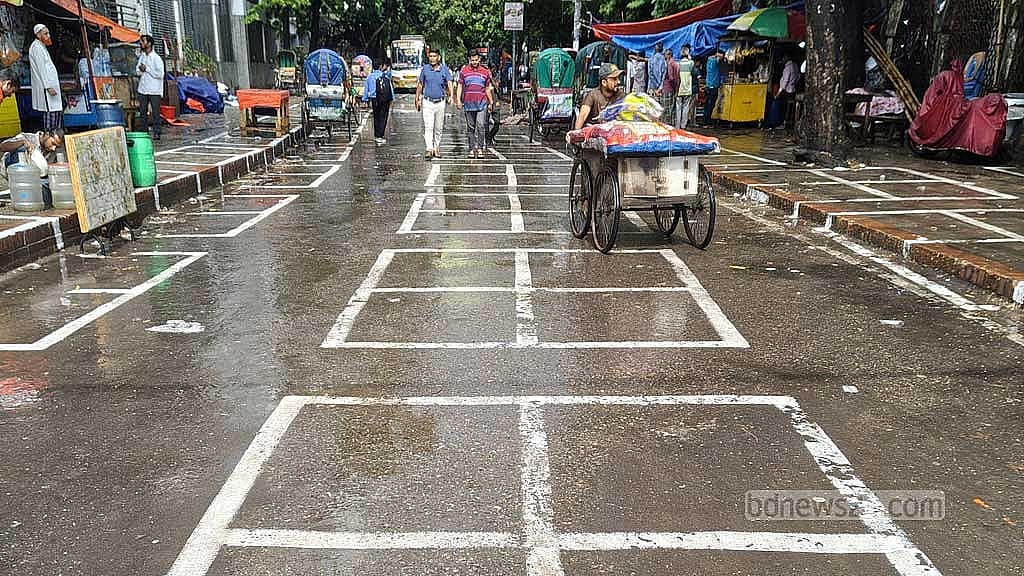
"The city corporation has merely drawn lines on the street, but they haven't allocated any actual spots to us yet," said local vendor Md Yusuf.
With the monsoon season fast approaching, hawkers say they are forced to hang polythene sheets to protect their merchandise from rainwater.
However, police are preventing them from doing so.
Expressing his deep anger, a vendor named Abdul Hannan said, "The rainwater will destroy my entire capital. If that happens, how will I feed my wife, son, and daughter?"
A young hawker in Mohakhali described the immediate toll of the initial clampdown: "When the eviction drive began last month, we kept our business shut for nearly a month. We were kicked in the stomach, brother. We don't know what the future holds for us."
Interviews with hawkers in Malibagh revealed that the city corporation has not yet served them any directives.
Addressing this, Abdus Salam said, "The drive has not commenced in the Malibagh area yet, which is why no notices have been served there.
“For now, our operations are strictly focused on Gulistan and Baitul Mukarram," he added.
Milton echoed this phased approach: "We are focusing on Mirpur-1 and Mirpur-10 first. Trying to tackle the entire Dhaka city at once will create massive chaos. We will proceed step by step."
What Pedestrians and Experts Say
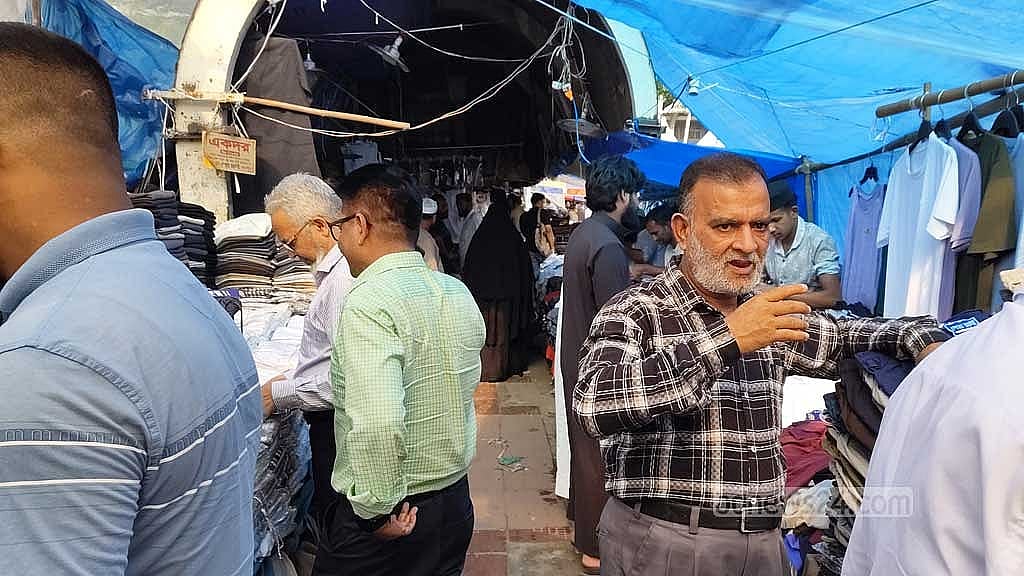
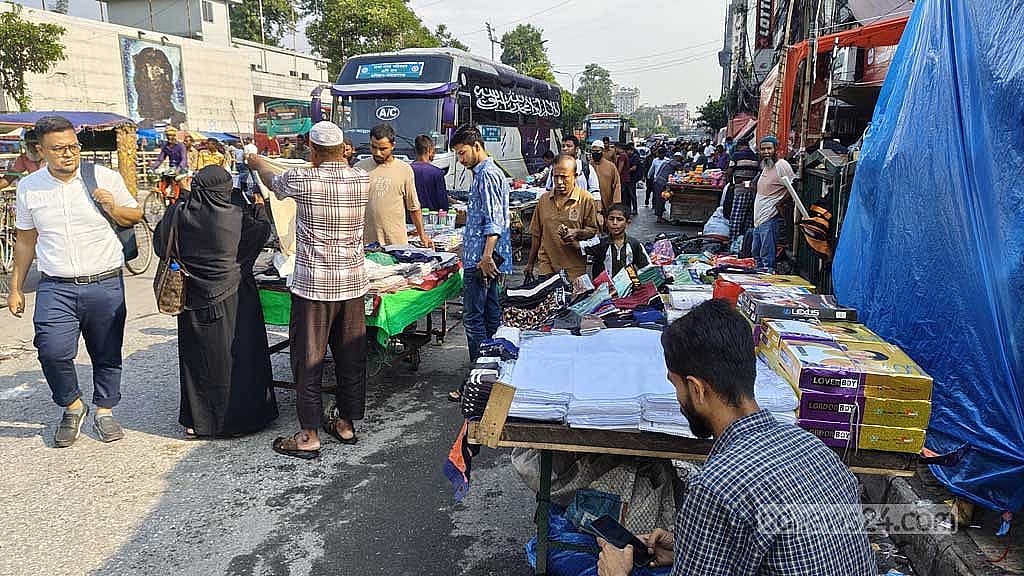
Pedestrians continue to voice deep frustration over the persistent gridlock on pavements, which routinely compromises their ability to walk safely.
"When customers stand in front of the stalls to buy things, where is the space left for pedestrians to walk on the pavement?" asked Papon Sarkar, a commuter navigating the Baitul Mukarram area.
Many regular commuters are deeply sceptical that the new government measures will bring any tangible change.
Ahmad Suman, a 39-year-old pedestrian on Abrar Fahad Avenue, remarked: "In my 39 years of life, I have seen plenty of these stunts and tall promises. I no longer have faith in anyone."
In contrast, some permanent shopkeepers view the presence of street hawkers as a positive factor for local security.
Jitu, an employee identified by a single name at Monoram Snacks in the Baitul Market, noted: "When they are around, we can run our businesses smoothly until 9pm or 10pm, and the area stays secure. Without them, the streets would be overrun by thieves and muggers."
Pedestrian Rights Must Take Priority
Akter Mahmud, a professor in the Department of Urban and Regional Planning at Jahangirnagar University, urged the administration to firmly protect pedestrian rights.
Speaking to bdnews24.com, he noted that while a mega-city like Dhaka can benefit from a structural hawker management policy -- similar to other global metropolises -- pavements in this densely populated city should never be surrendered to street vendors.
"The right of the pedestrian must be returned to the pedestrian. Allowing hawkers to occupy pavements or use chunks of the main road in a city like Dhaka will only complicate the crisis further," Akter warned.
He pointed out that Dhaka already suffers from an inadequate road network alongside chronic traffic congestion, adding, "Allowing hawkers on the streets effectively shrinks the remaining commuting space."
Akter added that while some countries allow registered hawkers to operate within specific designs and limited parameters, replicating that model in Dhaka remains highly impractical.
"Here, if you allow one person to sit, 10 more will immediately set up shop. We simply lack the capacity for effective, continuous monitoring."
Suggesting ward-based and zone-based decentralised rehabilitation, he proposed that the city corporations build ground-level hawker markets on vacant plots or designated lands.
"Hawker markets are fundamentally viable only at the ground level. People do not climb stairs to the first or second floor for spontaneous, convenient shopping. The very nature of the hawker trade relies on capturing the attention of people on the move."
However, the urban planner pointed out that there is room to introduce highly regulated night markets on specific routes for a limited time.
"Roads that are relatively underutilised after dusk could be identified and allocated for temporary markets for a window of four to five hours. But this management must be meticulously planned."
Ultimately, Akter concluded that it is impossible to rehabilitate Dhaka's massive hawker population in its entirety.
"The most critical step is to cap the exact number of hawkers permitted to sit in each specific area. You cannot accommodate everyone."
The Root Issue of Extortion Remains Ignored
Adil Mohammed Khan, an urban planner and the executive director of the Institute for Planning and Development (IPD), strongly critiqued the prevailing rhetoric surrounding the drive.
"The entire narrative of 'rehabilitating through hawker cards' is inherently flawed," he argued.
While acknowledging that the Hawker Management Policy 2026 is a well-intentioned initiative, Adil highlighted several fundamental weaknesses in its framework.
"A policy is undoubtedly necessary, but the biggest elephant in the room is: who qualifies as a genuine hawker? Many operate on the street as their sole source of livelihood, while a powerful group illegally occupies spaces only to rent them out to others."
According to him, the systemic extortion and illegal space-grabbing syndices that govern street vending are completely unaddressed in the new policy document.
"There is absolutely no discussion regarding this entire illegal network. As a result, the core root of the problem remains entirely unresolved," Adil said.
Saying that it is logistically impossible to find physical space for every vendor, he advised the state to bring genuinely impoverished hawkers under social safety net programmes and alternative employment schemes.
He also fiercely questioned the policy’s guidelines regarding pedestrian space allocation.
"In a megacity like Dhaka, leaving a mere five to six feet of walking space is entirely inadequate. The state must clearly declare that 'pavements belong exclusively to the public'. We need an absolute political consensus on this matter."