
Published : 04 Nov 2026, 01:23 AM
Updated : 04 Nov 2026, 01:23 AM


The promise of rewriting Bangladesh’s constitutional order has run into a familiar political fault line: agreement on the destination, but deep disagreement over the road to get there.
Both the government and opposition say the Constitution needs major changes. But while the BNP government wants to amend it through parliament under Article 142, the Jamaat-e-Islami-led opposition alliance insists that the verdict of the referendum be implemented through a separate Constitutional Reform Council.
The dispute reaches beyond procedure. It touches on the constitutional legitimacy of the post-July 2024 order, the authority of the interim government and the meaning of the public mandate delivered at the ballot box.
Home Minister Salahuddin Ahmed has warned that the government cannot wait indefinitely for the opposition to join the process. The opposition, meanwhile, says it will continue its campaign in parliament and on the streets.

Could the government ultimately push through constitutional changes without its political rivals? Zainul Abedin, a member of the parliamentary committee tasked with the amendments, says that is not what the government wants.
The disagreement took shape after the interim government and most political parties adopted the July National Charter on Oct 17 last year, as part of efforts to establish a democratic transition.
In November, President Mohammed Shahabuddin issued the July National Charter (Constitutional Reform) Implementation Order, 2025, followed by a referendum ordinance.
On Feb 12, alongside the parliamentary election, nearly 69 percent of voters backed constitutional reform.
The implementation order required elected MPs to take an additional oath as members of a Constitutional Reform Council. But BNP lawmakers, whose party secured an overwhelming parliamentary majority, took oath only as MPs. Members of the Jamaat-led alliance took both oaths.
After forming the government, the BNP said it would implement the July Charter, but without the “notes of dissent”. The opposition argues that voters approved the charter in the referendum and that its proposals must therefore be implemented through the reform council.
For constitutional lawyer Kazi Zahid Iqbal, the disagreement is largely technical. He told bdnews24.com that the two sides were not visibly divided over several major proposals, including restoring the caretaker government system, amending Article 70 and introducing a bicameral parliament.

“The main question is whether the changes will be made through amendments passed by parliament within the existing Constitution, or implemented through a reform council outside parliament,” he said.
Iqbal believes the latter route could be legally weaker and riskier if it operates beyond the constitutional framework.
He also sees a difference between the movements of 1990 and 2024.
“The central focus of the mass movement in 1990 was to establish a caretaker government system to ensure fair elections. In contrast, the 2024 uprising involved people from all walks of life on a much broader scale, and the demand to overhaul the Constitution was also far wider.”
Yet changing constitutional provisions is no guarantee of a more accountable state, says Supreme Court lawyer Shahdeen Malik.
Calling the belief that writing good principles into the Constitution would automatically ensure accountability and justice “absurd”, he says: “A good law does not make a country good.”
He points to the United States, whose Constitution was adopted in 1789 in just 12 pages and seven articles, yet has governed the country for more than 250 years. Bangladesh, by contrast, has 153 articles but continues to suffer from glaring accountability deficits.
Writer and academic Salimullah Khan goes further, describing the present Constitution as undemocratic and arguing that it should be rewritten rather than merely amended.
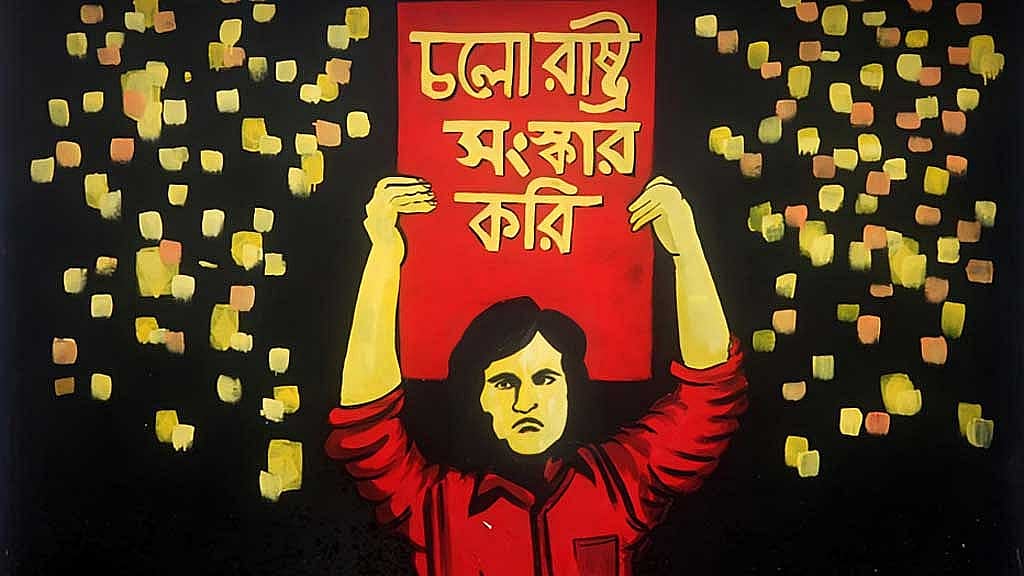
“The current Constitution sustains the rule of a handful of people. So it needs to be written anew rather than reformed,” he says.
For Salimullah, changing the form of government alone cannot end authoritarianism.
“HM Ershad established authoritarian rule under a presidential system, while Sheikh Hasina did so under a parliamentary system led by a prime minister. The root of the problem is not the form of government, but the monopolistic control of the state by a small class.”
A genuinely democratic Constitution, he argues, must place the legislature at the centre of the state.
Constitutional Rupture of Aug 5
The fall of the Hasina government on Aug 5, 2024, has also left experts divided over whether the existing constitutional order survived the Uprising.
Constitutional lawyer Sharif Bhuiyan says the state’s contract with the people was fundamentally breached when the government began killing its own citizens.
“The Constitution clearly states that all power belongs to the people. And when the government starts killing those very people, power automatically returns to them,” he says.

Describing this as “revolutionary constitutionalism”, Sharif argues that the Uprising rendered the old constitutional order ineffective. He rejects the idea that the interim government’s legitimacy rested on an opinion from the Appellate Division under Article 106.
“The interim government derived its constitutional legitimacy not from any court opinion, but directly from the people’s ‘revolutionary mandate’,” he says.
Salimullah also believes the Constitution became void after Aug 5, with the country now relying largely on established conventions and using only those parts of the 1972 Constitution considered necessary for running the state.
Supreme Court lawyer Manzil Murshid disagrees. He says administrative continuity, state decisions and ordinances remained in place after the change of power, making it impossible to declare the Constitution entirely defunct.
Citing the “past and closed” principle in the judgment on the Fifth Amendment, he argues that the constitutional framework did not simply disappear.

Who Has the Authority to Reform?
The legal status of the proposed Constitutional Reform Council is another point of contention.
Supreme Court lawyer Imran A Siddiqui says the implementation order explicitly stipulated that the council would be formed if voters backed reform.
“Therefore, forming the Constitutional Reform Council under that order is not only a legal obligation but also an unavoidable political commitment,” he says.
He regards any alternative route as a departure from the July Charter and the direct mandate of the people.

Murshid, however, questions the legal foundation of both the referendum and the presidential order behind it.
“Under Article 93 of the Constitution, the president has no authority to issue an order concerning constitutional change or amendment. Therefore, the order issued on that basis cannot stand legally,” he says.
Iqbal says the BNP wants amendments passed by parliament under the existing constitutional framework. Other opposition parties fear that changes made through parliament could later be reversed by an ordinary majority, prompting their demand for an independent reform council.
Three Visions of a Second Chamber
Experts are also divided over the proposed bicameral parliament and the powers of an upper house.
Salimullah supports an upper chamber but opposes allocating seats according to parties’ share of the vote, warning that it could create opportunities for political nomination trading.
Instead, he proposes a 128-member chamber, with two members directly elected from each district.
He also wants the upper house to have sole authority to impeach the president and senior court judges.

Sharif favours proportional representation, arguing that it would give parties with few or no seats in the lower house a voice in state affairs.
The upper house, he says, should not be able to overturn legislation passed by the lower chamber. It should instead return disputed bills for reconsideration, creating a balance of power and greater accountability.
Murshid opposes the idea altogether. An unelected upper chamber with the authority to overturn laws passed by directly elected MPs, he argues, would conflict with popular sovereignty under Articles 7 and 65(1). It would also impose an unnecessary financial burden.
Article 70, Caretaker Government and Judiciary
The question of how much freedom MPs should have to vote against their parties has raised concerns for Malik.
He warns that allowing lawmakers to defy party positions on ordinary bills, except money bills and no-confidence motions, could have serious consequences.
“Large corporations and influential business groups could lobby and buy MPs to serve their interests, making it impossible for the government to pass legislation necessary for the public good,” he says.
Sharif supports greater freedom for MPs outside budget and no-confidence votes, but says such a provision would be difficult to enforce without a fundamental change in political culture.
On restoring the non-party caretaker government, Murshid favours reinstating the former Article 58(c). He rejects making the speaker the head of the interim administration, arguing that the office is generally held by a partisan figure.

Sharif prefers political consensus between the government and opposition, with a retired chief justice as a last resort if no agreement is reached.
Murshid also supports limiting a prime minister to two terms and appointing retired judges or non-political figures to statutory and autonomous bodies such as the Anti-Corruption Commission and National Human Rights Commission.
Judicial independence is another fault line. Salimullah describes the judiciary’s past role as “judicial adventurism” and proposes a compulsory Bengali proficiency test for candidates seeking appointment as Supreme Court judges.
He argues that the entire Constitution is foundational, with popular sovereignty at its core. Murshid, meanwhile, says judicial review must remain intact to prevent unconstitutional executive action and protect the Constitution’s basic character.
Iqbal proposes another accountability measure: parliament should receive a mandatory annual report on progress in implementing the state policy principles in Part II of the Constitution, before the national budget is presented.
A Process at Risk of Becoming One-Sided
The opposition walked out after the government formed a special parliamentary committee to work on constitutional amendments. Although five seats were reserved for opposition members, they have yet to nominate anyone.
The opposition says it supports reform under the July Charter but objects in principle to the committee’s current mandate and process.
Imran argues that boycotting the process would only give the ruling party room to proceed without meaningful opposition input.
“Instead of completely boycotting the process, the opposition parties should actively participate in the relevant parliamentary committee, strongly raise their objections and, if necessary, formally record their dissent,” he says.
Iqbal shares that view, saying the opposition should remain at the negotiating table and try to incorporate its core demands into the final amendments.
The government, however, is preparing to move ahead. After a committee meeting on Oct 13, Home Minister Salahuddin Ahmed said the opposition would be given opportunities to participate, but the government could not wait indefinitely.

“If the opposition still does not come, we have to proceed with the constitutional amendment. This is the expectation of the nation. We have to implement the July Charter. This is our commitment. We cannot wait,” he said.
Jamaat Assistant Secretary-General and Coordinator of the 11-Party Alliance AHM Hamidur Rahman Azad told bdnews24.com that there would be no compromise over the referendum verdict or the 48 reform issues.
“Our movement on this issue will continue both in parliament and on the streets,” he said.
Zainul Abedin, a member of the amendment committee, insists that the Constitution must be amended, not “reformed”, as it contains no provision for reforming itself.
He says the committee has repeatedly invited the opposition and held 11 meetings with stakeholders. It will review the views of all sides before submitting a report, he says, adding that parliament remains sovereign and another referendum is unnecessary.
“We do not want to do anything unilaterally like the previous government. We want the opposition to participate in the discussions and give their opinions, along with those of parliament members. Only then can the Constitution be amended,” he says.
The committee hopes to finish its work by December and place a bill before parliament in January.
That timetable leaves little room for a political breakthrough. The BNP’s 209 seats in the 300-member parliament are enough to meet Article 142’s two-thirds threshold of 200 votes, provided its lawmakers remain united. The government could therefore pass constitutional amendments without opposition votes.
The question is whether a process that can secure the numbers will also secure the consensus that gave the July Charter its political force.