Published : 24 Sep 2026, 01:20 AM
Updated : 24 Sep 2026, 01:20 AM


Set off a crude bomb. Film the explosion. Send the video. Get paid.
Dhaka detectives say that is the simple formula behind at least some of the crude-bomb attacks that have rattled the capital over the past several days.
The Detective Branch (DB) says a “specific network” is recruiting people to carry out the blasts, offering between Tk 5,000 and Tk 10,000 for each explosion.
Instructions on where to go and what to do are being sent through WhatsApp accounts registered with Indian phone numbers, according to investigators.
The alleged operatives are told by text or voice call to detonate the device, record the blast, and send the footage back to the person giving the instructions. Only after the video arrives is the promised payment made, according to police.
Detectives say they uncovered the pattern while investigating a series of crude-bomb explosions across Dhaka over the past week.
Police reported explosions at a number of locations in the capital on Sept 18 and 19, including outside Jatrabari Police Station, in Mohakhali, Agargaon and Malibagh, while vehicles were also set on fire in several areas.
Investigators say questioning of suspects has also produced claims that some of those issuing instructions are leaders of the Awami League, whose activities are banned, and are now staying in India.
That remains a police allegation based on an ongoing investigation.
Shafiqul Islam, additional commissioner of the Dhaka Metropolitan Police’s Detective Branch, told bdnews24.com that several suspects had been arrested over the crude-bomb attacks.
“We have arrested several people involved in the cocktail explosions,” he said.
“After questioning them and examining various electronic devices they used, we found that they had been communicating among themselves using Indian numbers.
“The arrested suspects have also told us that cocktails are being made in the Signboard and Narayanganj areas.”
The recent arrests have given investigators several different trails to follow.
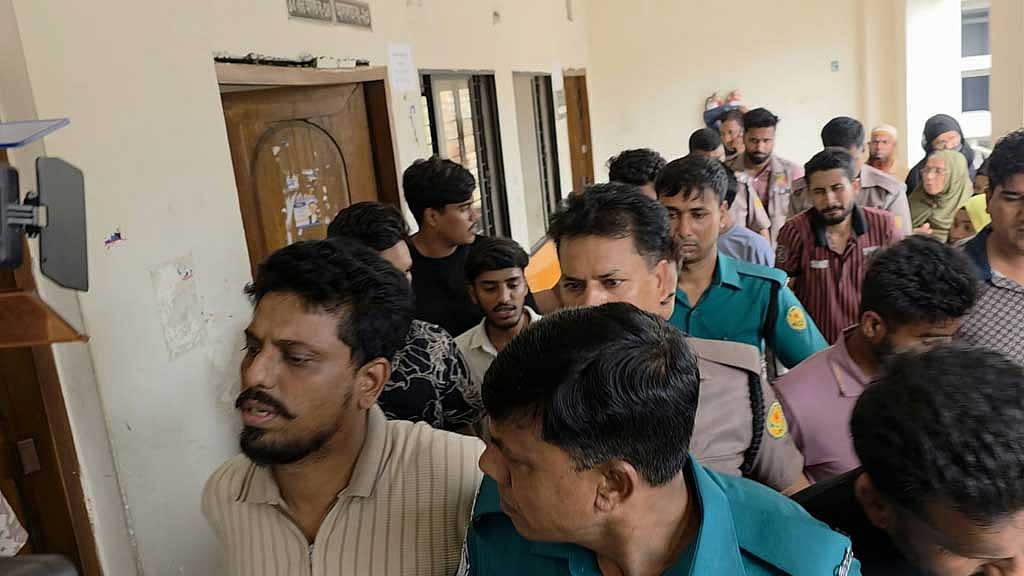
On Sept 18, DB arrested a man named Raihan Uddin over crude-bomb explosions outside Jatrabari Police Station.
Police identify Raihan as office secretary of Unit 6 of Ward 32 under the Awami League’s Bangshal unit in Dhaka South.
He had also spent five months in prison after being arrested last year in an Anti-Terrorism Act case filed with Motijheel police.
Three others, Rasel Khan, Ala Uddin, and Abdullah, were later arrested over the same Jatrabari incident.
DB says they were active members of the Chhatra League, the banned student organisation affiliated with the Awami League.
Police also said four unexploded crude bombs were recovered following the arrests.
A Dhaka court placed Raihan on four days’ remand and the three others on two days each for questioning in the case.
The same area produced another discovery.
On Sept 18, police recovered 10 crude bombs that had been left in South Dania in Jatrabari.
They were found inside an old shopping bag lying at the entrance to an alley beneath a six-storey building near the South Dania kitchen market, according to police.
The devices were later defused by the DMP Bomb Disposal Unit.
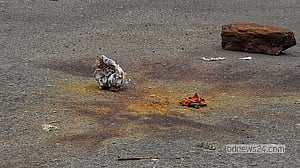
A day later, on Sept 19, crude bombs exploded on a platform at Kamalapur Railway Station.
Police later arrested two men after investigating the incident with the help of technology and intelligence information.
They were identified as Sakhawat Hossain Raihan and Mohammad Sanmun.
Police describe Raihan as an organising secretary of the Chhatra League’s Shahjahanpur unit. He is also employed as an electrician with Bangladesh Railway.
Sanmun is described by police as an active Jubo League member in Shahjahanpur.
The explosions at Kamalapur were part of a wider run of blasts and vehicle fires across the capital. Police said the two devices exploded on Platform 2 between pillars 29 and 30 on the night of Sept 19.
Another arrest followed an earlier blast outside the Supreme Court.
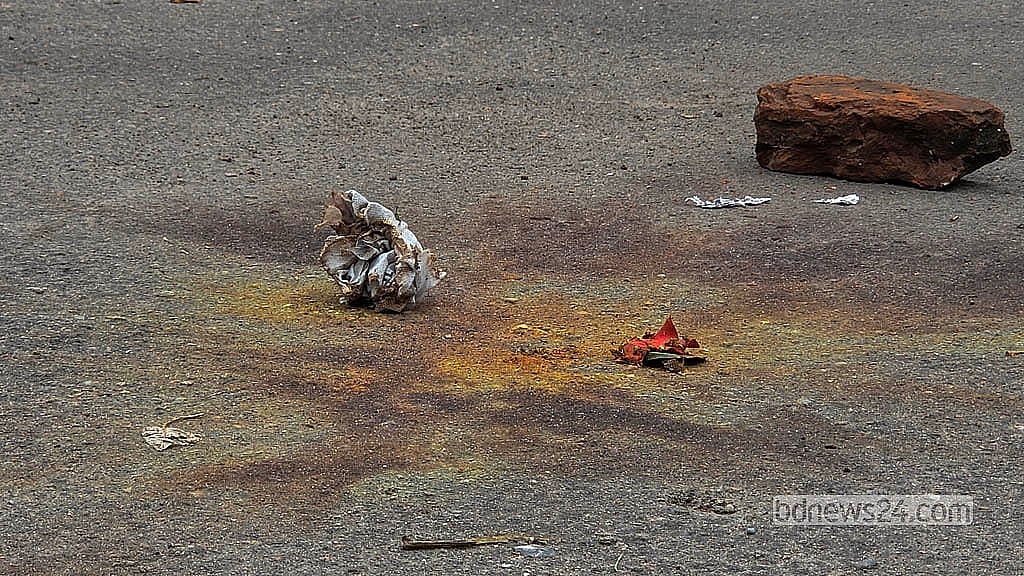
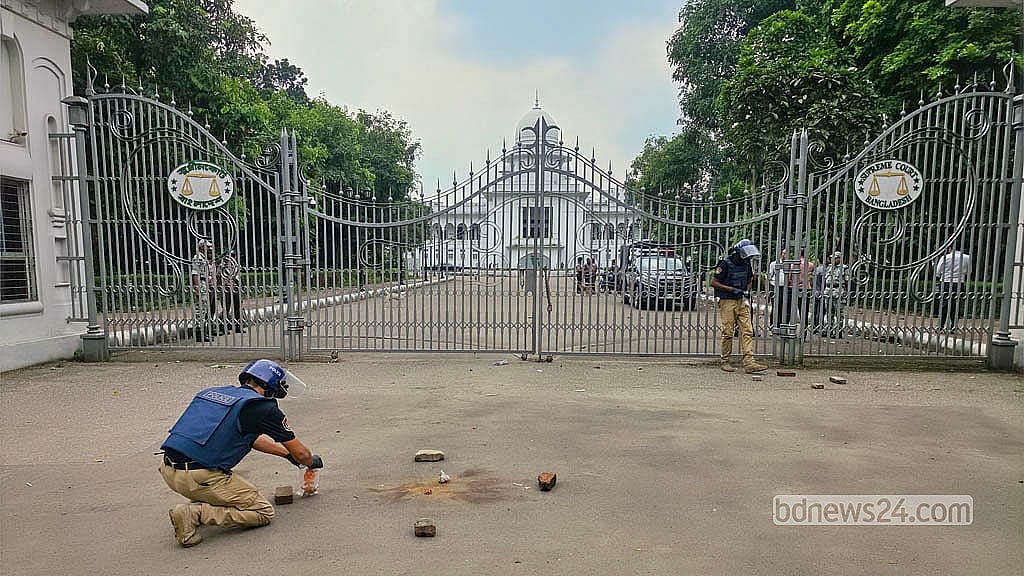
On Sept 15, a crude bomb exploded in front of the court’s main gate.
Police later arrested Salman Islam Sakib, also known as Asif, whom they identify as a joint general secretary of the Chhatra League’s Motijheel unit.
DB said the motorcycle allegedly used in the incident was seized following his arrest. Police also said information obtained from questioning him led to the recovery of four unexploded objects resembling crude bombs in the Hazaribagh Beribadh area.
Investigators say the emerging picture is not simply one of people being hired for cash.
According to officials involved in the inquiry, some suspects may also have taken part in attacks in the hope of securing positions or advancement within political or organisational structures.
Molla Md Shaheen, deputy commissioner of DB’s Wari Division, said investigators were still working through the evidence.
“We are working on these issues,” he told bdnews24.com.
“We do not want to give details at this stage. We will know more after questioning the suspects on remand.”
Investigators say different people are being assigned different jobs.
Some allegedly supply the crude bombs. Others throw them. A separate network is said to be involved in making the devices.
Police say they have received information about crude bombs being made around Signboard on the Dhaka-Chattogram Highway in Narayanganj and in the Geneva Camp area of Mohammadpur.
Another group based inside Bangladesh is suspected of coordinating those who actually carry out the attacks.
Detectives say the video is crucial to the payment system.
The money is allegedly released only after footage of the explosion has been sent to the people directing the operation.
Police believe this has also created an incentive to detonate several bombs at the same location: four or five explosions can mean a larger payment.
In cases involving buses being set on fire, investigators allege that people with drug addictions and others living on the margins are sometimes recruited to carry out the attacks.
One investigator, citing Raihan’s questioning, said the suspects claimed they were acting mainly on the instructions of Sabbir Hossain, a former general secretary of the Dhaka Metropolitan South Chhatra League.
bdnews24.com tried to reach Sabbir for comment, but his phone was switched off.
Police say he is currently in hiding.
Investigators also believe some of the crude bombs used in recent attacks in Jatrabari, Malibagh, Agargaon and Mohakhali were made at what they described as a factory-like location in the Signboard area.
Detectives say that after examining Indian numbers found on the phones of arrested suspects, they encountered the names of several senior Awami League, Jubo League and Chhatra League figures.
Some of those figures have been staying in India since the fall of the Awami League government during the July movement, according to police.
The claims have not been independently established and remain part of the investigation.
Motorcycles ‘Easiest Getaway Vehicle’
For those carrying out the blasts, investigators say one mode of transport appears particularly attractive: the motorcycle.
It is quick, relatively inconspicuous, and allows riders to leave the scene rapidly.
An officer involved in the investigation described what police say they learned from Raihan after his arrest.
A man known to Raihan operates a cosmetics shop with his wife in Nazirabazar in Old Dhaka, according to the account.
“On Friday evening, Raihan went to the shop and asked to borrow his motorcycle for an hour,” the officer said.
“Another associate brought another motorcycle.
“The four of them then threw five cocktails from the flyover towards the front of Jatrabari Police Station and left through the Kajla toll plaza.
“They later returned to Nazirabazar, handed the motorcycle back to the shopkeeper and went into hiding.”
DB officials say Raihan claimed during questioning that Sabbir Hossain, whom he described as his “political mentor”, had instructed him through an Indian number to carry out the attack.
Police say Raihan also claimed that he had deliberately borrowed someone else’s motorcycle to make it harder for investigators to identify him.
According to the account investigators say Raihan gave them, the same leader based in India would also provide instructions on how to obtain the crude bombs.
A message to a specified WhatsApp number would be enough to arrange delivery of the devices, he allegedly told investigators.
Payment would then be transferred to a mobile financial services account according to the number of explosions successfully carried out, police say.
But the presence of an Indian phone number does not establish where the person using the WhatsApp account actually is.
Technology expert Suman Ahmed Sabir cautioned against drawing that conclusion from the number alone.
Even if a WhatsApp account was originally opened in India using an Indian SIM, he said, the account could subsequently be used from virtually anywhere in the world.
The same applies to the SIM itself if international roaming is activated.
“Even if a WhatsApp account was opened while someone was in India using an Indian SIM, that account can later be used from anywhere in the world,” he said.
“And if roaming is enabled, an Indian SIM can remain active in another country.”
More technical information would therefore need to be examined before investigators could establish where a particular user was actually communicating from, Sabir said.
“You would have to verify additional technical data to be certain where the user was actually contacting people from.”
Indian Citizen Arrested
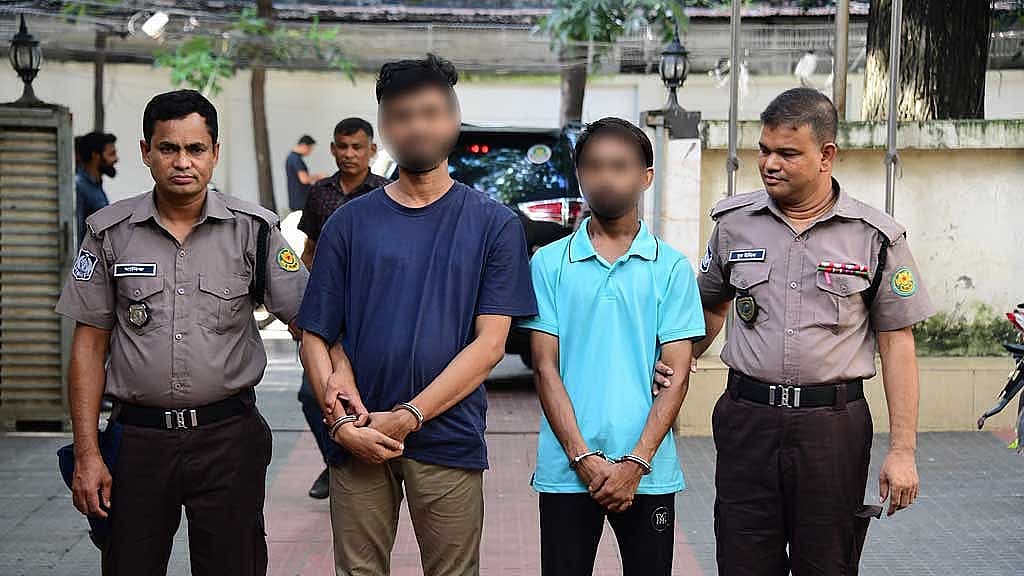
Amid the police claims that instructions for attacks were being sent through WhatsApp accounts registered to Indian numbers, DB has also arrested an Indian national in Dhaka on suspicion of involvement in sabotage.
The man, identified as Robiul Islam, was detained by DB’s Ramna zonal team around 3am on Monday in Sector 11 of Uttara.
A court on Wednesday granted police four days to question him on remand.
The remand application says Robiul has been in Bangladesh since Sept 14 and describes his movements as “suspicious”.
It says he presented a passport identifying himself as an Indian citizen, after which police examined his Indian passport, driving licence, and national identity card.
Police say the date of birth on his driving licence and identity card does not match the date on his passport.
They also say Robiul had travelled to Bangladesh many times before but had been unable to give a consistent explanation for those visits.
Investigators allege that he has provided information at different times and suspect he could have links to recent acts of sabotage in Dhaka and elsewhere in Bangladesh.
No finding of guilt has been made against him.
Robiul is from Gauribhoj village in North 24 Parganas in the Indian state of West Bengal, according to the report.
‘Coordinator’ Arrested in Cox’s Bazar
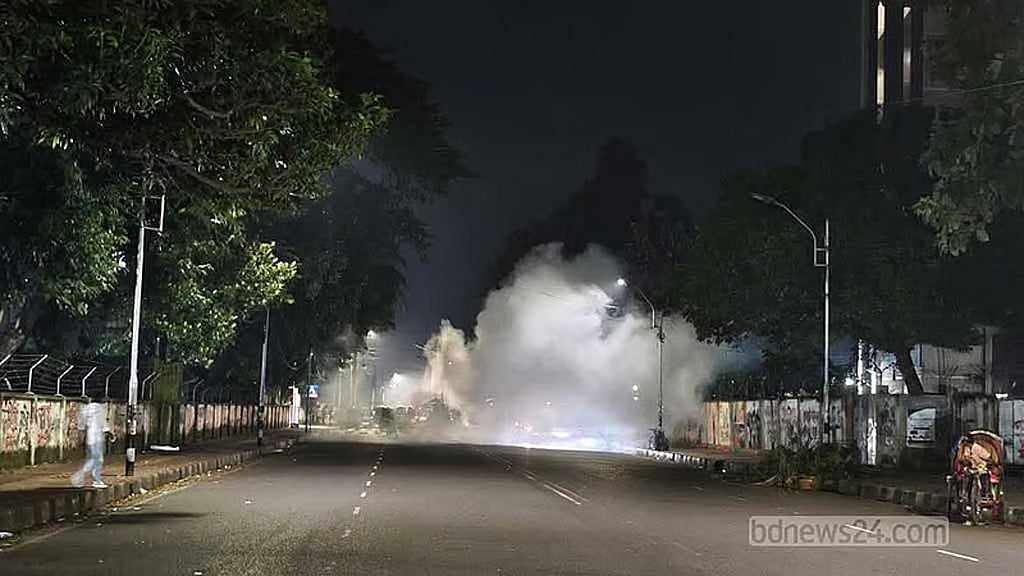
In a separate strand of the investigation, Demra police say they arrested a leader of the Matsyajibi League, an Awami League-affiliated organisation, in Cox’s Bazar on Sept 20.
The suspect has been identified as Md Sabuj. Police allege he was helping coordinate crude-bomb attacks and bus arson.
Investigators claim Sabuj had been operating from Cox’s Bazar while arranging people to carry out attacks in Jatrabari, Demra, and surrounding areas.
Md Shamim Hossain, assistant commissioner of Demra Zone, said police arrested him on specific allegations of coordination.
“We arrested him over a specific allegation of coordinating these activities,” he said.
“We are investigating whose instructions Sabuj was following and who else may have been involved.”
Demra Police Station chief Mirza Taifur Rahman said Sabuj was secretary of Matsyajibi League’s Demra unit.
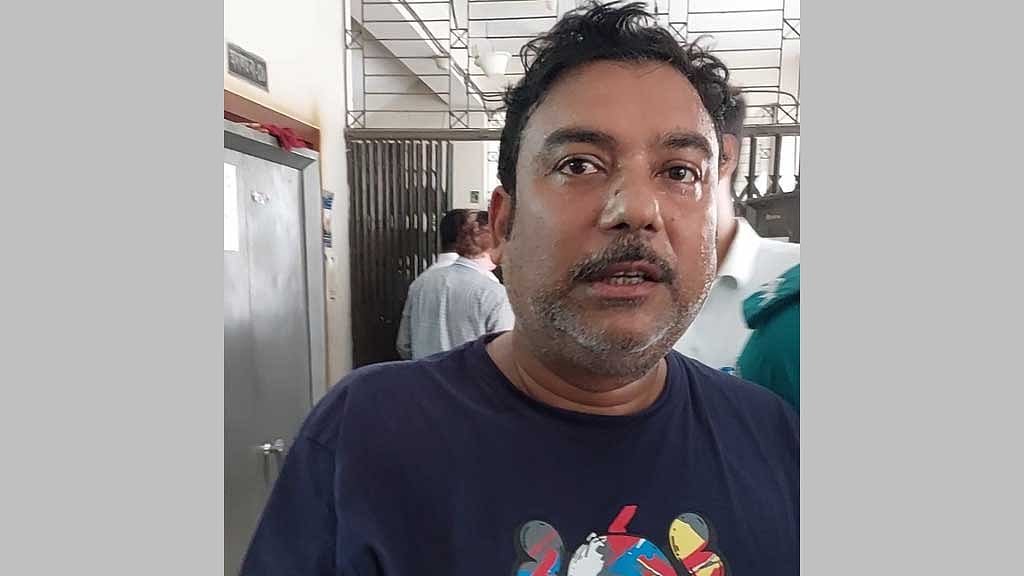
“He used to lead Awami League and Chhatra League processions and rallies in the Demra area,” the police officer said.
“We identified him after reviewing several videos of processions and meetings in the area at different times after Aug 5, 2024.”
The arrests and claims have raised an obvious question. If improvised explosives are being manufactured and distributed in different parts of the capital and nearby Narayanganj, how is that happening without being detected earlier?
Shafiqul Islam, the DB additional commissioner, said the arrests themselves showed that police surveillance was working.
“We are monitoring them. That's why they are being arrested,” he said.