


Published : 01 Jan 2019, 01:42 PM
Updated : 05 Aug 2022, 05:47 PM


This year Bangladeshis were energised by student protests for road safety and mourned the loss of 52 lives in the US-Bangla Airlines crash.
They were enraged by the death of Cox’s Bazar Ward Councillor Akramul Haque and celebrated the country’s first steps into space with the launch of the Bangabandhu-1 satellite.
And the political arena saw major developments throughout the year -- Khaleda Zia’s imprisonment, Tarique Rahman’s conviction over the Aug 21 grenade attack attempt on Sheikh Hasina’s life – and culminated in the 11th national parliamentary election, which brought an unprecedented third term for the ruling Awami League party.

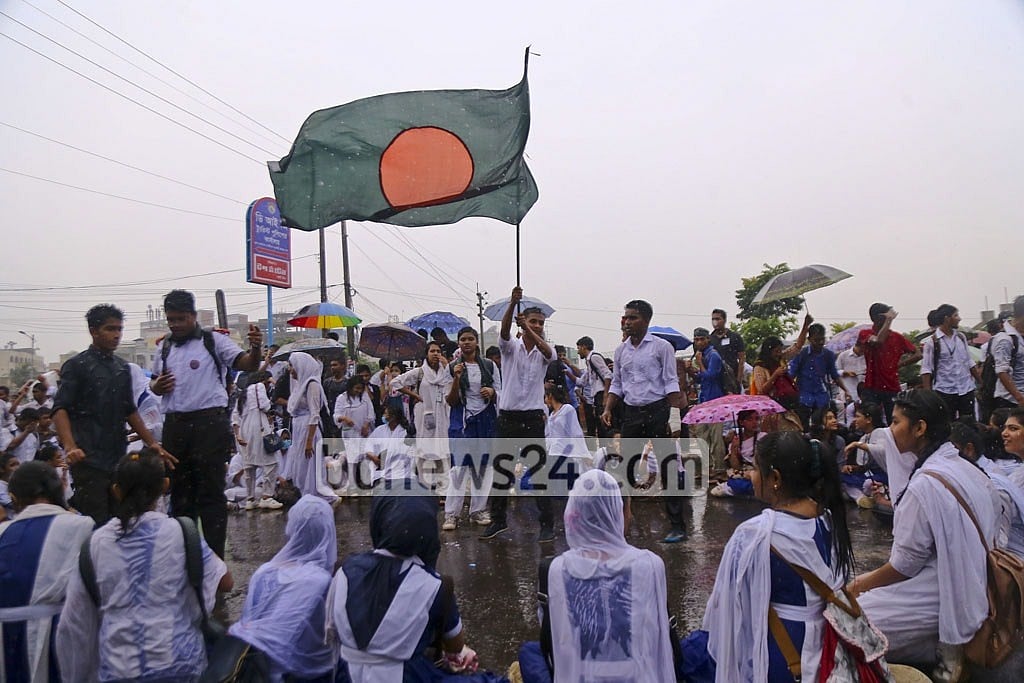
Road accidents are an everyday occurrence in Bangladesh. About 4,025 people were killed in 3,464 accidents across the country as of December 2018, according to the BUET Accident Research Institute. On Jul 29, two students of Shaheed Rameez Uddin College were run over and killed by a bus on Dhaka’s Airport Road. The comments of transport worker leader and Shipping Minister Shajahan Khan ignited a protest movement that saw students taking to the streets calling for him to resign and press for a nine-point list of demands.
The students began ‘policing’ the streets, checking the licences and registrations of vehicles and even stopping ministers, MPs and other eminent persons who were in violation of the law. Police were rendered helpless by the broad range of support for the protesters from all segments of society. After several days of immobility on Dhaka roads, transport workers called a strike. Allegations began to surface that the Chhatra League, the student wing of the ruling party, attacked the student protesters. Journalists who attempted to document the incidents were also attacked. Photographer Shahidul Alam was arrested and charged in an ICT case during the protests. The government responded to the protests with various programmes and by altering the laws. The protests were eventually called off. Despite acknowledging there was justification for the protests and assurances from eminent persons and the police of a change in conduct, the situation has largely returned to the status quo in the days since.
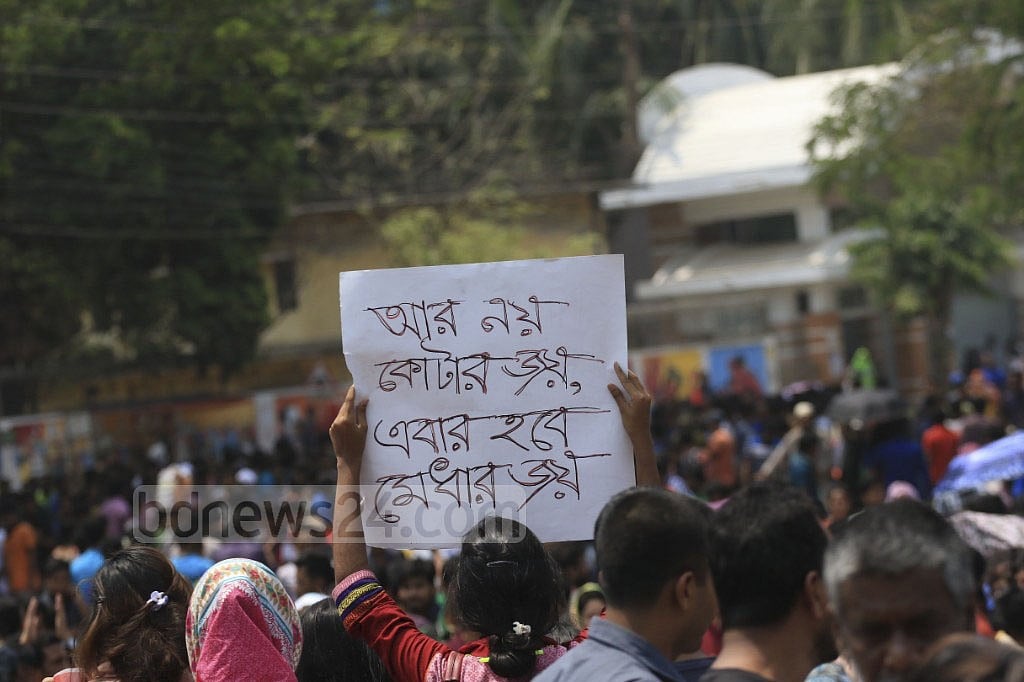
Though students and job seekers had been calling for reforms to the quota system for public sector jobs for many years, the movement came to a head this year. A group calling itself a “defender of student rights” staged several programmes that grew into large-scale protests in April. Police used baton charges and teargas to attempt to disperse the protesters. At one point the home of the Dhaka University vice-chancellor was vandalised. The Chhatra League began conducting attacks on the protesters and police arrested several of the movement’s leaders. Some Awami League leaders attempted to smear those opposed to the Liberation War freedom fighter quotas as anti-Liberation. The protests, which began at Dhaka University, eventually spread to the various districts. On May 2, Prime Minister Sheikh Hasina announced that all quotas would be removed from public sector jobs. Protesters who attempted to continue the movement until the prime minister’s statement was implemented were met with Chhatra League attacks. Leaders of the quota reform movement were arrested after the road safety movement got underway. The quota reform movement finally came to an end on Oct 3 when the government issued a gazette scrapping quotas.

On Mar 12, a US-Bangla Airlines flight from Dhaka to Kathmandu crashed near the runway at Tribhuvan International Airport and caught fire, killing 49 of the 71 passengers on board. Nine Bangladeshi nationals were recovered alive, but 27 were killed in the accident, including Captain Abid Sultan, pilot Prithula Rashid and crew member Khaja Hossain. The bodies were brought to Dhaka on Mar 19 and turned over to the families at the Army Stadium. Nepal formed a commission to probe the crash of the Bombardier Dash 8 craft. The team has yet to submit its report.

The #MeToo movement turned the spotlight journalists, politicians and cultural leaders of Bangladesh after the movement against sexual harassment and assault caught on in the West. At the end of October, Maksuda Akhter Prioty, a Bangladeshi-Irish model, brought allegations against Rongdhanu Group Chairman Md Rafiqul Islam of sexually harassing her in a Facebook Live post. Inspired by Prioty, many women in Bangladesh began sharing similar stories of sexual abuse under the #MeToo banner. Most of the accused have denied the allegations.
A month after Prioty’s statement, Tasnuva Anan Shishir, a transgender artist, made allegations against Pathak Shamabesh owner Shahidul Islam Bizu using a #MeToo hashtag. Later, television journalist Pranab Saha was accused of sexually harassing the daughter of journalist Supriti Dhar when she was eleven.
Artist Mahidul Islam was also accused of sexually assaulting a woman. Jakiya Sultana Mukta alleged that Mahidul had tried to abuse her while she was practising for a poetry programme at TSC on the Dhaka University campus. Journalism Training and Research Initiative (JTRI) chief Jamil Ahmed was accused of abusing a woman named Asmaul Husna, who is currently residing in Bangladesh. Many of the women who have made such allegations say they are not seeking investigations or trials of the incidents, but say they ‘simply wish to tell the truth.
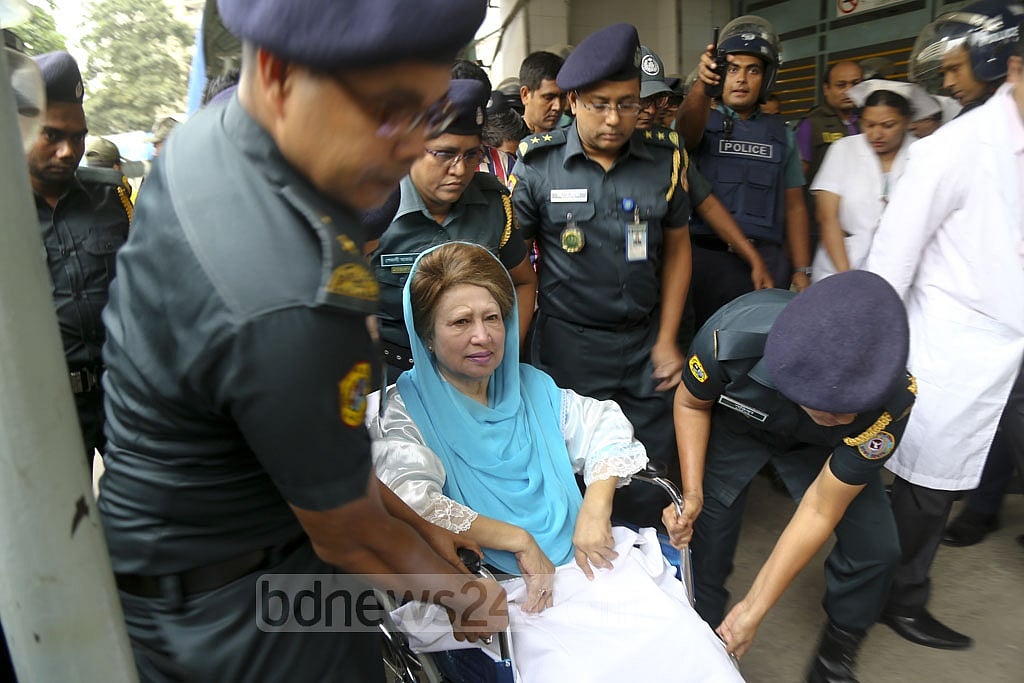
Former Prime Minister and BNP Chairperson Khaleda Zia was imprisoned on graft charges in February. The verdict in the Zia Orphanage Trust case, the first of several graft cases filed against the BNP chief under the caretaker government, was delivered on Feb 9. She initially received a five-year jail sentence in the case. She was then taken to the old prison at Old Dhaka’s Nazimuddin Road, where she is the only prisoner. Despite repeated attempts, she has not been released on bail, but was instead handed another jail sentence in the Zia Charitable Trust graft case. The sentence in the Zia Orphanage Trust graft case was later extended on appeal. The BNP attempted to arrange for her release so she could contest the 11th national parliamentary election, but was barred by the courts. The election was the first time the BNP has participated in a general election without their leader.
ফাইল ছবি
Awami League President Sheikh Hasina and BNP Chairperson Khaleda Zia have long been the chief political rivals in Bangladesh. This year Khaleda Zia’s son, Tarique Rahman, was convicted in the Aug 21 grenade attack case of attempting to kill Sheikh Hasina. The 2004 grenade attack is one of the more prominent incidents of violence in Bangladesh’s recent political history. The attack on a rally by the then opposition party leader Sheikh Hasina led to the death of 23 and the wounded several hundred others. The ‘Joj Mia’ drama staged by the BNP-Jamaat alliance government was widely discussed. The trial began in 2007 under the caretaker government. When the Awami League returned to power Tarique Rahman, who had moved to the UK, was added to the case. The verdict in the case was finally delivered on Oct 10 of this year. Former State Minister for Home Affairs Lutfozzaman Babar and former Deputy Minister Abdus Salam Pintu and 17 others were sentenced to death for an attempt to kill the Awami League leadership. Tarique Rahman and 18 others received a life sentence in prison. The judge in the case said in his observations that the attack was an attempt to eliminate the opposition leadership ‘with the help of state power’. The BNP has repeatedly claimed the case is politically motivated.

The term ‘crossfire’ has been familiar since the establishment of Rapid Action Battalion or RAB, an elite anti-crime and anti-terrorism unit of Bangladesh Police, in 2014. But the people of Bangladesh saw a new definition of the term after the death of Akramul Haque, a councillor of the Teknaf municipality in Cox’s Bazar. After his death on May 26, a gruesome audio recording emerged of a phone conversation between Akramul and his family members purportedly depicting the moments of his ‘execution-style killing’ during an “antinarcotics” drive. The incident sparked fresh questions about the anti-drug crackdown started under the orders of Hasina in May.
Hundreds of people were killed in the campaign, many families of those victims claim that, law enforcers had detained and killed them.
RAB and other law-enforcement agencies have faced repeated criticism from international rights organisation. The government had pledged to investigate the matter but little improvement was seen.

File Photo
In 2017 Surendra Kumar Sinha became the first chief justice in Bangladesh’s history to resign from his post. The move came after Justice Sinha left the country amid criticism from the ruling party.
Sinha returned to the spotlight this year after publishing a book of his experiences. The autobiographical book, “A Broken Dream: Rule of Law, Human Rights and Democracy” was published abroad on Sept 19 and contained explosive accounts of the Sinha’s resignation and exit from Bangladesh. In the book he claimed that he had left the country in the face of threats and had was forced to send his resignation from abroad. He claimed the threats had come from the military detective organisation DJFI. These comments were heavily criticised by the government. Awami League General Secretary Obaidul Quader said the writing was ‘fictitious’. BNP leaders claimed that Sinha’s writing lent credibility to their accusations against the government. After the release of the book, the Anti-Corruption Commission began to investigate graft accusations against Sinha. Former Minister Nazmul Huda had filed a case over the matter. Little progress has been made in these cases.

Bangladesh reached the Space Age on May 11 with the launch of the Bangabandhu-1, the country’s first commercial satellite. SpaceX’s new Falcon-9 Block 5 rockets blasted off from Florida’s Kennedy Space Centre carrying the satellite at 2:14am Bangladesh time. A half-hour later it reached the geostationary transfer orbit. The artificial satellite crossed 36,000 kilometres and slotted itself into its spot at the 119.09°E longitude. It took about two months for it to begin operations. The satellite is controlled from ground stations at Gazipur’s Joydebpur and Rangamati’s Betbunia. “We have become honoured members of the satellite club,” said Hasina in a video message on SpaceX’s live website. “We are stepping into a new era.” The communication satellite will provide broadcast, telecommunication and data communication services.
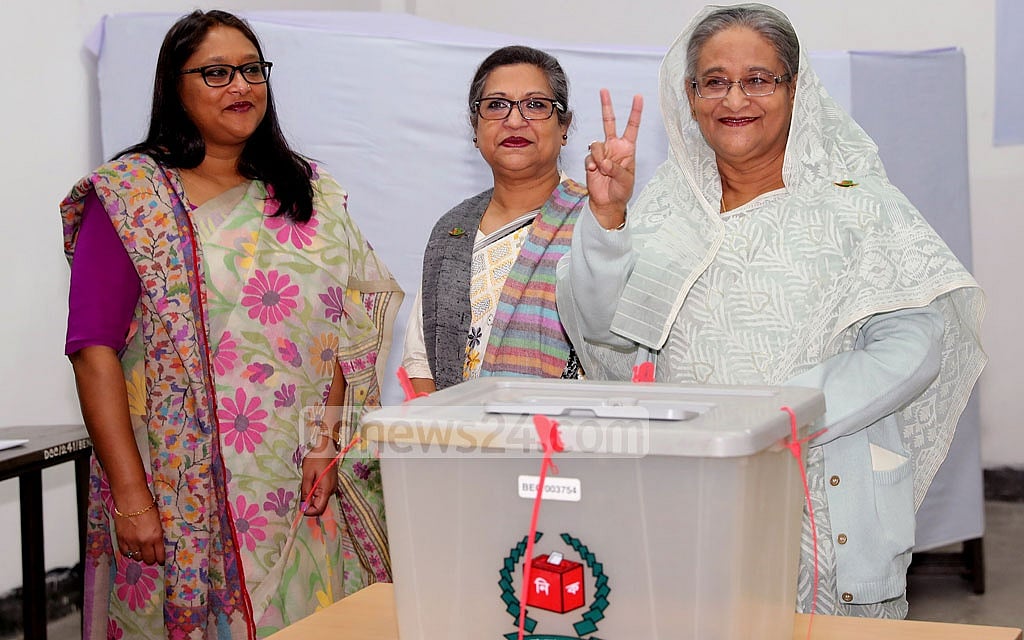
The Awami League won an unprecedented victory in the 11th national parliamentary election near the very end of the year. The Awami League won 259 of the 299 seats in the election, while its Grand Alliance took a total of 288 seats. Its opponents, the Jatiya Oikya Front and the BNP, were left floundering after winning only seven seats. Many of their candidates have conceded their races, but the Oikya Front has decided to boycott the polls after alleging vote rigging and call for another election. The BNP, which had boycotted the previous election in 2014, was initially unsure of its participation in the polls, and had announced they would not do so until their party chief was released from prison. But later they formed the Jatiya Oikya Front alliance with Gono Forum President Kamal Hossain, the JSD’s ASM Abdur Rab, the Krishak Sramik Janata League’s Abdul Quader Siddique and the Nagorik Oikya’s Mahmudur Rahman Manna and called for a ‘revolutionary vote’ against the government. But their expectations were not answered. Awami League President Hasina said that the opposition alliance had failed because of lack of leadership, inactivity of its candidates and attempting to profit from nominations. BNP Secretary General Mirza Fakhrul Islam Alamgir says the election will ‘cause problems’ for the future of the nation and show that the party was right to boycott the 2014 polls under the Awami League government.










