


Published : 09 Mar 2015, 02:09 PM
Updated : 19 Oct 2022, 06:37 PM


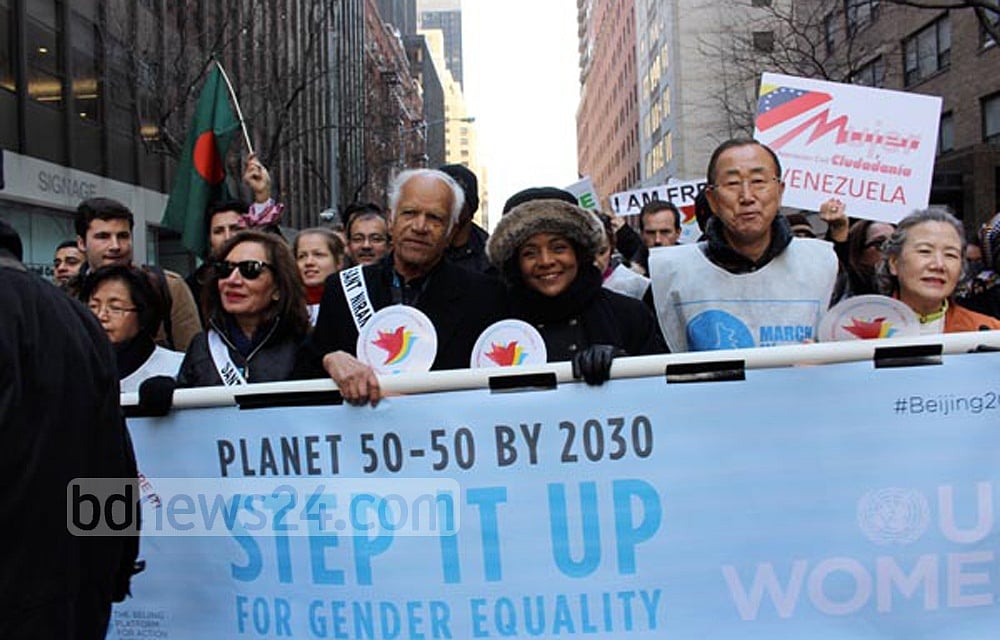
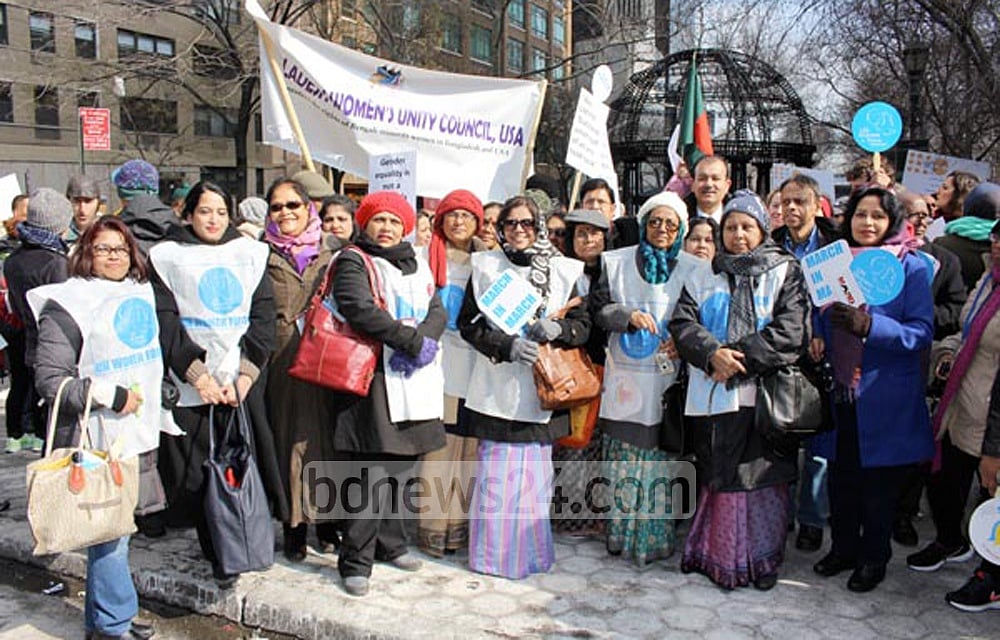
The 1995 Beijing roadmap that 189 governments including Bangladesh adopted was being considered by the UN Women as “the most comprehensive blueprint” on achieving women’s rights and gender equality.
But 20 years later, the UNFPA Executive Director Babatunde Osotimehin says no country in the world had achieved gender equality.
“And discrimination in the law persists in many countries,” he said in a statement marking the International Women’s Day celebrated on Sunday.
“Empowering women, empowering humanity: picture it!” was the theme of the celebration.
UNFPA Bangladesh Representative Argentina Piccin said 2015 was “important in many ways”, referring to upcoming events.
Countries have already reaffirmed their commitment to carrying forward the “unfinished agenda” from the 1994 International Conference on Population and Development (ICPD) that called for the universal access to sexual and reproductive health.
The global review of the landmark Beijing commitment will begin from Monday in New York at the ‘59th Commission on the Status of Women’.
Bangladesh is also sending a high-level delegation.
World leaders will report to each other and their peoples the status of achievement on their Millennium Development Goals (MDGs) commitments as new set of goals will be finalised in Sep at the UN general assembly.
The UNFPA Executive Director said they “look to the world’s leaders to commit to stronger action and the full implementation of the Beijing Platform for Action for progress for the world’s women and girls, and for all of humanity”.
He said women’s rising education attainment and workforce participation “has not been matched with equal prospects for advancement and equal pay”.
“And everywhere, violence against women and girls continues to take a devastating toll,” he said. “We can no longer allow violence to strike one in three women worldwide, as it does now”.
Bangladesh has also progressed in many areas including cutting pregnancy related deaths and improving women’s participation in education, employment, and politics.
Violence against women, child marriage, and women trafficking, however, remained some major areas of concerns, according to the ministry of women and children affairs.













