Published : 01 Jan 2026, 08:52 AM
Updated : 28 Aug 2026, 03:42 AM


The year 2025 drew the curtain on a tumultuous chapter in Bangladesh’s history.
With Khaleda Zia’s passing, the old political duopoly dissolved, leaving space for new actors -- but uncertainty filled that vacuum. From targeted assassinations to attacks on cultural and media institutions, the year’s promise of transformation was haunted by violence and ideological aggression.
As 2026 approaches, the nation stands at a crossroads: can elections, reform, and unity deliver what years of upheaval could not?
Analysts, politicians, and citizens alike weigh in -- some arguing that only a free and fair election can break the impasse, while others caution that democratic transition also requires robust reforms, which remain uncertain.
Nobel laureate Muhammad Yunus, head of the interim administration, has described the parliamentary elections and accompanying referendum as “a historic moment to chart Bangladesh’s future”, urging citizens to safeguard both the vote and the nation.
Yet the broader picture remains stark. “Mob” violence has eroded democratic norms. Attacks on newspaper offices have inflicted a serious blow to independent journalism and free expression. Traditional cultural institutions, such as Chhayanaut Bhaban and Udichi Shilpigosthi, have faced assaults, marking a new, extreme face of ideological aggression.
Asif Mohammad Shahan, professor of development studies at Dhaka University frames it starkly: “Looking at three consecutive years -- 2024 was our ‘year of hope’. 2025 became ‘a year of tension and uncertainty’, a period of transformation under duress. And 2026 will determine whether this tension leads to democratic progress or further disappointment.”
POLITICAL UPHEAVAL
The year 2024 sent deposed prime minister Sheikh Hasina into exile. 2025, with Khaleda Zia’s final departure, ended the era of the “Two Begums” in politics. As Khaleda’s health deteriorated, her son Tarique Rahman returned from London after more than 17 years in exile, assuming the baton of leadership. The central question now: can Tarique secure victory for BNP in 2026 and ascend to the premiership?
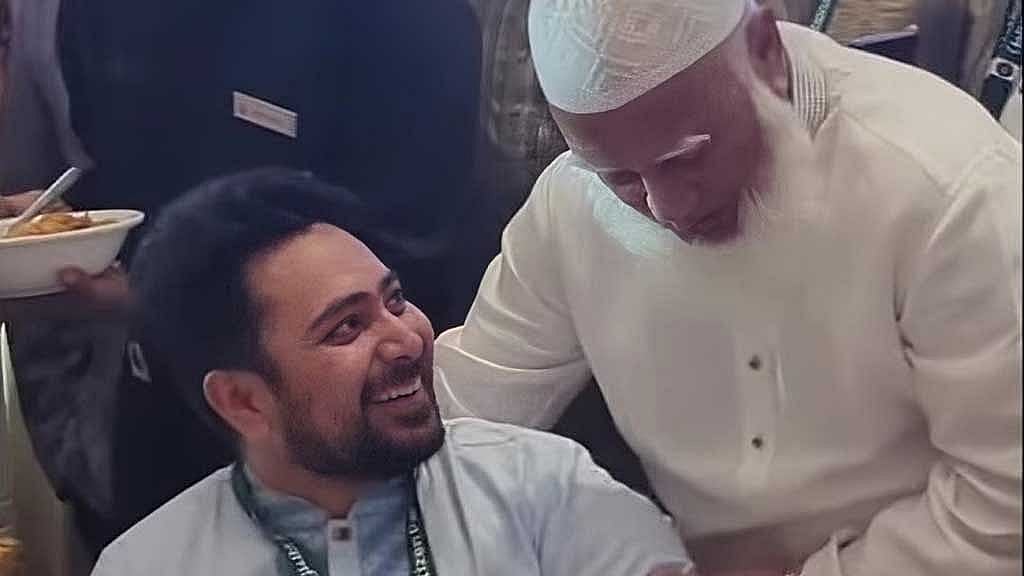
With his return, the BNP has been invigorated. The Jamaat-e-Islami has entered the 11-party coalition, strengthening the right-wing bloc. Conversely, the student-led National Citizen Party (NCP), which emerged in 2025 to establish a new order, found itself drawn into Jamaat’s political orbit before the year ended. Meanwhile, the absence of restrictions on the electoral process, excluding the ruling Awami League, propelled the campaign forward, though allies in the 14-party coalition and the Jatiya Party remain cornered.

The 2024 mass uprising, which challenged over a decade of Awami League rule, paved the way for an interim government under Muhammad Yunus. As the interim prime minister, Yunus envisioned a country where human rights are fully protected: “Our goal is singular -- an open, democratic, equitable, and secular Bangladesh. We are one family, with one purpose.”
Yet the 16-month interim tenure faced criticism for failing to demonstrate strong governance, especially in human rights and law enforcement. Economic reforms brought modest relief, but visible progress remained limited. Inflation softened briefly, yet rising food prices at year’s end left citizens anxious.
Sabur Mia, a betel leaf and cigarette vendor in Sutrapur, voiced a common sentiment: “Before elections, leaders make big promises. But later, we see nothing. For the elections, all we want is affordable prices and safety -- so we can sleep peacefully.”
That election is scheduled for Feb 12, with a referendum on democratic reforms set the same day.
REFORMS: OPENING CHAPTER OF DIVISION
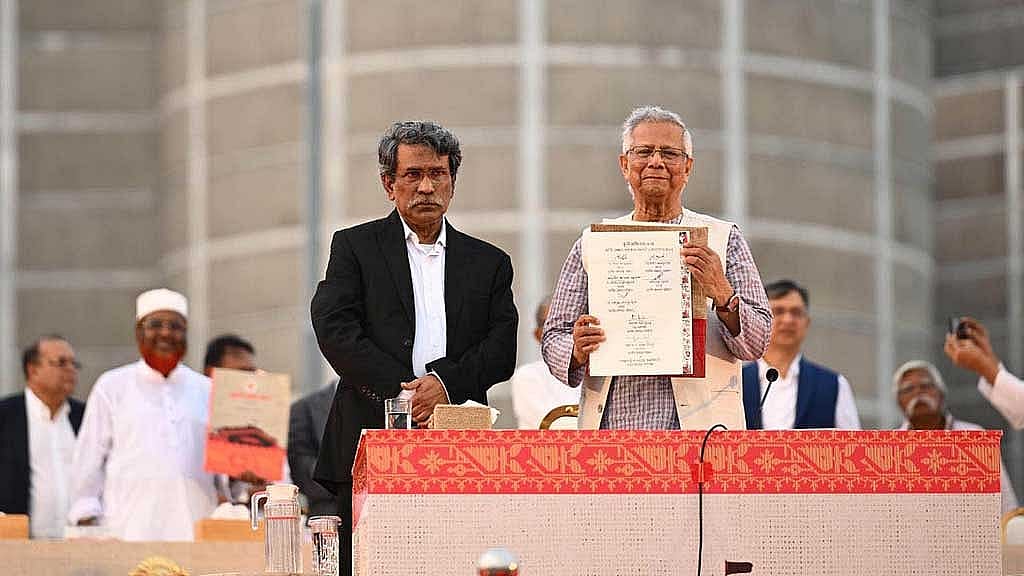
During the interim government’s 18-month tenure, the July Proclamation emerged as a focal point, with NCP expressing explicit reservations. Political parties debated state reform through the National Consensus Commission, leading to the July National Charter: 84 points achieved through unanimous agreement among 32 parties and coalitions, though 67 points faced dissent. The Charter, signed on Oct 17 in the presence of Yunus, excluded the NCP and four other parties.
Debates over implementation and the timing of the referendum intensified divisions. Jamaat-led coalitions mobilised for five specific demands, while BNP objected to non-dissenting endorsements of the July Charter, warning that adopting “manufactured reforms” could have long-term harmful consequences.
On Nov 13, Yunus announced the final implementation order, specifying the referendum could occur either before or alongside the parliamentary vote.
Chittagong University student Kaniz Fatema highlighted public expectations: “Whoever comes to power must pledge change. The election is about transformation, about empowering the people.”
NEW STAGE OF POLITICS
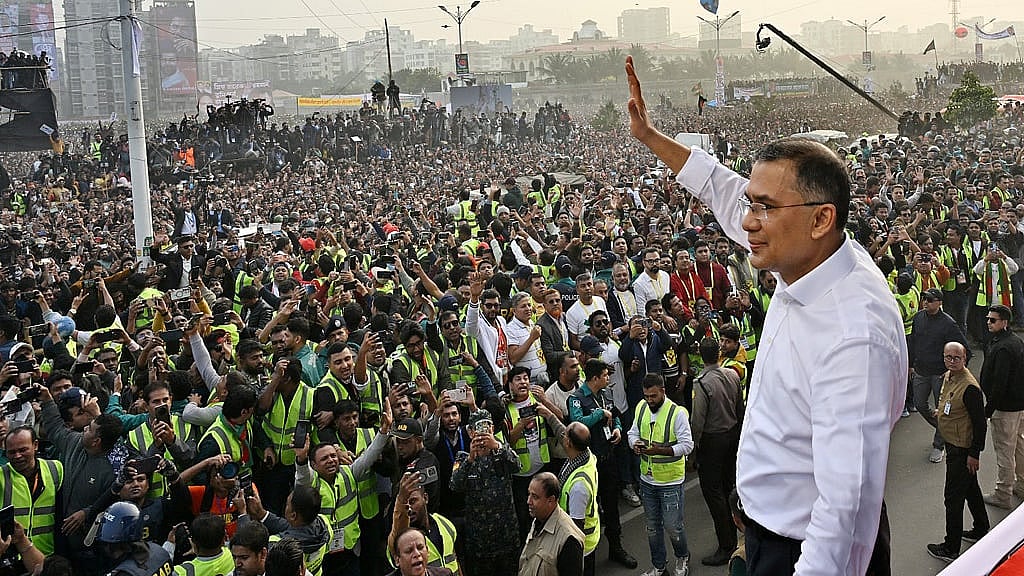
The parliamentary polls have created a new political theatre. In the Awami League’s absence, the BNP-led right-wing bloc now faces challenges and opportunities in a reconfigured ideological spectrum, which includes Islamic, centrist, and leftist parties. Acting chief Tarique’s return provides the BNP with both morale and strategic advantage.
Since 2008, Tarique’s return had been widely speculated but repeatedly delayed. A June meeting between Yunus and Tarique established a consensus: elections would occur in February 2026, confirmed by the Election Commission’s schedule.
Khaleda’s deteriorating health renewed urgency, prompting Tarique’s homecoming on Dec 25, accompanied by his wife and daughter. Amid nationwide celebrations, he announced: “I have a plan”, with 31-point proposals for state reform.
The BNP’s blueprint promises structural transformation: employment for a million unemployed, health and farmer cards, family welfare cards, and more. Jamaat’s alignment consolidates an 11-party coalition, though concrete implementation plans remain undeclared. The NCP leaders initially opposed coalition integration, with resignations from joint coordinators Tajnuva Jabeen and senior secretary Tasnim Jara. Student representative Asif Mahmud Shojib Bhuyain later joined the coalition, reflecting ongoing realignments.
Political analyst Prof Kazi Mohammad Mahbobor Rahman foresees ideological polarisation: “The BNP’s allies will gravitate closer, creating a contest between an Islamic front and a nationalist, secular capitalist front. This will define the next election’s struggle.”
HADI KILLING AND PRE-ELECTION SECURITY FEARS
The day after the schedule for the election was announced, prospective Dhaka-8 candidate Sharif Osman bin Hadi was shot while campaigning on Dec 12. Gravely wounded, he succumbed to his wounds on Dec 18 in Singapore.
Hadi, a leading figure in the July Uprising, had founded the cultural platform Inqilab Moncho inspired by the movement. His assassination ignited fears, with rumours circulating that 50 prominent figures, including politicians, were on a “hit list”.
In response, Home Advisor Jahangir Alam Chowdhury told journalists: “Those at risk have already been assigned a bodyguard. Our DGFI, NSI, and SB agencies maintain lists identifying who is vulnerable. Many have bodyguards; some declined them.”
MOB VIOLENCE AND THE QUESTION OF ACCOUNTABILITY
Following Hadi’s death, the night of Dec 18 saw coordinated attacks on the offices of Prothom Alo and The Daily Star, including arson, looting, and vandalism. While attempting to rescue 28 staff trapped on the Daily Star rooftop after a fire was set below, News Editors’ Council President Nurul Kabir was assaulted.
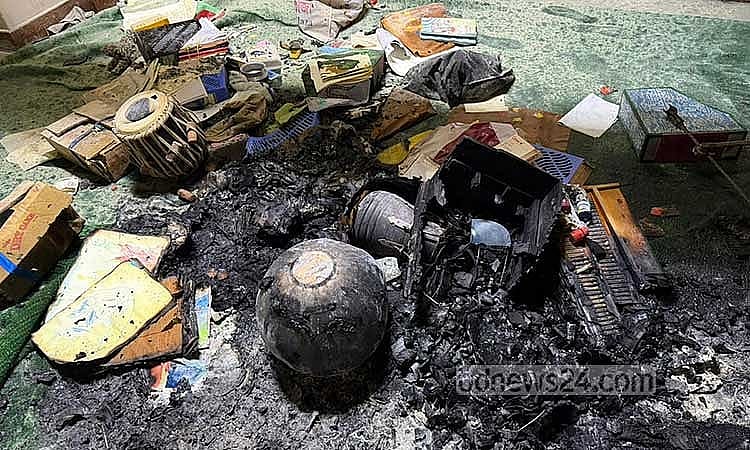
Traditional cultural hubs were also targeted. Dhanmondi’s Chhayanaut was subject to vandalism and arson, followed the next evening by a similar attack on Udichi’s central office on Topkhana Road. Across the country, authorities’ inaction enabled repeated “mob” assaults throughout the year.
Incidents included forced resignations branded as “collaborators with Awami fascism” and attacks following alleged violations of Shariah, such as the Sept 5 assault on Nural Paglar’s shrine. During that attack, a devotee named Russel Molla was killed. On Dec 18, the 28-year-old Hindu worker Dipu Chandra Das was beaten to death in Jamirdia, Bhaluka, and his body set ablaze by a roadside tree.
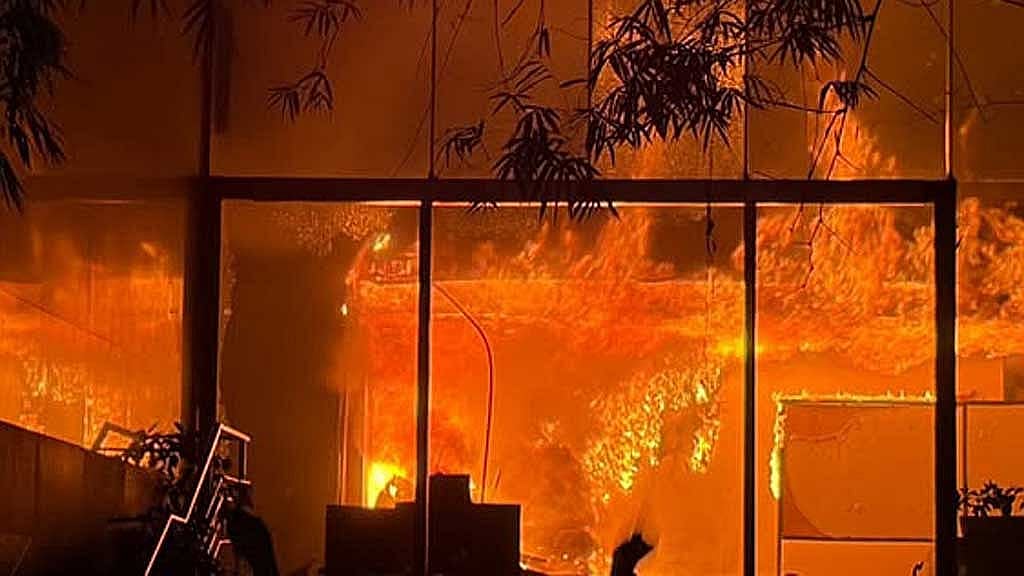
Attacks on mausoleums and cultural figures, including the arrest of Baul singer Abul Sarkar in Manikganj, shocked citizens. Editors’ organisations condemned the assaults as a “dark day for media”, joined by the UN Special Rapporteur on freedom of opinion and expression, Irene Khan, who attributed the attacks to government failure in protecting free expression.
Former IGP Muhammad Nurul Huda cautioned against dismissing these as mere “mob incidents”.
“This isn’t simply a spontaneous outburst. There’s a targeted pattern, using individuals ideologically committed to destruction to suppress other beliefs and cultural practices.”
Prof Shahaan observed the peak of “mob” fury on Dec 18-19, noting the uncertainty of how the interim government will address this burden going forward.
AWAMI LEAGUE: CORNERED AND CONSTRAINED
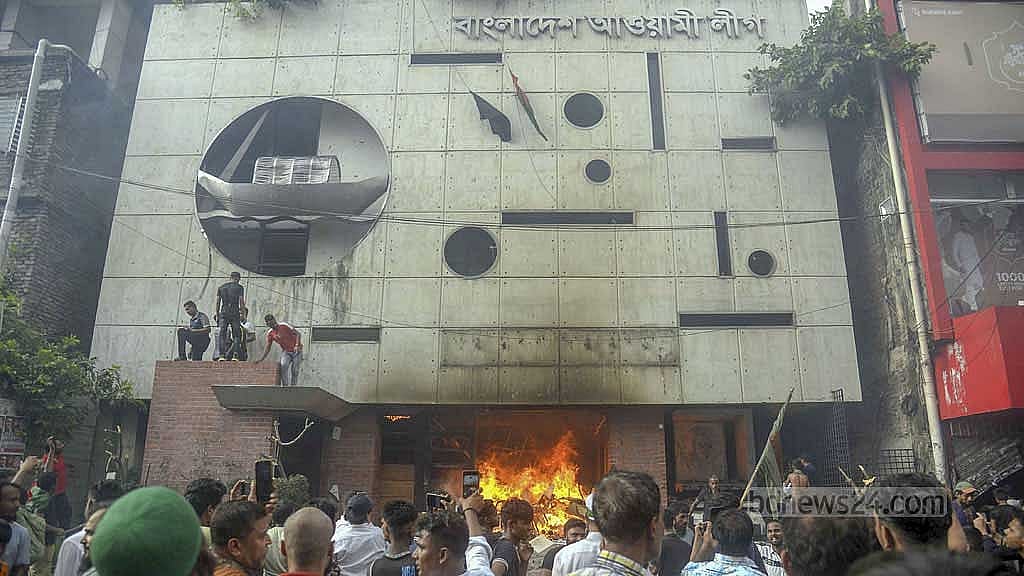
After the Aug 5, 2024 fall of the Awami League, their Dhaka headquarters at Dhanmondi 32 -- once Bangabandhu Sheikh Mujibur Rahman’s home -- was looted and torched. Six months later, on Feb 5, 2025, bulldozers demolished the property, citing provocative statements by Sheikh Hasina from India.
On Nov 17, the International Crimes Tribunal sentenced the ousted prime minister and party leader Hasina to death for crimes against humanity during the attempts to suppress the July Uprising.
In the face of the mass uprising, Hasina had fled to India, prompting formal requests for her return. Legal convictions also affected her family: son Sajeeb Wazed Joy and daughter Saima Wazed Putul received five-year jail sentences, while Sheikh Rehana was sentenced to seven years and daughter Tulip Siddiq, a UK MP, to two years.
With party offices shuttered and many leaders underground or detained, the government imposed restrictions on all Awami League activities from May 12, 2025, including the student wing, the Bangladesh Chhatra League.
Registration suspension by the Election Commission (EC) effectively barred the party from contesting. Despite restrictions, the party staged occasional protests and limited bombings, leaving questions about its future political viability.
ELECTION INCLUSIVITY IN SPOTLIGHT
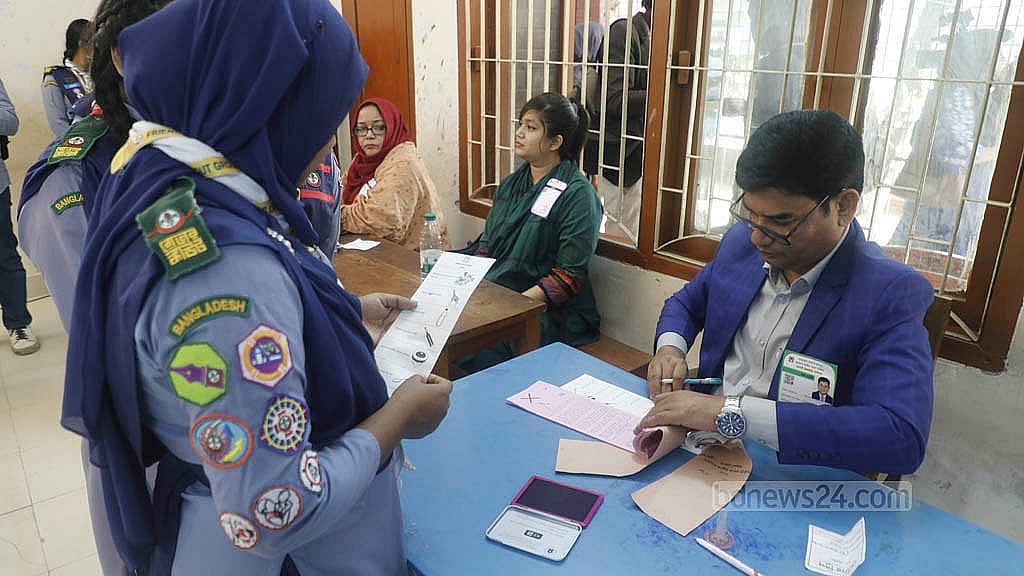
The Awami League’s absence left allied parties and the Jatiya Party cornered. Splits emerged in former autocrat Hussain Muhammad Ershad’s party: Anisul Islam Mahmud led a new National Democratic Front with 18 parties, while GM Quader’s Jatiya Party ran separately. Other coalition parties, including the Workers’ Party and JaSaD, withdrew, citing security threats after office attacks. The government explicitly barred the Awami League from participating.
In response, five US lawmakers wrote to Yunus, urging full participation of all parties to ensure a free, fair, and inclusive election. They warned that banning a major party risks disenfranchising millions and undermining fundamental rights. Signatories included representatives Gregory W Meeks, Bill Huizenga, Sydney Kamlager-Dove, Julie Johnson, and Tom Suozzi.
ECONOMIC RECOVERY: HOW FAR?
The 2024–25 GDP growth began at a modest 3.69 percent, the lowest since the COVID-19 crisis, impacted by unrest. Growth picked up slightly to 4.86 percent in Q3, then slowed to 3.35 percent in Q4. The World Bank forecasts 4.8 percent growth for 2025–26, aided by export recovery, remittance inflows, stable exchange rates, and easing import restrictions.
Yet inflationary pressures persist. Food inflation rose 0.28 percentage points in a single month. The July Uprising had driven overall inflation to a record 11.66 percent, temporarily curtailed by policy rate hikes to 8.17 percent by October, the lowest in 39 months.
Foreign reserves, at $32.57 billion as of Dec 18, recovered from $25 billion in August, supported by remittances and stable exchange rates. Capital equipment imports grew 6.1 percent between July–November, reversing previous negative trends.
Global uncertainties, such as US tariff fluctuations, impacted trade, though the supplementary reduction from 52 percent to 35 percent on imports provided some relief. Export earnings, however, fell 5.54 percent in November, and implementation of the Annual Development Programme lagged, with only 12.25 percent of allocations spent in the first five months. Revenue collection also lagged, with a deficit of nearly Tk 240 billion in the first five months, signalling a year-end gap of over Tk 1 trillion.
CPD Fellow Mustafizur Rahman summarised: “2025 began with significant challenges. While some positive trends emerged, many structural problems remain unresolved.”
WILL THE VOTE BRING RELIEF?
Political observer and election analyst Abdul Alim reflects on the country’s electoral history, noting that while the 12 past elections offered moments of legitimacy, the system was never firmly institutionalised. He recalls 1991 as a landmark turning point, but says the system has gradually reverted to old patterns.
Looking ahead, he suggests that the next vote could lay a more solid institutional foundation.
“Its significance is immense. Much will depend on those who assume power after this election, shaping the direction of reform and governance.”
Yet he laments that political divisions remain unresolved in the post-Uprising era.
“Personally, I am disheartened. The objectives of the July movement have not been fully realised. We have commissions, recommendations, agreements -- but these only establish a base. Change demands political will.”
He stresses that unity is essential to cultivate that will. Still, he expresses unease about the electoral process.
“In previous credible elections, a stable environment existed before and after the schedule announcement, and law enforcement maintained control. This year, violence is already evident. Such conditions naturally provoke fear among citizens and voters alike.”
BNP Secretary General Mirza Fakhrul Islam Alamgir underscores the election’s importance.
“This vote is critical from every perspective -- for the nation and its people. After past governments restricted voting, we now await a free, fair, and credible election.”
Jamaat-e-Islami deputy chief Syed Abdullah Mohammad Taher anticipates a smoother political climate once the year begins.
“With the new year, the election will fully commence. Political tolerance will improve, and the environment will be more conducive, ensuring a healthier post-election scenario.”
By contrast, Jatiya Party Secretary Shameem Haidar Patwary warns: “We expected the vote to illuminate a path forward, yet we are sinking further into obscurity. There is no level playing field, no coordination among law enforcement, and the state itself is fractured. The government remains indifferent to the nation’s problems.”
Communist Party of Bangladesh (CPB) President Kazi Sazzad Zahir Chandan calls on citizens to resist conspiracies by communal and extremist forces seeking to disrupt the election and destabilise the nation, emphasising the struggle to transform the political climate into a democratic one.
SHADOW OF UNCERTAINTY
Following the announcement of the parliamentary schedule on Dec 16, Chief Advisor Muhammad Yunus addressed the nation, stressing that the vote and referendum would determine Bangladesh’s future.
“The kind of state we aspire to depends on the referendum’s outcome. This vote will define the character, structure, and trajectory of a new Bangladesh.”
Prof Shahan, a member of the University Teachers’ Network and Citizen Coalition, highlights lingering uncertainties.
“Although progress has been made on reform, questions remain about public comprehension, participation, and political parties’ commitment. The July Charter left unanswered questions that the next parliament must resolve. We are moving toward transformation, but uncertainty shadows the process.”
With the Awami League absent, the NCP seeks to emerge as a third political force. Yet doubts persist over whether the BNP and Jamaat will prioritise ideology or revert to identity politics, continuing binary divisions.
“2025 is a year of attempted transformation. But behind it lies a shadow of uncertainty. The first step is ensuring peaceful elections with broad participation. The next challenge is implementing the reforms in state authority.
“And crucially, no group or individual must be allowed to infringe on others’ rights -- a responsibility the interim government has failed to uphold. Restoring this sense of state accountability is essential for democratic progress.”