Published :
27 May 2011, 12:22 PM
Updated :
10 Aug 2022, 04:52 PM
Dhaka, May 27 (bdnews24.com) – Anthrax strikes another north-eastern district of Bangladesh.
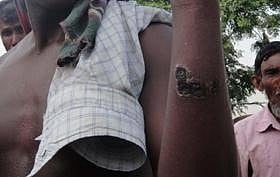
Sixteen people, including three children, have been found infected with the bacterium in Shahjadpur upazila in Sirajganj, a couple of weeks after this year's first outbreak was reported in Sathia, Pabna.
Local health officials say, the outbreak took place in Saratail village under Kayempur union council of the upazila.
Resident physician of Shahjadpur Upazila Complex Dr Abdul Awal told bdnews24.com that 16 people infected with anthrax were given treatment at the hospital over the last three days.
A three-member team of the livestock department rushed to the spot on Friday, bdnews24.com Sirajganj correspondent reports.
However, the director of Institute of Epidemiology Disease Control and Research (IEDCR) that oversees human infection urged people not to panic, instead be aware of the disease. He said doctors were better trained to manage anthrax infection. The infection in skin is not life-threatening if detected early.
Prof Mahmudur Rahman strongly recommended 'not to slaughter sick cattle.'
He said the organism passes on to the human while handling sick livestock, but person to person transmission does not occur.
Pabna, Sirajganj, Kushtia, Tangail, Meherpur, Manikganj, Satkhira, Lalmonirhat, Rajshahi, Narayanganj, Laxmipur, and Chittagong are the anthrax endemic districts.
Sirajganj Upazila livestock officer Altaf Hossain told bdnews24.com that a cow was slaughtered in the village on May 13, and those who processed the meat and consumed it got infected with anthrax.
He said cattle vaccination was underway in the district. Even a cheap vaccine can keep animals immune from the bacterium.
Experts suggest coordination between human health and livestock departments on 'one health approach' to stem such bacterial zoonoses.
The IEDCR director say people should know how to dispose of dead animals. They usually throw dead animals either into the water bodies or in the open field.
"That helps the bacterium stay on the surface," said Prof Rahman and urged all to bury dead animals after wrapping them with plastic.
The government officially started reporting human infection of anthrax in August 2009. The number of total infection was 610 before the Sirajganj outbreak.
The bacterium can survive in harsh conditions for even centuries in the soil. Cattle get infected while grazing during the rainy season when water brings the bacterium to the surface, experts say.
bdnews24.com/corr/skb/nih/nir/2011h