Published : 21 Aug 2026, 01:18 AM
Updated : 08 Sep 2026, 09:34 AM


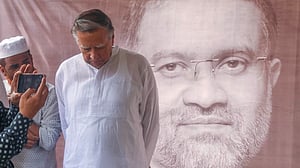
BNP Secretary General and Local Government Minister Mirza Fakhrul Islam Alamgir has been elected Bangladesh’s 23rd president, securing 255 votes in the election.
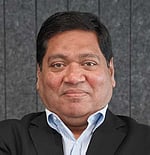
His rival Oli Ahmed, the candidate backed by the Jamaat-e-Islami-led 11-party alliance, received 88 votes on Thursday.
Fakhrul will succeed Mohammed Shahabuddin and move into Bangabhaban after more than three decades of one-candidate presidential contests.
Acting Speaker Kayser Kamal will administer the oath to Fakhrul at Bangabhaban at 7:30pm on Friday.
Members of parliament cast their votes from 2pm to 5pm on Thursday, marking the first presidential election with multiple candidates since 1991.
The contest was required under the law because more than one candidate remained in the race.
The BNP, which formed the government after winning a two-thirds majority in parliament, nominated Fakhrul for the presidency.
His election had effectively been assured once his candidacy was declared valid, as MPs were not allowed to vote against their party’s nominee.
How the Vote Unfolded
Shahabuddin, who took charge as president under the Awami League government, resigned and left Bangabhaban on Jul 24.
The new presidential election came nearly four weeks later.
Lawmakers voted in a presidential election for the first time in three and a half decades on Thursday, with voting in the parliament chamber running from 2pm to 5pm.
This is the first time since 1991 that the presidential race featured more than one candidate, requiring the vote to be organised under the legal requirements of the Presidential Election Act.
The BNP, which formed the government with a two-thirds majority in parliament, had nominated Fakhrul as its candidate.
Once his candidacy was declared valid, it became certain that the BNP secretary general would move into Bangabhaban as the country's 23rd president, since lawmakers had no scope to vote outside their party line.
Voting formalities began at 2pm with a recitation from the Holy Quran.
Returning Officer AMM Nasir Uddin first walked lawmakers through the voting guidelines, after which balloting got under way.
Acting President Hafiz Uddin Ahmad cast the first vote, followed by Acting Speaker Kayser.
Leader of House Tarique then voted for BNP nominee Fakhrul, who cast his own ballot afterwards.
Leader of the Opposition Shafiqur Rahman voted at 2:19pm. Three boxes were set up to collect the ballot papers.
Once voting concluded, CEC Nasir announced the result around 5:30pm.
The premier congratulated the winning candidate Fakhrul in parliament, presenting him with a rose.
Bangladesh Television broadcast the opening formalities of the election live.
One of parliament's 300 seats had its candidacy cancelled, while 50 seats are held by lawmakers from reserved constituencies.
In total, 349 MPs in the 13th Parliament were eligible to vote in the presidential election, though only 343 ballots were cast.
From Grassroots to Bangabhaban
Fakhrul rose through the ranks of BNP's grassroots to the party's top leadership, overcoming numerous setbacks along the way.
A steadfast fighter through years of crackdowns under Awami League rule, Fakhrul served as the party's field commander through its toughest years.
In a Bangladesh transformed by 2026 July Uprising, he now becomes "Your Excellency" at Bangabhaban.
A believer in leftist politics during his student years, Fakhrul has served as BNP's secretary general for a decade and a half.
Having entered politics from teaching four decades ago, he brings experience spanning local government bodies to key central government ministries.
He is also widely regarded as a "gentleman politician".
As an economics student at Dhaka University, Fakhrul joined leftist politics, becoming a member of the East Pakistan Students Union, the student wing of the East Pakistan Communist Party, in the 1960s.
He was elected general secretary of the organisation's Dhaka University SM Hall unit.
Rising through different tiers of the Students Union, he became president of its Dhaka University unit during the 1969 mass uprising against Ayub Khan, and was jailed for his role in the movement.
After completing his Bachelor's and Master's degrees in economics, Fakhrul joined teaching, taking up a lecturer's post in the economics department of Dhaka College under the education cadre in 1972.
He later taught at several government colleges.
Fakhrul also served as deputy director at the Bangladesh government's Directorate of Inspection and Audit, and worked with the UNESCO National Commission.
In late 1979, he joined the administration of president Ziaur Rahman as personal secretary to the then deputy prime minister SA Bari.
He left government service in 1986 to enter full-time politics, and was elected chairman of Thakurgaon Municipality in 1988.
Following His Father into Politics
Fakhrul was born on Jan 26, 1948, in Kalibari of Thakurgaon town.
His father was Mirza Ruhul Amin, and his mother was Mirza Fatema Amin.
Ruhul was a lawyer, a member of the Provincial Legislative Assembly of Pakistan and was elected to the parliament twice.
He was also a cabinet member in the HM Ershad government.
However, unlike his father, Fakhrul began his political journey with Abdul Hamid Khan Bhashani's party – the National Awami Party (NAP).
He joined the BNP in 1990 and became the president of the Thakurgaon district BNP unit in 1992.
Later, he became a member of the party’s executive committee, gradually rising to the position of senior joint secretary general.
He has served as BNP's acting secretary general since 2011, before being elected secretary general at the party's sixth national council in 2016, a post he held until Thursday's vote.
Before reaching the top tier of BNP's leadership, Fakhrul served for years as first vice-president, and later president, of the party's farmers' wing, Jatiotabadi Krishak Dal.
Over his long political journey, Mirza Fakhrul weathered the turbulence that followed the 1/11 political changeover.
He also kept BNP's struggle alive through relentless persistence during the ousted Awami League's long rule, a period marked by repeated crackdowns and repression against the party.
The then BNP chairperson Khaleda Zia spent nearly two years in jail from 2018 under Awami League rule, after which ill health kept her away from active politics.
With the party's then acting chairman Tarique based in London during the military-controlled caretaker government and leading from there, it fell to Fakhrul to steer the BNP on the ground in Bangladesh.
The BNP secretary general stood at the forefront of the movement against the Hasina government, continuing to build opposition to the Awami League in the face of the party’s crisis.
He has fought numerous cases and been jailed three times.
Path to Govt
Nearly a decade after joining the BNP, Fakhrul entered parliament from Thakurgaon in 2001.
He served as state minister for agriculture and civil aviation in Khaleda’s cabinet.
In the 2018 general election, he ran from Thakurgaon-1 and Bogura-6.
Though elected from Bogura-6, he refused to take his seat over nationwide allegations of vote-rigging, a rare move in the country's parliamentary history.
After winning from Thakurgaon in the February election, he was appointed to the local government ministry in Tarique's new cabinet.
His seat in parliament now sits next to the prime minister's, an honour several BNP leaders say reflects how he kept the party's flag flying through its leanest years.
Fakhrul's wife Rahat Ara Begum, who studied at the University of Calcutta, retired as a senior official at a private financial institution.
The couple have two daughters, Mirza Shamaruh and Mirza Safaruh.