Published : 12 Jul 2025, 09:04 AM
Updated : 28 Aug 2026, 01:22 AM


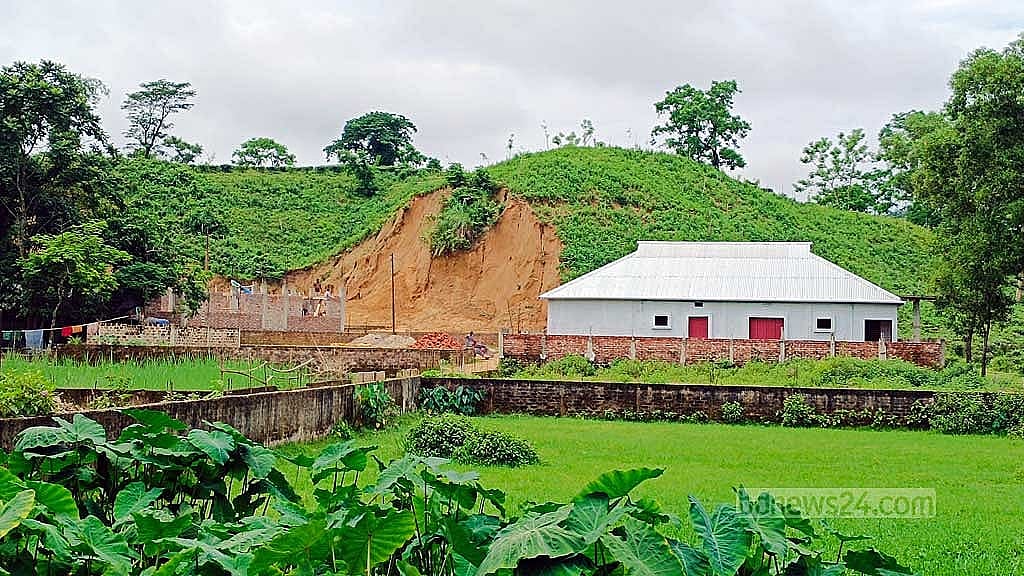
From a distance, Jahangirnagar village on the outskirts of Sylhet city appears idyllic, surrounded by a ring of small green hills.
But beneath the surface lies a grim pattern: illegal hill-cutting, risky settlements built on weakened slopes, and a mounting death toll from landslides.
According to data from the Bangladesh Environmental Lawyers Association (BELA), at least 17 people have died in landslides across Sylhet Division over the past three and a half years, primarily as a result of hill-cutting and hazardous living conditions on or near those slopes.
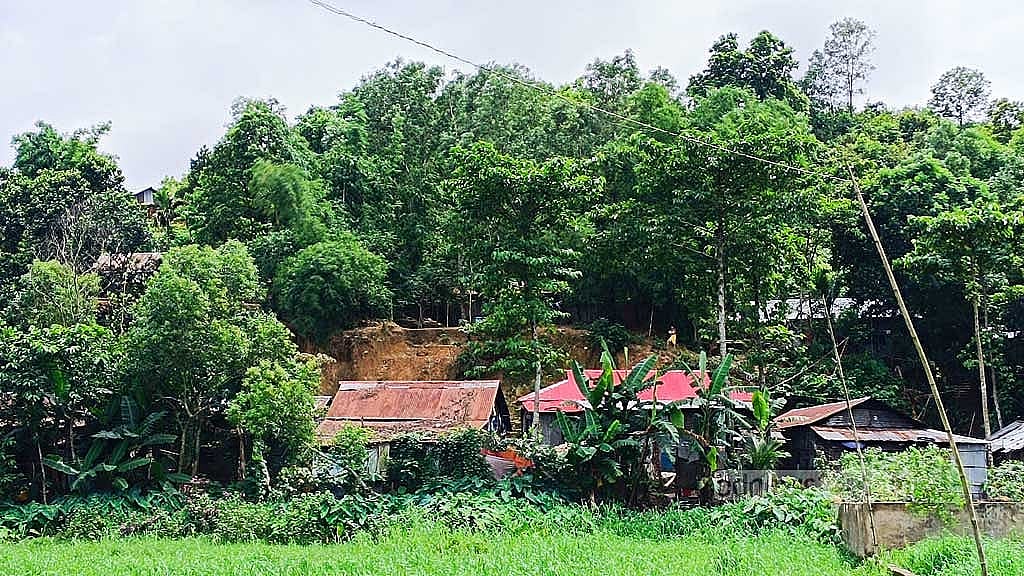
In Jahangirnagar, part of the Tukerbazar Union under Sylhet Sadar Upazila, dozens of semi-permanent tin-roofed houses have sprung up at the base of the hills. Most appear to have been built by levelling sections of the slopes, often by illegal means.
On one such hillside, a corrugated tin fence conceals what is happening within. From the outside, there is no sign of the activity inside. But a closer look reveals several men digging into the side of a hill with shovels.
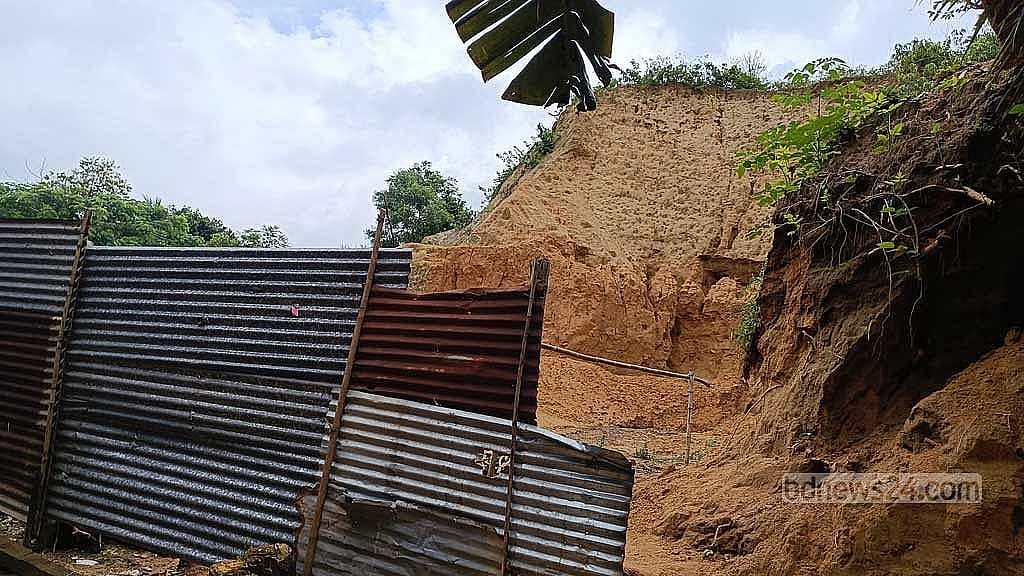
In the middle, they have hollowed out a pit. One of them explains the method, “We dig a hole in the middle so that rainwater collects there. The water seeps in, softening the soil. That makes it easier to cut. Then we sell the soil.”
Once cleared, the land is flattened and repurposed for housing. Environmentalists say this practice is dangerous, especially during the monsoon.
“When the soil is softened deliberately and then carved out, the risk of landslides multiplies,” one expert said. “Houses built nearby are at risk of being buried. It’s become a source of fear.”
Locals admit that the risk is real. Some residents said they fear staying in their homes at night during heavy rains.
“During the day, we manage. But on stormy nights, we go to stay with relatives,” one man said. However, few were willing to speak openly once they learned a journalist was present.
Sylhet's Tukerbazar Union Parishad Chairman Md Shafiqul Rahman acknowledged the risks.
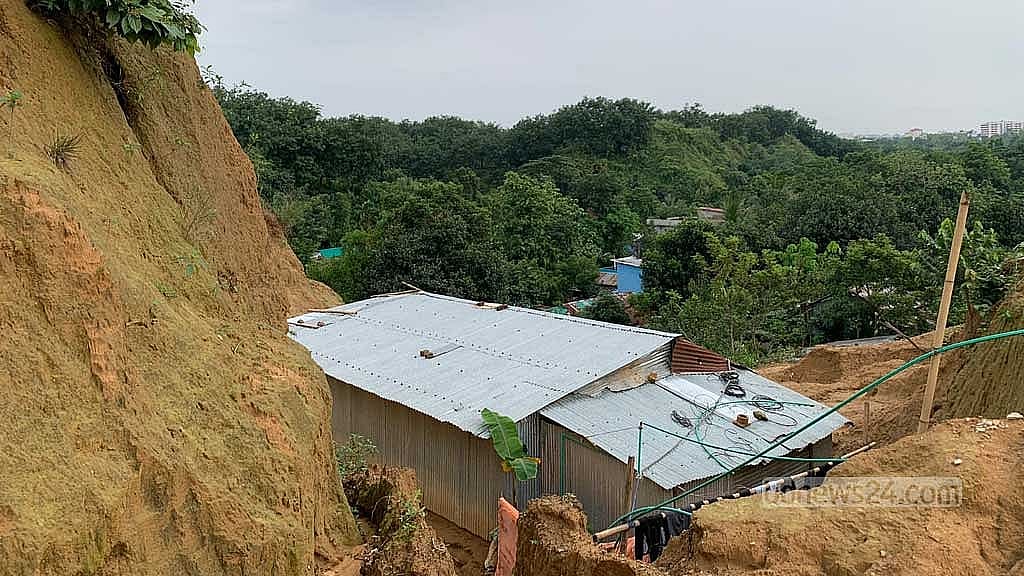
“Jahangirnagar is home to about 1,400 to 1,500 voters. As the population grows, people are increasingly settling on these hill slopes,” he said.
“We’ve used loudspeakers to warn people not to cut hills. But people have been living there for years.”
He claimed that while hill-cutting continues, it is no longer done for selling soil.
“Our union council is doing everything we can to stop it. But enforcement is up to the administration.”
Environmental groups dispute that claim. They say local authorities often turn a blind eye, or worse, collude in the destruction.
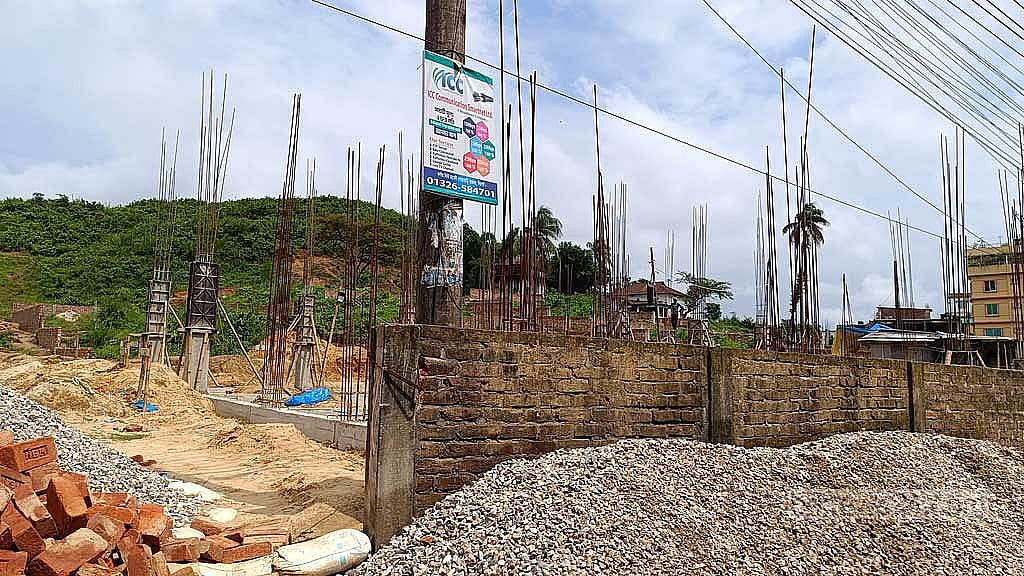
Hill-cutting in Jahangirnagar, they say, is typically accompanied by reclassification of land and lax oversight. Some of the soil is used for building new house foundations. In nearly every backyard, there’s a pile of dug-up soil.
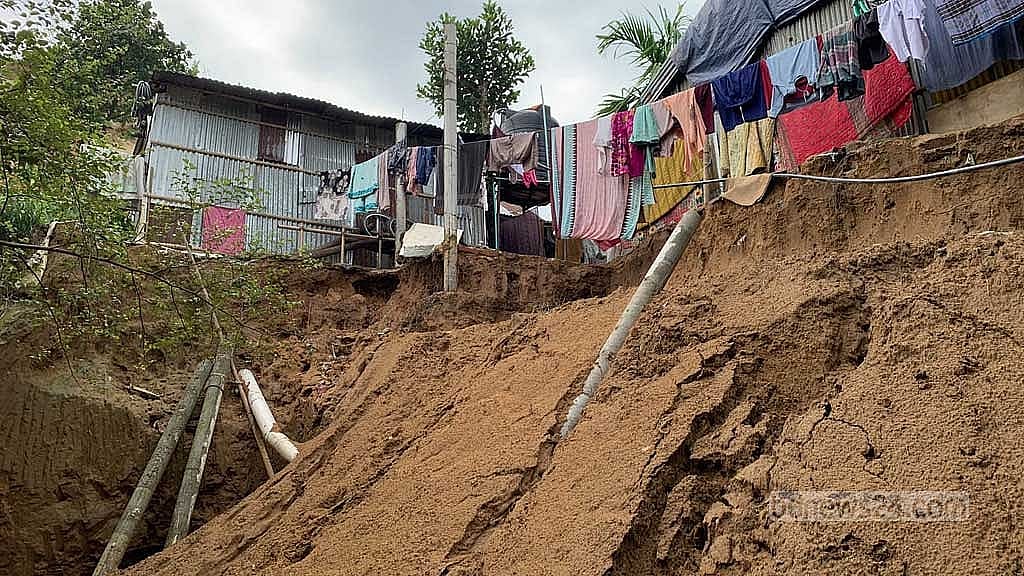
What’s more, residents are increasingly wary of strangers. Locals say they keep a close eye on unfamiliar faces and alert one another if outsiders are spotted. That fear reflects a deeper tension -- residents understand the illegality and danger of the practice, but feel trapped between poverty and risk.
Truckloads of hill soil are often transported at night to avoid detection. The scars left on the landscape remain as silent witnesses to a growing crisis.
LOW RENT OUTWEIGHS RISK FOR MANY
Surrounded by verdant hills and tea estates, Sylhet faces an increasing number of deaths caused by landslides each year.
Alongside the rising death toll, more and more people are living dangerously on hill slopes.
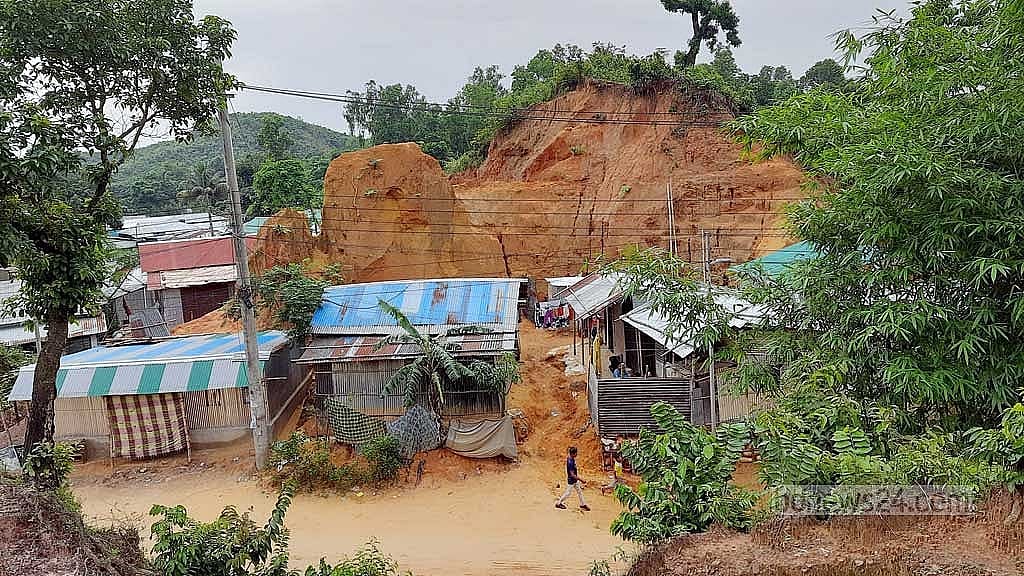
Yet, the dministration holds no precise data on the number of people residing in these high-risk zones.
Speaking to residents in hill-heavy areas, it emerges that an influential syndicate builds homes at the foot of hills to illegally cut or occupy the land, renting them out at low rates to the landless.
Drawn by cheap rents, low-income families end up living in what are effectively death traps.
The issue is not confined to Sylhet Sadar only; thousands are living at risk near hill slopes in Jaintiapur, Golapganj, Beanibazar, Gowainghat, and Companiganj Upazilas.
In the city, the number of people residing precariously near the base of hills has risen in areas such as Baluchar, Majortila, Pir Moholla, Khadimpara, Khadimnagar, Jonaki, and Islampur Monglirpar.
NO RECORD
Environmental groups estimate that at least 15,000 people in Sylhet district live in “hazardous” hill-slope settlements.
The district administration, however, only accounts for about 1,600 such families.
The most recent fatal landslide occurred on Jun 1 in Golapganj’s Lakshanaband, where four members of a sleeping family lost their lives.
On Jun 10 last year, a similar collapse in Majortila’s Chameli Bagh claimed the lives of three members of a family, including a child.
In another incident on Jun 6, 2022, four members of a single family were killed in a landslide in Jaintiapur’s Purba Satjani village.
Despite fatal landslides every year, the authorities do not compel residents to relocate, merely broadcasting warnings over loudspeakers, environmental activists allege.
According to the Sylhet District Relief and Rehabilitation Office, 386 families are currently living in risky conditions along 169 vulnerable hills and slopes.
A total of 169 hills have been identified as vulnerable.
In Golapganj municipality, seven families reside at the base of five hills, while in several unions within the Upazila, 88 families live at the foot of 71 hills.
Beanibazar Upazila has nine families living across nine hills.
In Kanaighat Upazila, three families live at the base of one of its 75 hills.
In Ghilachora union of Fenchuganj, 38 families live near 12 hills.
Bishwanath Upazila has six families at one hill site.
Khadimnagar in Sylhet Sadar has 70 families living along 25 hills, Khadimpara has 39 families at the base of 15 hills, and Tuker Bazar has 125 families residing near 20 hills.
The Relief Office notes that there are no human settlements on 27 hills in Zakiganj and Purba Jaflong in Gowainghat.
Sylhet’s District Relief and Rehabilitation Officer Md Abdul Kuddus Bulbul admitted that they do not have specific data on how many people are living in hill areas.
ONGOING SURVEY
Md Bodrul Huda, assistant director of the Department of Environment, Sylhet, said: “We’re conducting a survey. In wards No. 8, 35 and 36 under the city corporation, we’ve identified 500 families living on hills.
“The operation is ongoing. Whenever we receive a report of hill-cutting, we launch immediate action.”
Sylhet Deputy Commissioner Mohammad Sher Mahbub Murad also confirmed that they do not have accurate numbers on those living in hazardous hill areas.
He, however, said: “There are over 1,500 houses across hill regions in Sylhet. We will install warning signs in these risky zones to discourage settlement.”
Abdul Hai, chief coordinator of the environmental group Save the Heritage and Environment, said: “In a 2017 survey, we found that around 10,000 families were living dangerously at the base of hills across Sylhet.
“That number has since increased significantly.”
He added, “As hill-cutting increases, the number of people living in risky areas is growing ‘geometrically’.
“From our previous findings, it has increased by at least one-third. Large portions of hills have been removed to make room for housing, weakening the remaining land and leading to more deadly collapses during monsoon seasons.”
‘CONFUSION’ OVER HILL COUNT
Under Section 6(Kha) of the Bangladesh Environment Conservation Act, 1995, no person or institution --whether government, semi-government, autonomous, or private -- may cut or destroy hills or hillocks without authorisation from the Department of Environment.
Even with clearance, such actions may only be undertaken for unavoidable national interests.
Still, neither the environment department nor any other agency has definitive data on how many hills once existed in Sylhet and how many remain.
Data from the Bangladesh Environmental Lawyers Association (BELA) show that the 1956 cadastral land survey recorded 1,025 hills across six Upazilas in Sylhet.
In addition, three other Upazilas had several more hills.
At least 100 of these have since been fully or partially razed.
Breakdown from that survey includes:
· Sylhet Sadar had 199 hills
· Golapganj had 413
· Beanibazar 270
· Jaintiapur 98
· Gowainghat 44
· Companiganj one hill
Fenchuganj was recorded to have 251.8 acres, or 101.9 hectares, of land categorised as hill area, and some hills were also reported in Dakshin Surma and Kanaighat.
HILL-CUTTING
Bodrul confirmed that mobile court operations are regularly conducted to prevent illegal hill-cutting.
According to him, between November last year and May this year, seven cases were filed, implicating 30 people.
In addition, five people were fined a total of Tk 1.03 million for their involvement in hill-cutting.
ADMINISTRATIVE ACTION
Deputy Commissioner Mahbub said the administration is following High Court directives to prevent risky habitation in hill areas.
He added that since mid-May, they have been conducting awareness drives via loudspeakers and multiple eviction campaigns.
[Writing in English by Syed Mahmud Onindo and Sheikh Fariha Bristy]