


Published : 12 Feb 2022, 02:21 PM
Updated : 03 Aug 2022, 11:31 AM


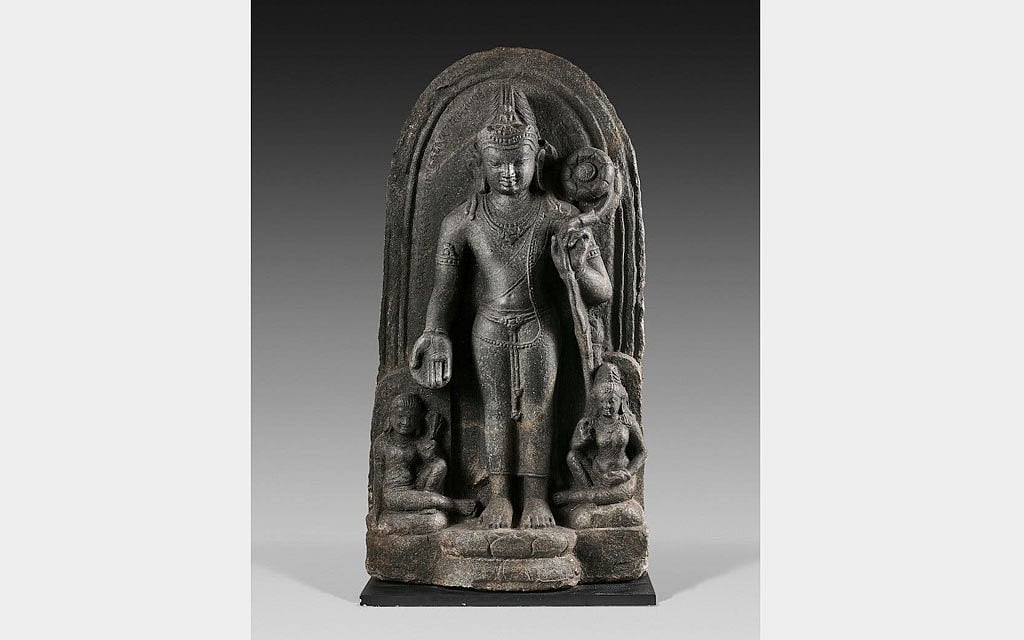
The stone sculpture, a nearly 1,200-year-old relic, was voluntarily surrendered by an Italian collector to the Consulate General of India in Milan on Thursday.
“The climate is changing for restitution,” said Christopher Marinello, a lawyer who specialises in tracking down looted and stolen art, who helped negotiate the statue’s return. “Collectors are being criminally charged worldwide and collections are being seized as more and more jurisdictions let it be known that it is unacceptable to possess looted and stolen art.”
Marinello tracked down the missing Buddha in partnership with Vijay Kumar, founder of the India Pride Project, a nonprofit organisation that works with the Indian government to retrieve looted artefacts.
Four years ago, Kumar was searching for the sacred sculpture when it appeared in the sales catalogue of a French dealer. He said this week that regulations in France protecting good-faith buyers of stolen artefacts made it difficult to act quickly. With only two weeks before the sale, Kumar did not formally request an inquiry into its provenance, which he said would have required him to notify Interpol and acquire police reports from when the idol was looted almost 20 years ago. But the statue didn’t sell and the trail went cold.
Marinello joined the case last year and located the object in an Italian collection. The owner of the Buddha, also known as an Avalokiteshwara Padamapani idol, voluntarily relinquished the object when presented with archival photographs showing it in the Indian temple. As a condition of the handover, officials are not disclosing the owner’s identity.
The statue depicts Buddha holding the stem of a blossoming lotus in his left hand, the Indian government said in a statement, with two female attendants below his feet. It was sculpted for the temple sometime between the eighth and 12th centuries. The temple is near Kurkihar, a village where a trove of more than 220 bronzes were unearthed in an archaeological dig in 1930. Most of those sculptures are now held in the Patna Museum in Bihar.
When it arrives in India, the sculpture will be sent to the Archaeological Survey of India in New Delhi for study.
Kumar and Marinello are among a growing number of citizen activists hunting for stolen antiquities on behalf of Asian countries. In December, the pair also retrieved a 10th-century goat head yogini statue from a garden in the English countryside.
“Repatriation of our rightful artefacts continues,” the Indian culture minister, G Kishan Reddy, said at the time.
The work never seems to end. “We are still scratching the surface,” said Kumar, who said he knows of thousands more looted Indian artefacts. Nearly 250 artefacts were returned by US officials last year as part of an investigation into a looting ring that authorities say was operated by antiquities dealer Subhash Kapoor. Kapoor is currently jailed in India on smuggling and theft charges.
“Each successful return is a deterrent,” Kumar said. “Now criminals know that Indian art is no longer fair game.”
© 2022 The New York Times Company













