


Published : 22 Sep 2013, 08:42 PM
Updated : 09 Aug 2022, 11:08 AM


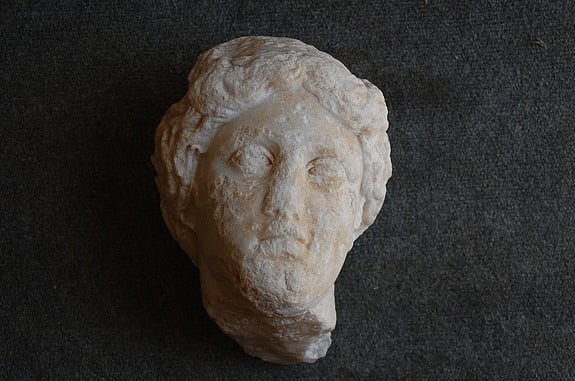
A group of archaeologists made the finding while uncovering an ancient pool-side mosaic at Antiochia ad Cragum (Antioch on the cliffs) on the Mediterranean coast, reports LiveScience.
The goddess of beauty, found lying face-down, has some chipping on her nose and face being buried for hundreds of years. Researchers believe the head was separated from its body long ago.
Researchers think the discovery could shed light on the extent of the Roman Empire's wide cultural influence at the time of its peak.
They believe the region, dotted with hidden inlets and coves, would have been a haven for Cilician pirates — the same group who kidnapped Julius Caesar and held him for ransom around 75 BC.
Expansion of the Roman occupation had put an end to the pirates' reign.
According to researchers, the city was officially established around the time of Emperor Nero and flourished during the height of the Roman Empire.
The excavators had been looking for more parts of the largest Roman mosaic ever found in Turkey: a 1,600-square-foot (150 square meters) marble floor elaborately decorated with geometric designs, adorning a plaza outside a Roman bath, the report said.
Traces of lime kilns have been found near the site, suggesting many statues and hunks of stone would have been burned to be reused in concrete.
Excavation's Director Michael Hoff believes the presence of an Aphrodite sculpture suggested that Greek and Roman influence had become mainstream in far-flung cities like Antiochia ad Cragum in the first and second centuries AD.
He said Aphrodite's head is the first fragment of a monumental statue they have found at the site over eight years of digging.
"We have niches where statues once were. We just didn't have any statues," Hoff, an art historian at the University of Nebraska-Lincoln, was quoted as saying in a statement.
"Finally, we have the head of a statue. It suggests something of how mainstream these people were who were living here, how much they were a part of the overall Greek and Roman traditions," he said.













