


Published : 09 Nov 2020, 07:10 PM
Updated : 17 Oct 2022, 11:15 AM


How do you begin to express that understanding, embody the city shining on a hill? For the next four years, that will be part of the job.
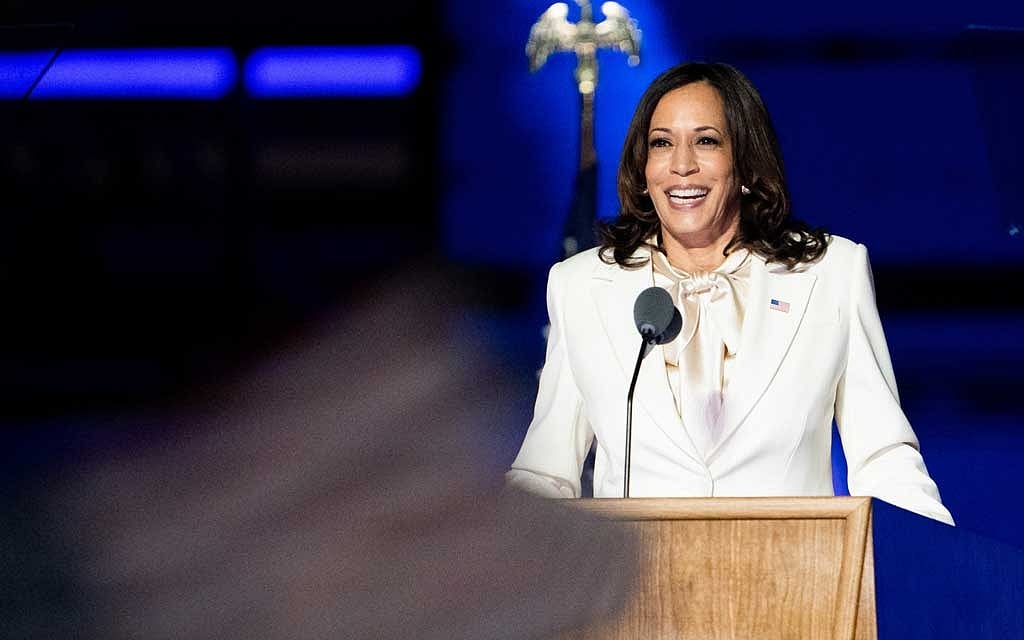
She said it — “while I may be the first woman in this office, I will not be the last” — and she signalled it, wearing something she had not worn in any of her moments of firsts since she joined Joe Biden as his No. 2 (or, indeed, in the months before when she was running for the Democratic nomination herself): a white pantsuit with a white silk pussy-bow blouse. The two garments have been alternately fraught and celebrated symbols of women’s rights for decades, but which over the last four years have taken on even more potency and power.
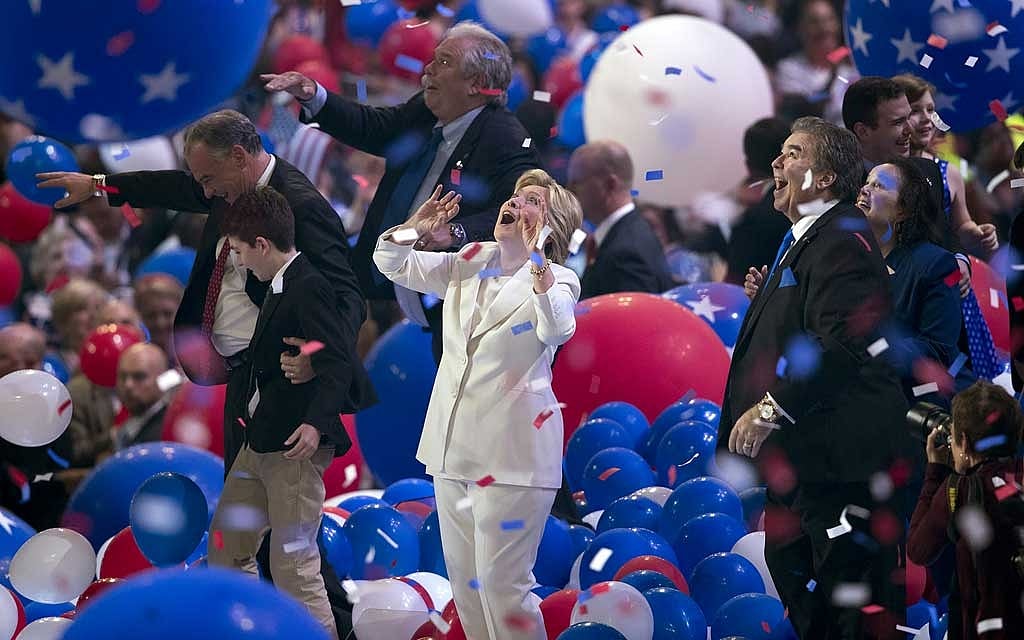
The white pantsuit: a nod to the struggle to break the final glass ceiling, stretching from the suffragists through Geraldine Ferraro, Hillary Clinton, Nancy Pelosi and the women of Congress. A garment in a colour meant, as an early mission statement for the Congressional Union for Woman Suffrage published in 1913 read, to symbolise “the quality of our purpose.” Latterly redolent with frustration; now, finally, transformed into a beacon of achievement.
Hillary Clinton looks up as balloons come down after she accepted the Democratic Party’s presidential nomination, at the Democratic National Convention in Philadelphia, Jul 28, 2016. Stephen Crowley/The New York Times
Now, again, reclaimed.
The point was not who made the clothes; it wasn’t about marketing a brand (though, on the subject of “building back better,” the suit was by Carolina Herrera, an American business). The point was that to wear those clothes — to make those choices — on a night when the world was watching, in a moment that would be frozen for all time, was not fashion. It was politics. It was for posterity.
And it was the beginning of what will be four years in which everything Harris does matters. Obviously, what she wears is only a small part of it. But in her first-ness, in her ascent to the highest realms on power, she will become a model for what that means. How, as a woman, as a Black woman, you claim your seat at the highest table. Clothes are a part of that story. In some ways, they are how those at faraway tables connect to it.
Yes, what Biden wears matters, too. His aviators have become practically his doppelgänger; the blue tie he wore Saturday night, representative both of his party and the blue skies to (they hope) come. Presidents have always used clothing as part of their political toolbox. John Kennedy distinguished himself from the generation that came before by opting for single-breasted suits instead of the more formal double-breasted styles favoured by Roosevelt and Truman.
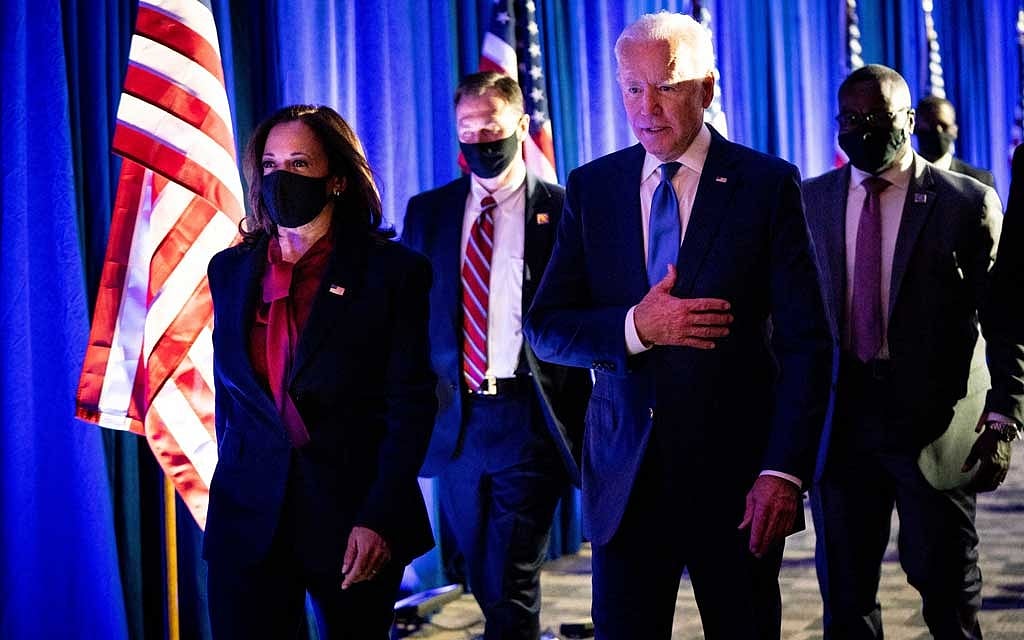
Joe Biden, then the Democratic presidential nominee, alongside his running mate Sen Kamala Harris (D-Calif), leave the stage after giving an address in Wilmington, Del, Nov 6, 2020. Erin Schaff/The New York Times
But what Harris wears, and will wear, could matter more. Why should we pretend otherwise?
(A website, WhatKamalaWore, has already sprung up to keep track.)
As Dominique and François Gaulme wrote in the 2012 book “Power & Style: A World History of Politics and Style,” clothing, from its earliest origins, was developed “to communicate, even more clearly than in writing, the social organisations and distribution of political power.”
And when the person possessed of that power is a pioneer, when she is defining a new kind of leadership, understanding those lines of communication and how to employ them is key. Not because she is a woman, but because she will be the first female vice president.
Hillary Clinton came to understand this, over a career in which at first she seemed to dismiss fashion and then, as first lady, to resent it, before finally embracing it as a useful tool.
It began when she joined Twitter in 2013 with a biographical note that included the descriptors “pantsuit aficionado” and “hair icon,” along with “FLOTUS,” and “SecState.” When she started her Instagram account in 2015, her first post was a photo of a clothing rail with an assortment of red, white and blue jackets and the caption “Hard choices.” During an Al Smith dinner before the 2016 election, she joked that she liked to refer to tuxedos as “formal pantsuits.” She weaponised her clothing as necessary.
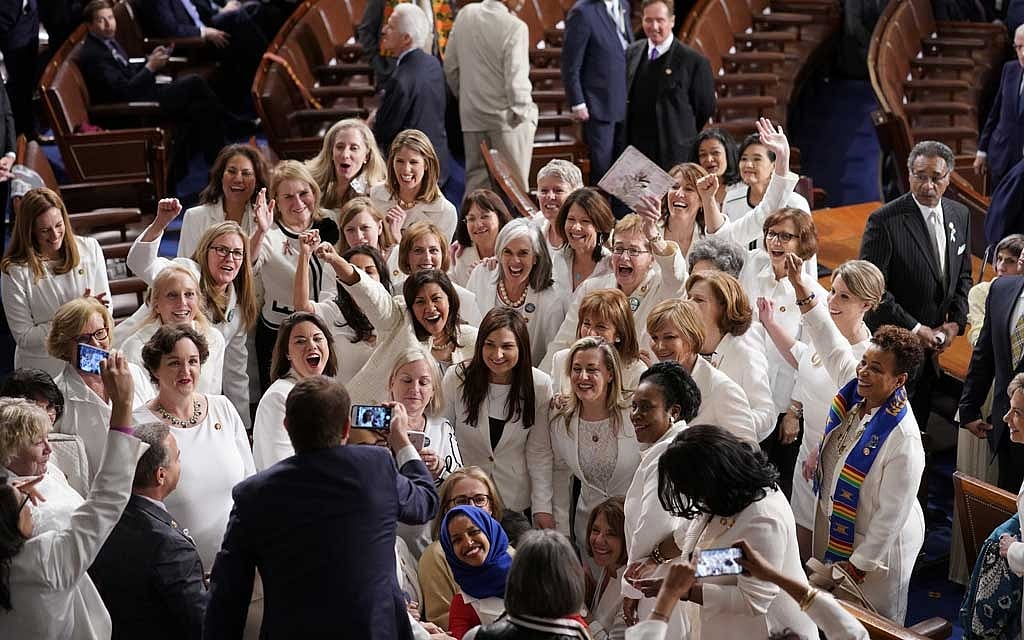
House Democratic women wearing white, the colour of the suffrage movement, pose for a group photo before the start of President Donald Trump's State of the Union address at the Capitol in Washington, Feb 5, 2019. Erin Schaff/The New York Times
Though Harris has been lauded for her love of Converse (and talked about her Chuck Taylors more than any other item of clothing), and for her Timberlands, when it comes to professional situations, she has usually favoured a uniform of dark colours — black, navy, burgundy, maroon, gray — with matching shell blouses, pumps and pearls. Those were the suits she wore at the Democratic National Convention and at the debates.
Often they were by New York designers (Prabal Gurung, Joseph Altuzarra), but they never looked overly fashion. They looked serious, prepared, no-nonsense. She even wore a black suit to the 2019 State of the Union, when many of her fellow congresswomen had banded together to wear white.
So her choice, this time, to finally join that tradition could not have been an accident. (Her two young grandnieces, one of whom had recently featured in a YouTube video talking about her desire to be president, also wore white.) It was deliberate. Not to credit that is to give her less credit than she is due.
Perhaps, rather, it is a signal of what to expect. That she will go on as she has, with practical, elegant suits that don’t get in the way of her day or require much response from the peanut gallery. (We, in turn, can get back to Kimye.) That the details — the pearls, the pumps, the sneakers — will matter. And that then, every once in a while and when the situation and theatre calls for it, she will deploy a sartorial surgical strike that hits everyone where it counts.
© 2020 New York Times News Service










