Published : 20 Sep 2026, 02:13 PM
Updated : 20 Sep 2026, 02:13 PM


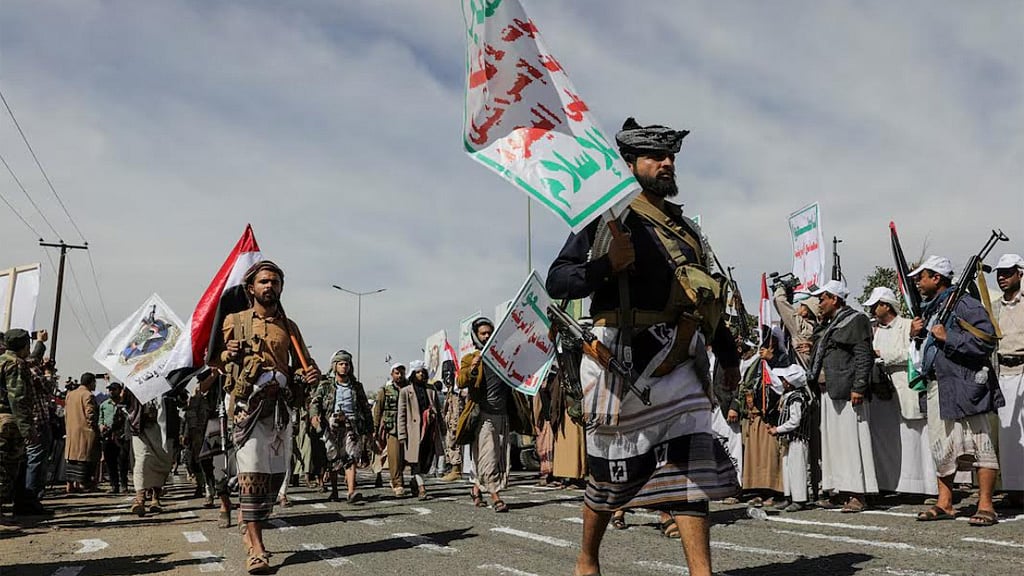
The Houthis began as a religious revival movement in Yemen’s rugged northern highlands. Three decades later, they control the capital, possess ballistic missiles and long-range drones and have demonstrated an ability to disrupt one of the world’s most important shipping routes.
Their latest battlefield gains have underlined just how far that transformation has gone.
In September, Houthi forces swept through Yemen’s southern Red Sea coast, taking the port of Mocha and the remaining coastline and islands held by their opponents. The advance put their forces along the Yemeni shore of Bab el-Mandeb, the 19-km-wide strait linking the Red Sea with the Gulf of Aden.
Bab el-Mandeb is a major chokepoint on the shipping route between Asia and Europe through the Red Sea and Suez Canal, meaning control of territory along its shores gives the Houthis greater ability to threaten international trade passing through it.
But the Houthis did not begin as the regional military force they are today. Nor were they simply created by Iran, as some of their opponents have portrayed.
So where did they come from, how did they take control of much of Yemen, and what role did Iranian support play in their rise?
From Religious Revival to Rebellion
The Houthis, formally known as Ansar Allah, emerged from Yemen’s Zaydi Shia community in the northern province of Saada.
Zaydism is a branch of Shia Islam with deep roots in northern Yemen and is distinct from the Twelver Shia tradition predominant in Iran. Zaydi imams ruled much of the north at different times for centuries before the imamate was overthrown in 1962.
The movement’s immediate roots lie in a Zaydi religious revival that developed in northern Yemen during the 1990s.
At its centre was the Believing Youth, a religious and educational movement that organised schools, study groups and summer camps to teach Zaydi beliefs to a new generation. It emerged as some Zaydis worried that their centuries-old religious tradition was losing ground after the fall of the imamate and amid the growing influence of Salafi teachings in northern Yemen.
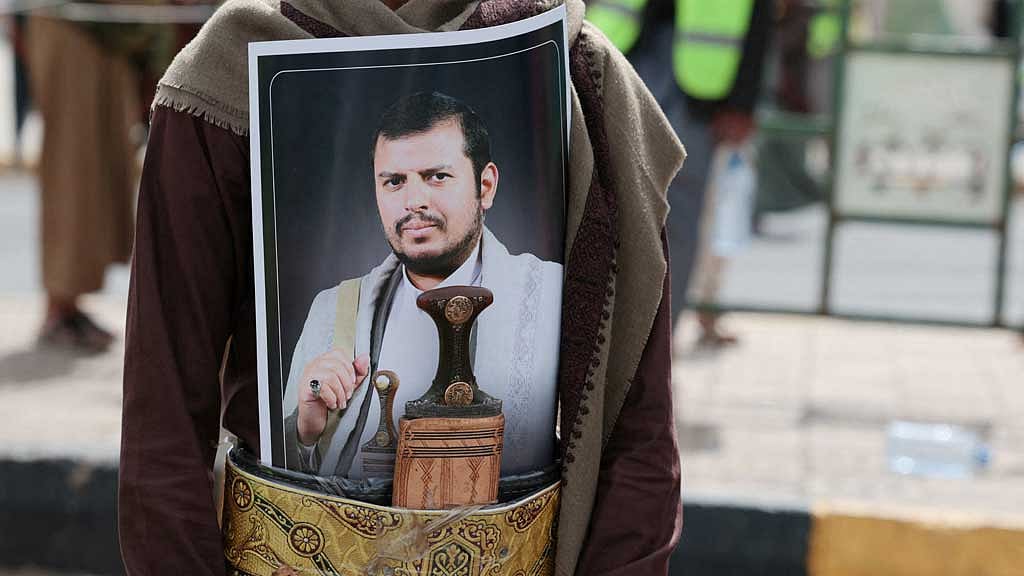
Hussein Badr al-Din al-Houthi, a cleric who served in parliament from 1993 to 1997, became one of the movement’s most prominent figures. The Believing Youth would eventually provide the nucleus for the movement that became known as the Houthis and later, formally, as Ansar Allah.
Tensions with President Ali Abdullah Saleh’s government intensified in the early 2000s. Government forces sought Hussein al-Houthi’s arrest in 2004, triggering fighting in Saada. He was killed that September.
His death did not end the movement.
Instead, six rounds of war between the Houthis and government forces from 2004 to 2010 transformed it into an experienced armed insurgency. Hussein’s younger brother Abdul-Malik al-Houthi eventually emerged as its leader.
The Arab Spring Opens the Door
Yemen’s 2011 uprising transformed the political landscape.
Saleh eventually handed power to his deputy, Abd-Rabbu Mansour Hadi, under a Gulf-backed transition plan.
The Houthis then participated in the National Dialogue Conference, a UN-supported process intended to negotiate a new political order after Saleh’s departure. The talks brought together 565 representatives from across Yemen and produced proposals for a new constitution and federal system.
But the transition faltered.
Houthi leaders opposed important elements of a subsequent proposal to divide Yemen into six federal regions, arguing that the arrangement would disadvantage their northern stronghold, including by limiting its access to the coast. At the same time, the Houthis were expanding their territorial influence as the central state weakened.
By September 2014, they had seized Sanaa.
Hadi initially remained president, but the political transition unravelled. In January 2015, Houthi forces seized the presidential palace and surrounded his residence. Hadi and his government resigned before he later escaped to Aden and withdrew his resignation.
The Houthi advance also relied on an extraordinary alliance.
They joined forces with military units loyal to Saleh — the same president whose government had fought six wars against them.
Saleh had retained considerable influence over sections of Yemen’s armed forces after leaving office, and both sides shared an interest in weakening Hadi’s government despite their history as enemies. Their partnership helped the Houthis expand southwards and illustrates why Yemen’s conflict cannot be reduced to a straightforward sectarian struggle between Shia and Sunni forces.
The alliance eventually collapsed. Houthi fighters killed Saleh in December 2017 after he broke with them.
Saudi Arabia Enters the War
As Houthi and Saleh-aligned forces advanced towards Aden in March 2015, Hadi appealed to neighbouring states for military intervention.
Saudi Arabia assembled a coalition and launched an air campaign, saying it was acting to restore Yemen’s internationally recognised government.
But the intervention also reflected a wider regional rivalry.
Saudi Arabia and Iran had competed for influence across the Middle East for years, backing different governments and armed groups in conflicts from Lebanon and Syria to Iraq. Yemen’s war was rooted primarily in its own domestic fractures, but the Houthi advance increasingly drew it into that broader struggle.
For Riyadh, the prospect of an increasingly Iran-aligned armed movement controlling much of Yemen meant a potential adversary was establishing itself along Saudi Arabia’s southern border. That concern grew as the Houthis developed the ability to strike Saudi cities, airports and energy infrastructure with missiles and drones.
The United Arab Emirates became another major coalition member, although Riyadh and Abu Dhabi increasingly backed different Yemeni factions.
The UAE developed close ties with southern forces, including the Southern Transitional Council (STC), which seeks to restore an independent South Yemen similar to the state that existed before north and south unified in 1990.
Years of war followed. Saudi-led air strikes hit Houthi-held territory, while the Houthis launched missiles and drones at Saudi Arabia.
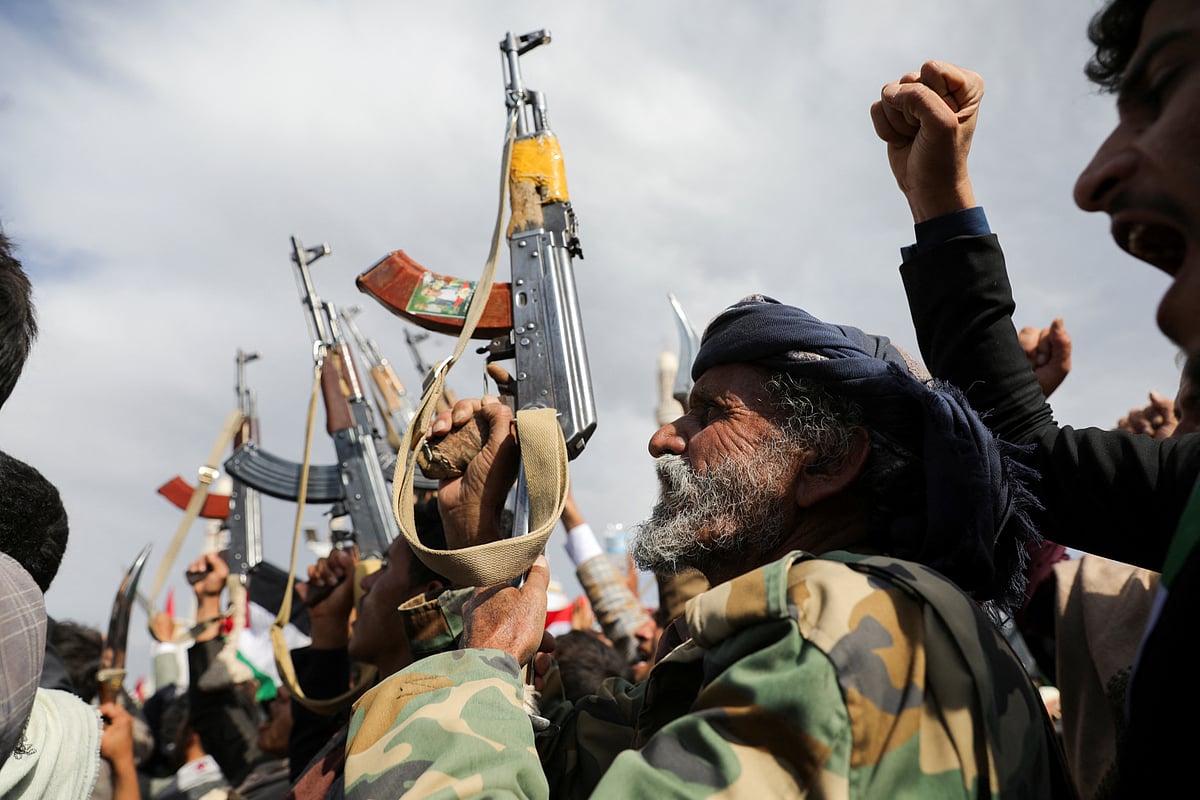
All parties to the conflict have faced accusations of serious abuses. Human-rights organisations have documented arbitrary detention, enforced disappearance, torture and other violations by Houthi authorities as well as government and UAE-backed forces.
A UN-brokered truce that began in April 2022 sharply reduced large-scale fighting. Although the formal agreement expired in October that year, it effectively froze the principal front lines without producing a comprehensive political settlement.
A 2023 rapprochement between Saudi Arabia and Iran helped create momentum for direct Saudi-Houthi talks, but the wider regional confrontation involving Iran has since eroded that détente. The Saudi-Iran agreement, reached under Chinese auspices in March 2023, was one of several regional factors that helped sustain the relative calm and supported talks between Riyadh and the Houthis in Sanaa.
That relative military stalemate lasted for several years before the latest offensive again dramatically shifted the battlefield.
What Role Did Iran Play?
The relationship with Iran is central to understanding the Houthis’ military transformation, but it is also frequently oversimplified.
The movement arose from Yemeni political and religious circumstances, and its rebellion against the central government began before its relationship with Tehran developed to its present extent.
For Iran, however, the Houthis became an increasingly valuable regional partner. Their position gives Tehran an ally on Saudi Arabia’s southern flank and close to Bab el-Mandeb, one of the world’s most important maritime chokepoints.
That gives Iran another way to exert pressure on regional rivals and, through the Houthis’ missile, drone and maritime capabilities, potentially influence shipping and energy flows far beyond Yemen. The relationship also fits into Iran’s broader strategy of cultivating allied armed movements across the region rather than relying solely on its own forces.
There is, however, substantial evidence of Iranian military assistance in the years that followed.
A 2025 UN Panel of Experts report said the Houthis had developed missile and drone technologies through a combination of technical assistance and domestic manufacturing. Investigators documented arms-smuggling networks and the seizure of drone equipment, engines, missile components and Iranian-made anti-tank missiles.
Iranian sources have also told Reuters that Tehran supplied its Houthi allies with weapons and military expertise, although Iran has officially denied arming the group in violation of the UN embargo.
The International Institute for Strategic Studies assessed in 2025 that while the Houthis had made significant advances in producing weapons domestically, they remained dependent on Iran for key technologies and advanced capabilities.
Analysts also say training from Iran and Hezbollah helped turn the movement into a more organised military force. UN experts reported the presence of Hezbollah missile and drone personnel with the Houthis and previously identified members of Iran’s Quds Force operating in Yemen.
The evidence therefore supports describing the Houthis as Iran-backed. But portraying them simply as an Iranian creation obscures their Yemeni origins, leadership and political ambitions.
From Yemen to the Red Sea
The war in Gaza marked another major change in the Houthis’ regional role.
From November 2023, they began attacking ships in and around the Red Sea and launching missiles and drones towards Israel, saying they were acting in solidarity with Palestinians and seeking to pressure Israel over its military campaign in Gaza.
But the pattern of attacks extended beyond vessels with clear Israeli links.
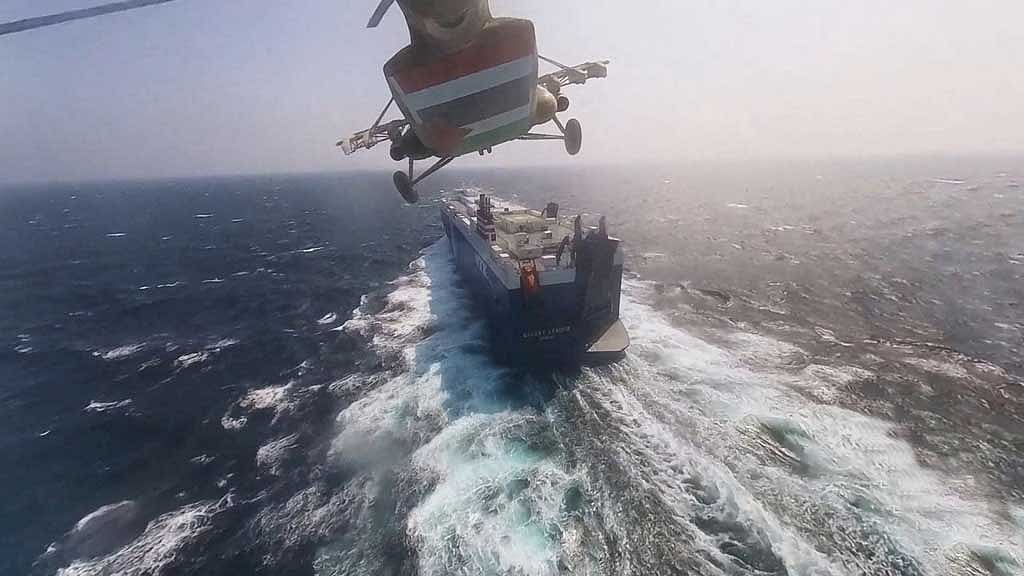
The campaign disrupted traffic through the Red Sea and prompted some major shipping companies to divert vessels around southern Africa, increasing journey times and costs.
The US and Britain responded with strikes on Houthi targets in Yemen, while Israel also carried out attacks after Houthi strikes directed at it.
The campaign demonstrated how dramatically the group’s reach had expanded. A movement that once fought Yemeni government troops around Saada could now threaten international shipping and fire weapons towards targets more than 1,000 miles away. In 2025, a Houthi ballistic missile struck the perimeter of Israel’s main international airport.
What are the Houthis Today?
Calling the Houthis simply “rebels” no longer adequately describes them.
They are an armed movement but also the de facto authority in Sanaa and much of northern Yemen, controlling territory containing a large share of the country’s population.
Their principal Yemeni rival is the internationally recognised Presidential Leadership Council (PLC), formed in 2022 after Hadi transferred his powers and nominally based in Aden. But the anti-Houthi camp remains divided among factions with different political objectives and foreign backers.
The Houthis’ military capabilities have grown alongside their political control.
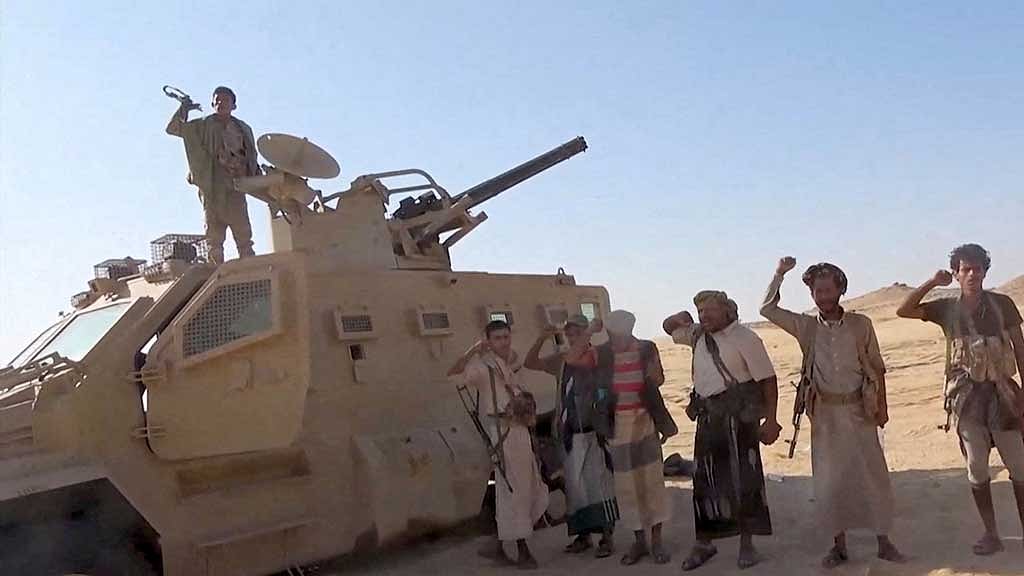
A 2025 UN Panel of Experts assessed the Houthi force at around 350,000 fighters, Reuters reported. The figure is an estimate rather than a current independently verifiable headcount, and the panel said the force had grown partly through the recruitment of people under 18.
The group operates ballistic and cruise missiles, attack drones and anti-ship weapons alongside more conventional military equipment. Some hardware has been captured from Yemeni opponents, while UN investigations have traced important components and technologies to overseas smuggling and Iranian assistance.
The Houthis now form part of what Tehran and its allies call the “axis of resistance” — a loose network of armed groups and political movements aligned with Iran across the Middle East — while retaining their own leadership, domestic power base and Yemeni political objectives.
That combination helps explain why attempts to defeat or contain them have repeatedly fallen short.