Published : 05 Aug 2025, 05:37 AM
Updated : 21 Aug 2026, 01:36 PM


Switzerland is ready to make a "more attractive offer" in trade talks with Washington, its government said on Monday, following a crisis meeting aimed at averting a 39 percent US import tariff on Swiss goods that threatens to hammer its export-driven economy.
The Federal Council - the country's governing cabinet -said it was determined to pursue discussions with the United States, if necessary beyond the Aug 7 deadline that US President Donald Trump has set for the tariff to come into effect.
"Switzerland enters this new phase ready to present a more attractive offer, taking US concerns into account and seeking to ease the current tariff situation," it said in a statement.
The statement said it was committed to securing fair treatment compared with its primary trading competitors, but did not give any details on what the Swiss government may offer. It was not currently considering any countermeasures, it added.
Switzerland was left stunned on Friday after Trump hit it with one of the highest tariffs in his global trade reset, with industry associations warning that tens of thousands of jobs were at risk.
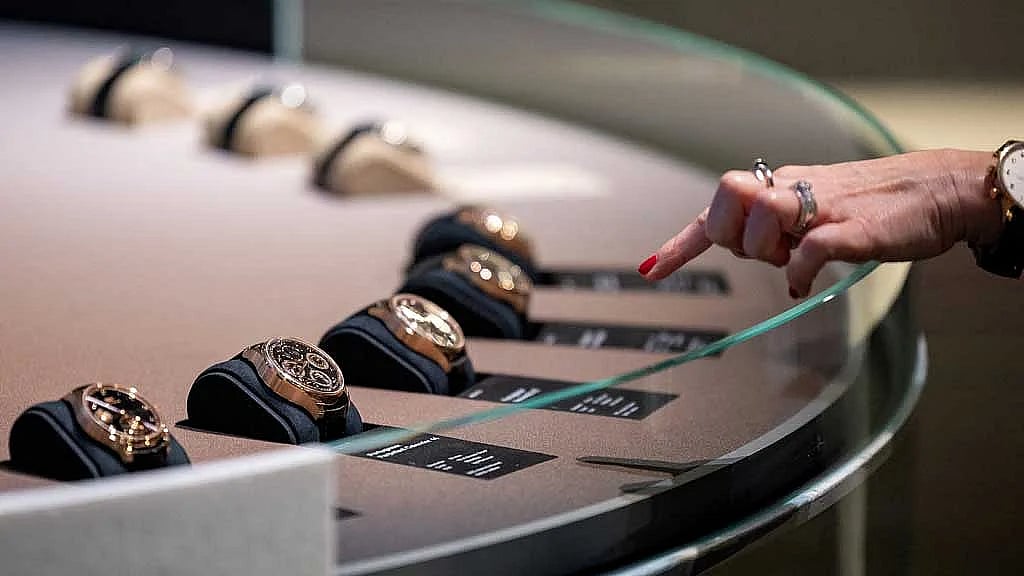
The duties are scheduled to go into effect on Thursday, giving Switzerland, which counts the US as its top export market for pharmaceuticals, watches, machinery and chocolates, a small window to strike a better deal.
The government declined to comment on whether Swiss President Karin Keller-Sutter would travel to Washington for more talks, as called for by some, including Nick Hayek, CEO of flagship Swiss watchmaker SwatchUHR.S.
The White House said on Friday it decided on the 39 percent import duty because of what it called Switzerland's refusal to make "meaningful concessions" by dropping trade barriers, calling the two nations' current trade relationship "one-sided".
Swiss industry leaders and politicians, however, have struggled to understand why the country was singled out.
Monday's statement pointed out that bilateral trade between the two nations has quadrupled in the past two decades, and Switzerland is now the sixth-largest investor in the United States.
"Switzerland unilaterally scrapped all tariffs on industrial goods as of Jan 1, 2024, meaning over 99 percent of US goods enter Switzerland tariff-free," it said.
Trump has stated he wants to rebalance global trade, claiming that current trade relations are stacked against the United States and are responsible for a$1.2 trillion US goods trade deficit.
Switzerland had a 38.5 billion Swiss franc ($48 billion) trade surplus with the US last year.
"The president (Trump) is really focused on the trade deficit, because he thinks that this is a loss for the United States," President Keller-Sutter told Reuters on Friday.
'DISTINCT DISADVANTAGE'
Bern's statement on Monday said the new tariff rate would apply to nearly 60 percent of Swiss exports to the US and "puts Switzerland at a distinct disadvantage compared with other trading partners with similar economic profiles".
The EU, Japan and South Korea, which have negotiated 15 percent tariff rates with Washington, all have larger trade surpluses with the US - around $235 billion for the EU, $70 billion for Japan, and a nearly $56 billion surplus for South Korea.
Swiss Business Minister Guy Parmelin, who over the weekend said the government was open to revising its offer, said options included Switzerland buying US liquefied natural gas or further investments by Swiss companies in the United States.
While the government appears focused on proposing a more enticing deal to Washington, some Swiss politicians have pushed for retaliation, including calls to scrap 6-billion-franc deal to buy F-35A Lightning II fighter jets from the United States.
The new tariff rate - up from an originally proposed 31 percent tariff that Swiss officials had already described as "incomprehensible" - would deal a major blow to Switzerland's economy.
Swiss economic output would be reduced by 0.3 percent to 0.6 percent if the 39 percent tariff was imposed, said Hans Gersbach, an economist at ETH, a university in Zurich. That figure could rise above 0.7 percent if pharmaceuticals, which are currently not covered by the US import duties, are included.
Prolonged disruptions could shrink Swiss GDP by more than 1 percent, Gersbach said.
The tariffs could also see the Swiss National Bank cut interest rates in September, according to Nomura.
An index of Swiss blue-chip stocks .SSMI was down 0.4 percent on the day, lagging the broader regional STOXX 600 index .STOXX, which rose 0.8 percent.
In Zurich, shares in high-end watchmakers such as Richemont CFR.S and Swatch fell in volatile trading. Richemont stock was last down 1.5 percent, having dropped as much as 3.5 percent earlier, while Swatch shares were down 1.8 percent, having fallen by as much as 5 percent.
On Monday, the Swiss franc CHF=EBS was the worst-performing major currency against the dollar, which was last up 0.4 percent at 0.8073 francs, not far off Friday's one-month highs.