


Published : 26 Sep 2018, 03:15 AM
Updated : 19 Oct 2022, 02:20 PM


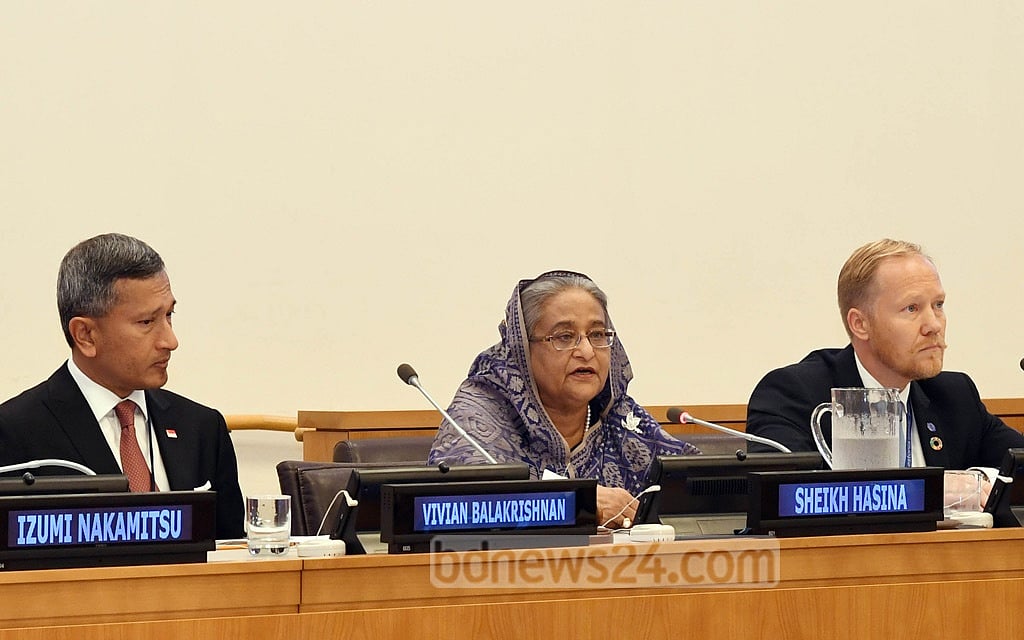
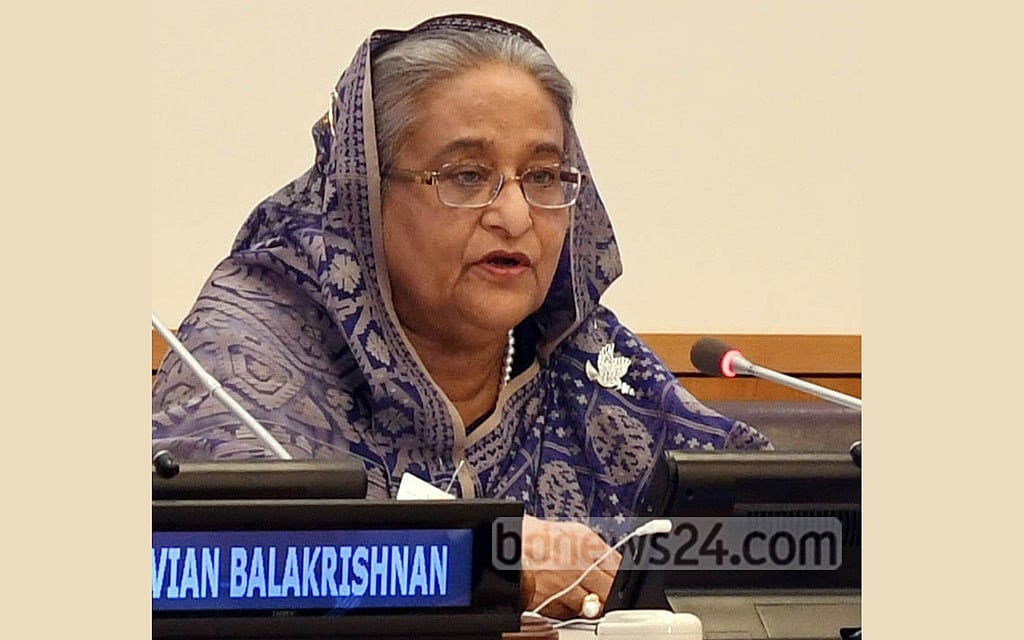
“UN can play a critical role in making the digital world safer. The work on norm-setting in information security should continue,” she told an event organised by the Permanent Mission of Bangladesh to the UN on cyber security and international cooperation.
Her ICT Affairs Adviser Sajeeb Wazed Joy also urged the UN to come forward to help small countries like Bangladesh prevent cybercrimes at the event on the sidelines of the UN General Assembly in New York on Tuesday.
Hasina alerted the world leaders to the abuse of ICT, which she said may pose serious threat to global peace and security as “cyber space has no physical borders”.
The capacity of states for securing IT was “far from even” while “terrorists and violent extremists are using it to spread their toxic narratives”.
The hard-earned gains in the ICT sector of the world needed to be secured as critical infrastructures around the globe were becoming regular target of cyberattacks, she said.
The prime minister emphasised identification of the actual source of wrongful activity on the internet, which she said remained a challenge for developing countries. She called for access of the developing countries to the technologies and information to detect such evil or wrong activities.
Mechanisms so far used for cyber security should as well be made more inclusive and the question of rights and freedoms in cyberspace needed to be duly addressed, she said.
The norms and principles for responsible behaviour of the UN member states in cyberspace should receive “unconditional support”, she said.
“The principles of the UN Charter and relevant international law should apply to the cyber space. States must remain true to their commitment not to conduct or support any harmful cyber activity,” Hasina said.
International cooperation in capacity building for cyber security must be given priority, she said and added the development partners should consider this to be part of their internationally agreed commitments.
Bangladesh was working on building a complete cyber security eco-system, Hasina said. She mentioned the passage of the Digital Security Act by her government recently.
The government also formed a Cyber Security Incident Response Team to cooperate with other countries and a Digital Forensic Laboratory for training purposes, she said, adding that the process to form a National Cyber Security Agency was under way.
“We hope to keep learning from the experience of other friendly countries,” the prime minister said.
A high-level UN conference on cyber security can be an important building block for promoting a culture of cyber security at the UN and beyond.
“We must demonstrate our strong political resolve,” added Hasina, “to create a secure, stable, peaceful, inclusive and accessible cyber space for our future generations.”
Bangladesh could identify the problems but was unable to find a complete solution all the times, he said.
The country prevented attempts to hack many times but could not catch the hackers, he added.
Bangladesh being a small country could not solve the cyber heist of its central bank, which was linked to the SWIFT messaging system, Federal Reserve of New York and the Philippines, the prime minister’s adviser said.
He called for the UN’s interference in such cases.
UN Under-Secretary General and High Representative for Disarmament Affairs Izumi Nakamitsu, Singapore Foreign Minister Vivian Balakrishnan, Estonian Deputy Foreign Minister Paul Teesalu and Ambassador in Charge of Cyber Policy of Japan Masato Otaka spoke at the event.
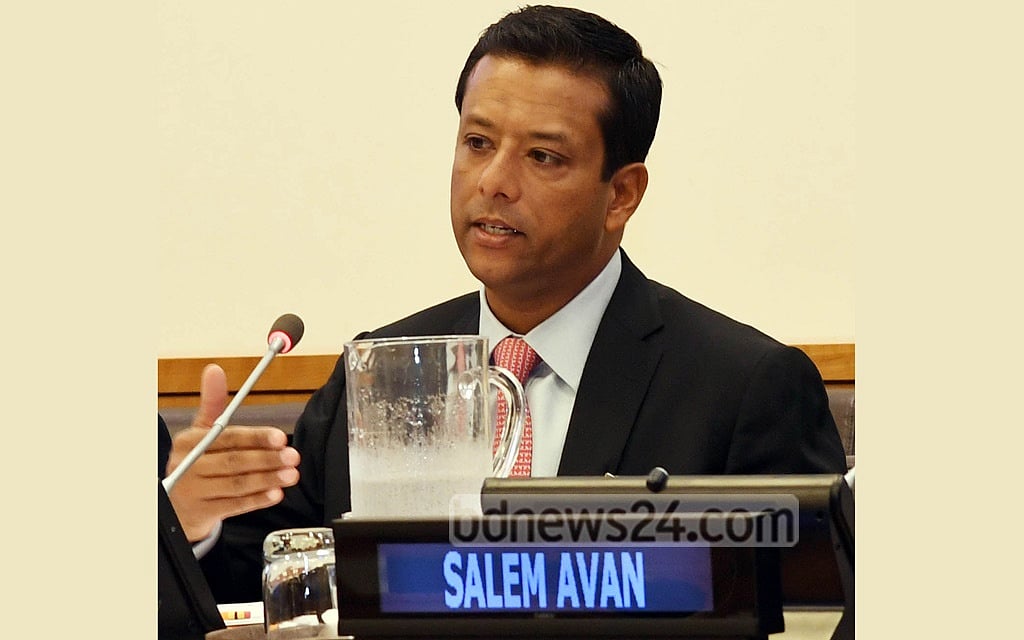
Besides Joy, the panellists were Salem Avan, Director of Global Services Division, UNOICT and Angela McKay, Senior Director, Cyber Security Strategy and Policy, Microsoft.
PM’s Energy Adviser Tawfiq-e-Elahi Chowdhury delivered the closing remarks at the event moderated by senior adviser of ICT4Peace Eneken Tikk.







