Published : 28 Sep 2026, 08:57 PM
Updated : 28 Sep 2026, 08:57 PM


Manchester City’s era-defining success has acquired a different shadow. The Premier League’s verdict found City guilty on substantially all charges, opening questions far beyond punishment.
The charges cover inaccurate financial information from 2009-10 to 2017-18, when City won three league titles, and non-cooperation from 2018-19 to 2022-23, when they won four more.
Another title followed in 2024, taking their tally to eight in 15 years.
The bigger uncertainty is whether rival clubs will pursue compensation after the case ends. The Athletic reported that claims worth hundreds of millions of pounds are now being discussed.
Arsenal, Manchester United, Liverpool and Tottenham have preserved their compensation rights under Premier League rule W, according to The Independent.
Under W.51.5, now W.64.5, an independent commission can order a rule-breaking club “to pay compensation unlimited in amount to any person or to any club”.
Burnley previously used the provision successfully against Everton.
Should damages stop in 2017-18, when the financial-information charges end, run through 2022-23 to include non-cooperation, or continue beyond that?
City’s financial gains underline the scale. Their wage bill was English football’s highest in eight of nine published seasons. Their heavily funded academy became a talent pipeline whose graduates generated sizeable sales, surpassed only by Chelsea’s player trading.
Related-party commercial deals helped fund expensive, highly paid squads.
Between 2009-10 and 2017-18, City collected £1.09 billion in Premier League and UEFA prize money, behind Chelsea’s £1.13 billion and Manchester United’s £1.105 billion.
Including the non-cooperation period, they led England; since Abu Dhabi’s 2008 takeover, their prize money across competitions has exceeded £3 billion.
City received £199 million in Premier League merit payments over those nine seasons, £13 million more than Chelsea.
Of the league’s £6.12 billion distributed among 42 clubs since 2009-10, City took £559.6 million, about 9 percent and more than any other club.
Television exposure also rose: City received £170 million in facility distributions from 2009-18, behind Manchester United (£180 million) and Liverpool (£175 million).
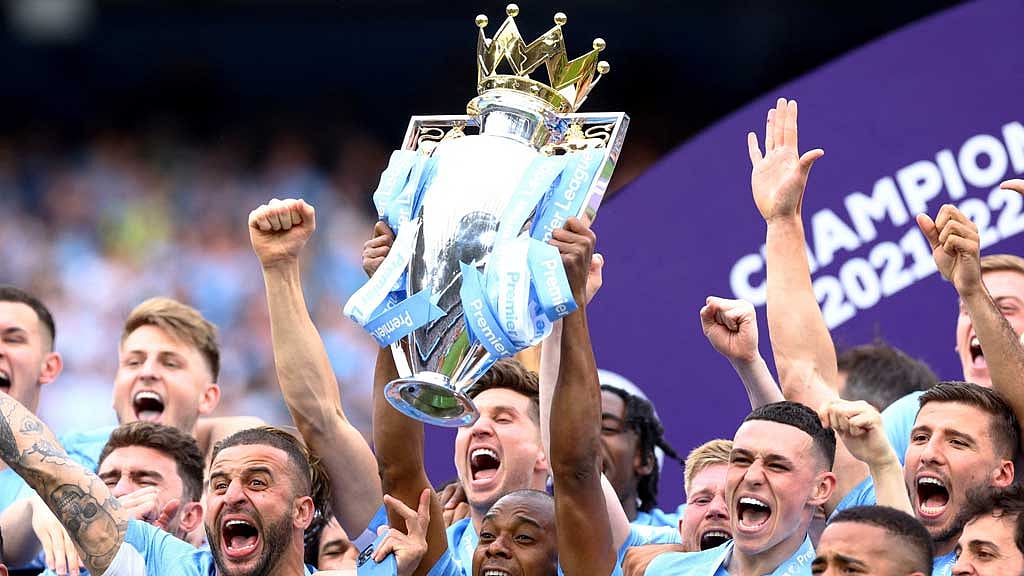
The consequences extend beyond title races. City qualified for the Champions League every season from 2011-12, including eight of the nine seasons covered by the main financial-information charges.
Tottenham missed out on Champions League qualification by one place four times, earning £28.8 million in Europa League money while City collected £141 million from the Champions League in those same seasons.
Across eight seasons from 2011-12 to 2018-19, clubs missing Champions League qualification by one place collectively earned £147 million in UEFA prize money; City earned £358 million.
Because UEFA rewards historical performance, repeated qualification compounds the advantage.
The Athletic estimates City were already entitled to more than £52 million this season before playing a Champions League match, a figure exceeded by only three clubs.
Potential effects reach further. Stoke City and Sunderland lost FA Cup and League Cup finals to City in 2011 and 2014. The Athletic also raises questions over player-remuneration charges.
One thought experiment illustrates the problem: remove City from every relevant season.
In 2011, Blackpool would have stayed up instead of Wolverhampton Wanderers. From 2009-10 to 2017-18, 42 clubs would have earned more merit money. Bolton would have climbed three places in 2010-11, gaining £2.3 million and raising revenue by 4 percent.
Extending the exercise to last season would relegate Tottenham rather than West Ham. Such counterfactuals are speculative; Blackpool’s owners extracted £27 million during and after that season.
Barcelona’s 2017 renewal with Lionel Messi eventually cost more than €500 million (£429 million/$568.5 million). City were linked with Messi that summer, though Pep Guardiola later denied they tried to sign him.
Barcelona might have negotiated differently without City’s financial power, but that cannot be proved.
The same uncertainty surrounds Leicester, who missed the Champions League in 2021 by one point and later fell to League One, and Aston Villa, whose 2025 sales came amid rule compliance.
City cannot be blamed for every rival’s decisions or for football’s wage inflation: Roman Abramovich’s Chelsea, Qatar-owned PSG and Premier League clubs generally also shaped the market.
Yet the wage figures remain stark. During the nine seasons covered by the financial-information charges, City spent £1.94 billion on wages, more than £100 million above any other English club.
Across 17 Abu Dhabi-controlled years through 2024-25, their wage bill reached £4.96 billion, about £600 million above Manchester United and Chelsea.
The result is a question football cannot easily answer: if rule-breaking altered the distribution of money, success and opportunity across the game, where does the damage begin and end?
The verdict may settle some allegations, but its financial and reputational ripples could last far longer.