
Published : 22 Sep 2026, 09:58 PM
Updated : 22 Sep 2026, 09:58 PM


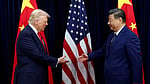
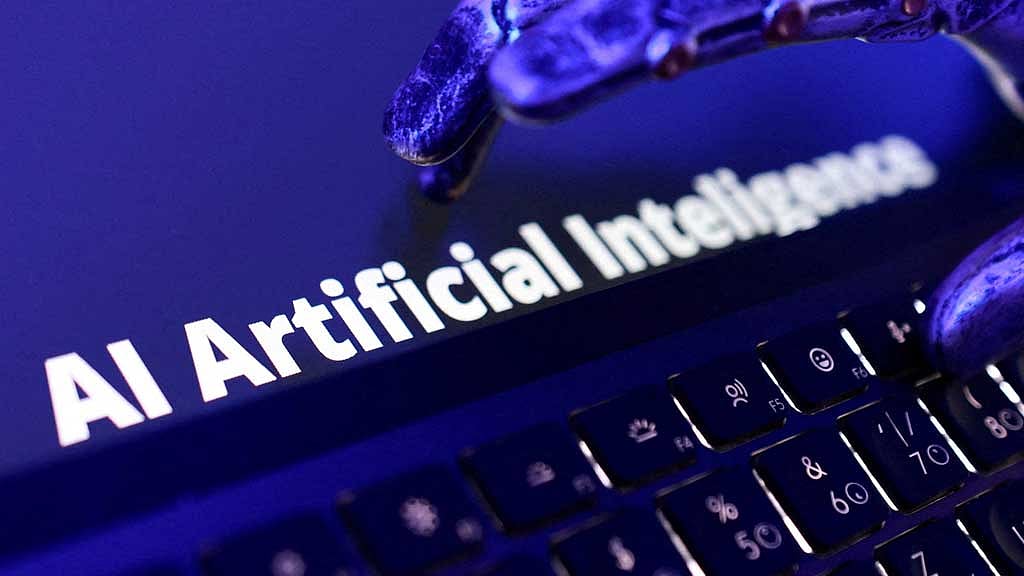
The recent spike in apocalyptic AI warnings from Anthropic, OpenAI and others could reflect genuine fears about this rapidly advancing technology’s threat to humanity, but it may also signal a more prosaic fear about the Chinese threat to US tech firms’ business models. As Presidents Donald Trump and Xi Jinping prepare to meet in Washington this week, the two countries could be entering a new phase in the AI arms race.
Financial markets have long worried about US tech's mountainous borrowing to fuel the AI buildout, but these anxieties have been compounded in recent weeks by a sudden burst of doomsday scenarios floated and promoted by industry insiders.
The recent wave of AI “doomerism” kicked off on Sept 8 when former Anthropic researcher Jacob Coxon posted on X that "people building AI earnestly believe that it could kill us all by the end of the decade." His post has been viewed 173 million times, sparking a wildfire debate about the pace and safety of AI development that has drawn in the most powerful leaders in the industry, wider business world, and government.
Anthropic CEO Dario Amodei on Sept 12 penned a lengthy essay on the need to moderate the development of AI model capabilities. OpenAI CEO Sam Altman and SpaceX founder Elon Musk expressed agreement, broadly calling for the technology to be slowed down or subjected to greater oversight.
The sudden wave of apocalyptic warnings seems to have caught everyone off guard – including the Trump administration.
Trump, who has long played down AI security and safety concerns, said he plans to appoint a new "AI czar" and to create an "AI force,” though few details are available on either.
US Treasury Secretary Scott Bessent also said the two superpowers have agreed to set up a formalised dialogue on AI, and senior officials will meet in China later this year.
On the surface, the tech leaders and the president may seem miles apart, but a growing chorus of investors is questioning whether fears about China’s growing AI prowess – and the challenges it could pose to already difficult AI economics – may actually be shared in Silicon Valley and the White House.
‘Terminator’ Garbage
AI sentiment is increasingly pushing investors into two camps: those who believe the trillions of dollars of investment by US hyperscalers and AI firms will pay off, and those who don't.
The first camp still appears to have the upper hand, as evidenced by the Nasdaq's rebound this week to its recent all-time high. But those in the second camp are gaining ground. Many now argue that the burst of "concern" shown by AI leaders and insiders about the future of mankind is simply a veiled plea for government help, reflecting the industry’s bleak financial outlook.
"I think these companies are very nervous, they realise that there are no moats around their business whatsoever, and they're trying to manufacture a crisis that will create regulation that they think they can then manipulate to create the moats, to create the duopoly that they want," investor Steve Eisman told CNBC last week, referring to Anthropic and OpenAI. "I think this whole 'Terminator' thing is garbage."
Sounds conspiratorial? Maybe. But the mounting concerns are real.
The mooted OpenAI and Anthropic initial public offerings (IPOs) are getting pushed back, even as the record-breaking US capital expenditure (capex) spree continues to accelerate, and debt piles rise.
The US hyperscalers, along with Nvidia and Broadcom, have more than $3 trillion in off-balance-sheet commitments and guarantees, with more "financing structures under development,“ according to Morgan Stanley.
On top of this is the intricate web of circular financing that raises concerns even among some AI optimists - AI could revolutionise society, but an unwind of these convoluted financing schemes could create a lot of pain for investors along the way.
Spend More to Make More
The real risk keeping US AI leaders up at night may be less Arnold Schwarzenegger and more Adam Smith.
Cheap large language models (LLMs) from China are proliferating rapidly, putting significant competitive pressure on costlier US offerings. For example, a version of Chinese startup DeepSeek's flagship AI model could be more than 100 times cheaper to run than Anthropic's Claude Fable 5 model. Products from other Chinese firms are up to 50 times cheaper than leading US versions, and Chinese LLMs are rapidly closing the performance gap with the more expensive US frontier models, analysts say.
The US AI industry is facing this rising competition by spending and investing on a massive scale. Hyperscalers are expected to invest up to $1.5 trillion in AI next year.
“You have to spend money to make money, or at least the hyperscalers are testing the motto. The AI buildout is expensive, but likely worth it,” says Ryan Sweet at Oxford Economics.
But for that to be the case, the big outlays must be followed by big revenues. Apollo Global Management's Torsten Slok estimates that hyperscalers' operating cash flow needs to more than triple from last year's $600 billion to $2 trillion in 2030 to justify these vast expenditures. That’s a high bar. And it’s one that could become even more difficult to reach if China’s cheaper LLMs see their market share continue to grow.
If these gains don’t materialise, hyperscalers’ capex may be slashed, slowing chipmakers’ revenue growth and Wall Street’s AI-driven rally. This, in turn, could ultimately slow US economic growth.
Few expect any firm understanding on AI to be hashed out at Trump and Xi’s meeting this week, but the statements from both on the technological front could speak volumes about whether US tech firms have more to fear from rogue agents or simple economics.
[Jamie McGeever has been a Reuters financial journalist since 1998, reporting from Brazil, Spain, New York, London, and now back in the US again. Focus on economics, central banks,
policymakers, and global markets - especially FX and fixed income.]