November 21, 2026

Goal-line technology makes World Cup bow

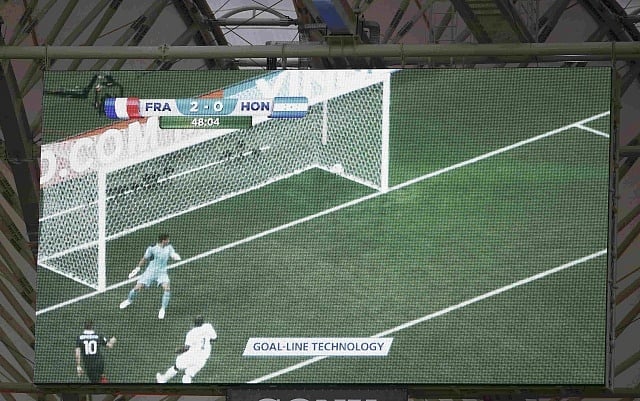
Goal-line technology was used for the first time in a World Cup match to decide if the ball had crossed the line during France's Group E clash with Honduras on Sunday.

Reuters

>>

Reuters

Published : 16 Jun 2014, 03:57 AM

Updated : 19 Oct 2022, 07:31 PM

Image
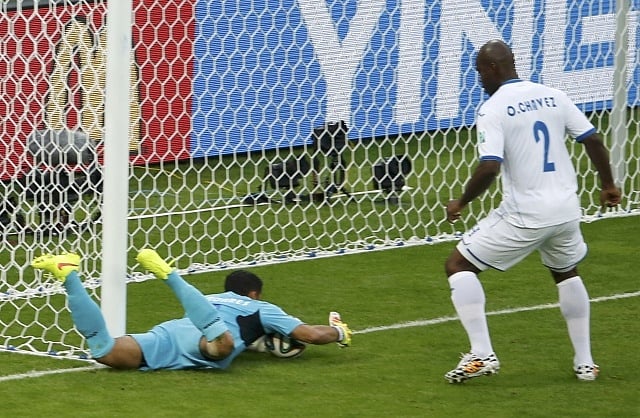
Noel Valladares of Honduras (L) fumbles the ball, which resulted in a goal, beside teammate Osman Chavez during their 2014 World Cup Group E soccer match against France at the Beira Rio stadium in Porto Alegre, June 15, 2014. The goal was awarded to France as it was detected by the German made goal line technology to have entered the Honduras team's goal. Credit: Reuters
Image
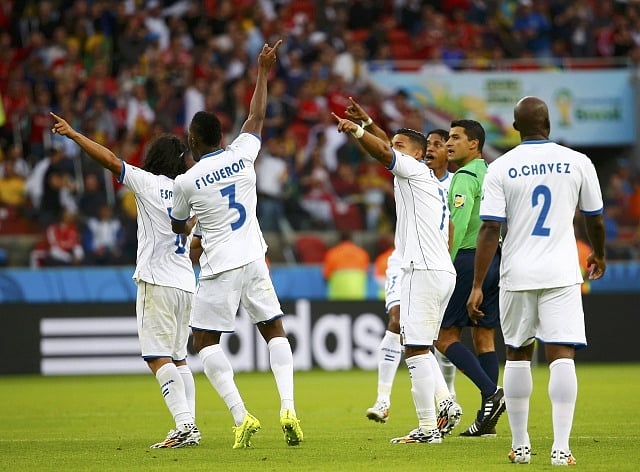
Honduras players point at the goal-line technology screen during the 2014 World Cup Group E soccer match between France and Honduras at the Beira Rio stadium in Porto Alegre, June 15, 2014. Credit: Reuters
Image
A video replay of France's Karim Benzema's goal using goal-line technology is pictured on a screen during their 2014 World Cup Group E soccer match against Honduras at the Beira Rio stadium in Porto Alegre June 15, 2014. Credit: Reuters
Image
France's coach Didier Deschamps (L) talks with Honduras coach Luis Fernando Suarez after a disputed goal was awarded to France during their 2014 World Cup Group E soccer match at the Beira Rio stadium in Porto Alegre, June 15, 2014. Credit: Reuters

A shot from France forward Karim Benzema cannoned off the post and back across the face of goal before Honduran goalkeeper Noel Valladares inadvertently pushed it towards his own net.

Despite his desperate efforts to scramble the ball clear, the referee awarded the goal with the aid of technology provided by German company GoalControl to put France 2-0 ahead.

The decision was confirmed by TV replays but it did not succeed in its aim of preventing debate following contentious decisions as a touchline row broke out between France manager Didier Deschamps and his Honduran counterpart Luis Fernando Suarez.

The GoalControl system involves 14 high-speed cameras located around the pitch, with seven cameras focusing on each goalmouth.
 

Related Stories