Published : 15 Oct 2026, 05:18 PM
Updated : 15 Oct 2026, 05:18 PM


Planetary systems in the Milky Way fall into two broad families, with their parent stars helping determine their evolution and fate, Space.com reports.
Researchers led by the Italian National Institute for Astrophysics studied 300 multiplanet systems to understand how conditions around young stars influence planetary formation and stability.
The second family consists of more compact, lower-mass systems whose planets have relatively similar sizes and masses, a configuration researchers call “peas in a pod”.
According to the space news website, these planets typically orbit closer to their stars than Mercury does to the sun.
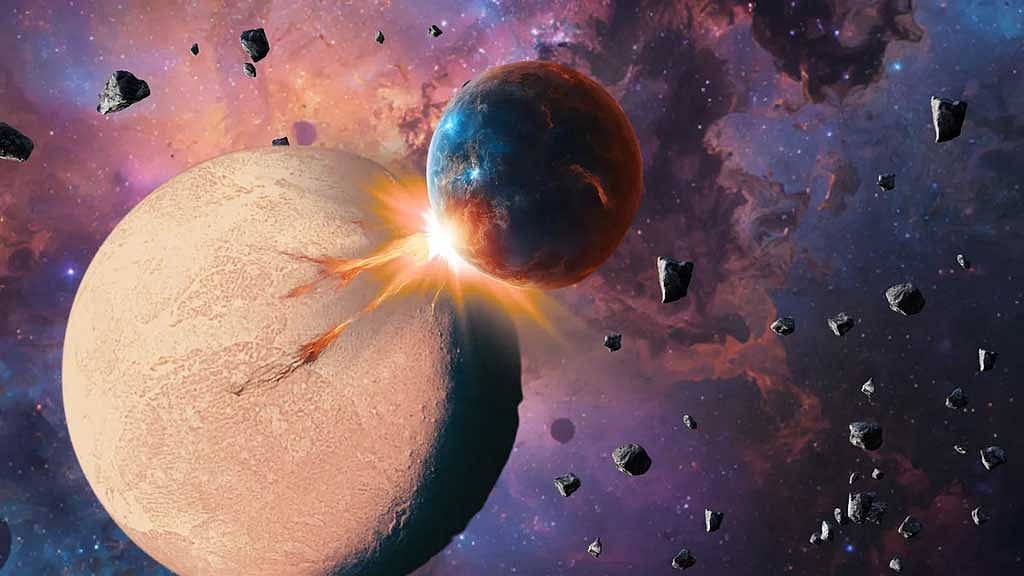
The report also says violent gravitational events, including giant collisions and planetary ejections, were more common in the first family than in the second.
The findings suggest that even modest differences in the environments where planets form can influence their long-term evolution. Researchers tested their conclusions through simulations of systems formed under different conditions.
Study researcher Diego Turrini said the results showed a “genetic link” between planetary systems and their stars, with conditions at birth helping determine their fate, cited per the report.
To test their conclusions, the team simulated planetary systems under different conditions. The results suggested that massive systems were unstable from birth because planet-forming material made them too large to be stable, research supervisor Danae Polychroni said.
The research could help astronomers identify systems with potentially habitable planets as they search for life beyond the solar system.