Published : 19 Sep 2026, 01:15 PM
Updated : 19 Sep 2026, 01:15 PM


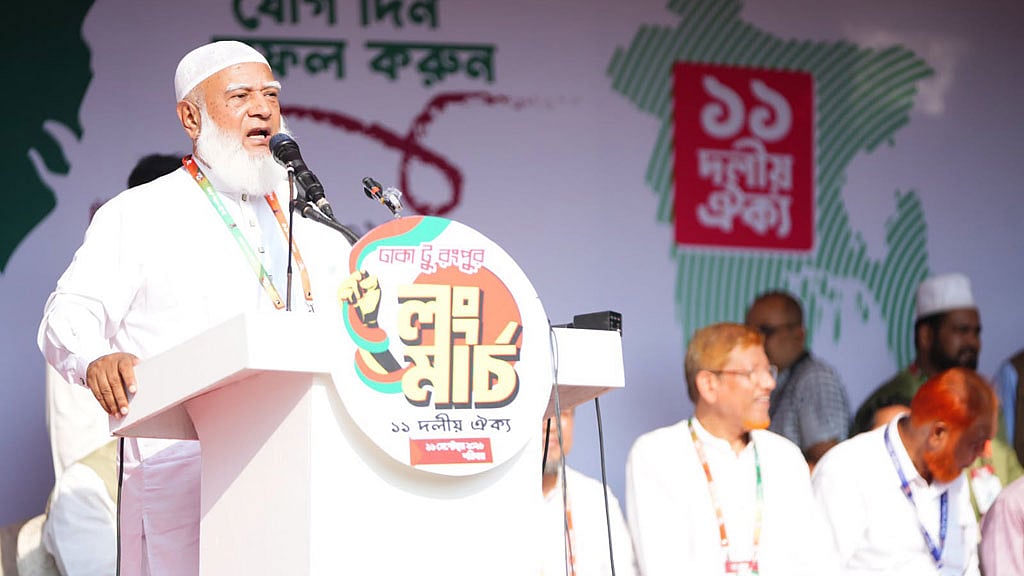
Jamaat-e-Islami chief Shafiqur Rahman has urged the government to “learn from the recent past”, warning that the 11-party alliance’s eight demands could eventually turn into a single demand.
“We have not taken to the streets with any partisan demands. Try to accept the demands of the people. When these demands turn into a one-point demand, the situation will become very dangerous,” he said.
“Learn from the recent past before you have to face such a situation. Learn from it and accept the people’s demands.”
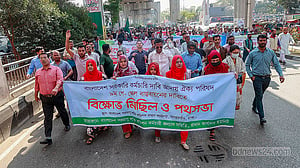
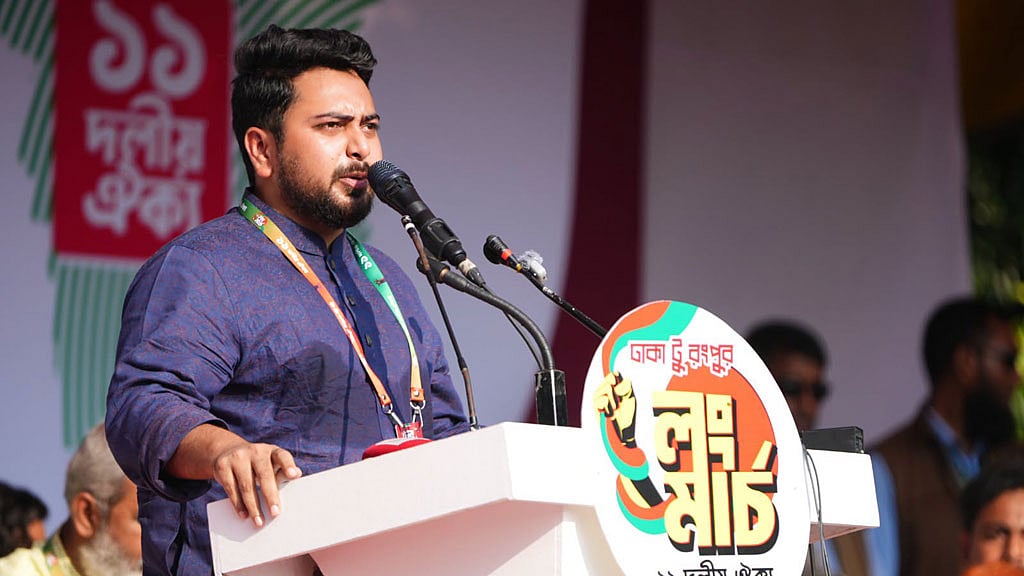
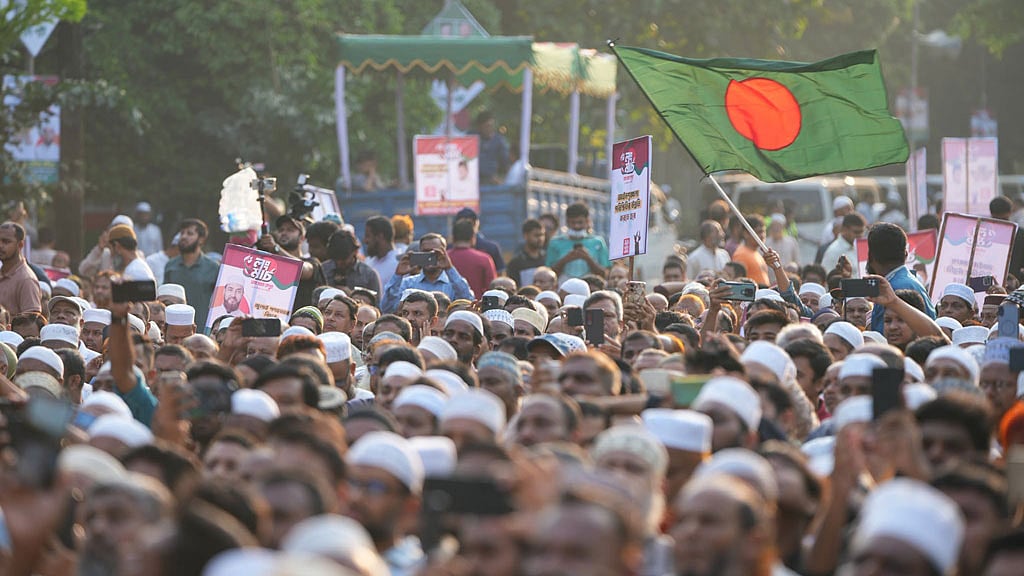
Shafiqur made the remarks on Saturday morning at a rally on Manik Mia Avenue in Dhaka marking the start of the alliance’s long march towards Rangpur.
The Jamaat-led alliance is pressing for implementation of the referendum verdict, trials over the July killings, measures to address shortages of electricity, fuel, gas and fertiliser, controls on commodity prices, an end to corruption, land grabbing and extortion, improvements in law and order, an end to what it describes as narrow politicisation, and implementation of the Teesta Master Plan.
Six of those demands were raised during the alliance’s first long march from Dhaka to Chattogram on Sept 5. An end to corruption, land grabbing and extortion and implementation of the Teesta Master Plan were added for the Rangpur programme.
Shafiqur said the list could expand further before eventually being reduced to one.
“Remember, today’s eight-point demand could become nine points or 10 points. And if the nation requires it, it could turn into a one-point demand at any time,” he said.
The reference to a “one-point demand” carries particular resonance following the July Uprising of 2024.
The student-led movement began with demands for reform of government job quotas before widening amid a deadly crackdown and unrest. On Aug 3, the Students Against Discrimination movement dropped its nine-point demands and replaced them with a single demand for the resignation of the Sheikh Hasina-led government.
Two days later, Hasina resigned as prime minister and left the country as the uprising brought an end to more than 15 years of uninterrupted Awami League rule.
Shafiqur said the alliance would continue its campaign until its demands were met.
“We have taken to the streets with the demands of 180 million people. We will return home only after achieving those demands,” he said.
Referring to the alliance’s earlier Dhaka-Chattogram march, he added: “Seeing this has made some people lose their cool. We can see signs of that in the capital. Do not lose your head out of frustration.”
NCP leader and Opposition Chief Whip Nahid Islam also addressed the rally, accusing the government of failing to protect democracy and human rights.
“Democracy and human rights are not safe in [Prime Minister] Tarique Rahman’s hands,” he said.
“The BNP government came to power promising to protect human rights, but it is creating certain repressive laws and institutions that instead pave the way for depriving citizens of their fundamental rights.”
Nahid also warned Tarique about the consequences of continuing on the same course.
“If things continue like this, Tarique Rahman will have to decide how he will resign,” he said.
Jamaat Secretary General Mia Golam Porwar urged activists not to respond to provocations and said the long march would remain peaceful.
“There is no intention of vandalism, disorder or instability of any kind during the programme. Our entire programme will be peaceful,” he said.
Bangladesh Khelafat Majlis chief Mamunul Haque said the alliance had avoided programmes such as hartals and blockades that could cause public suffering.
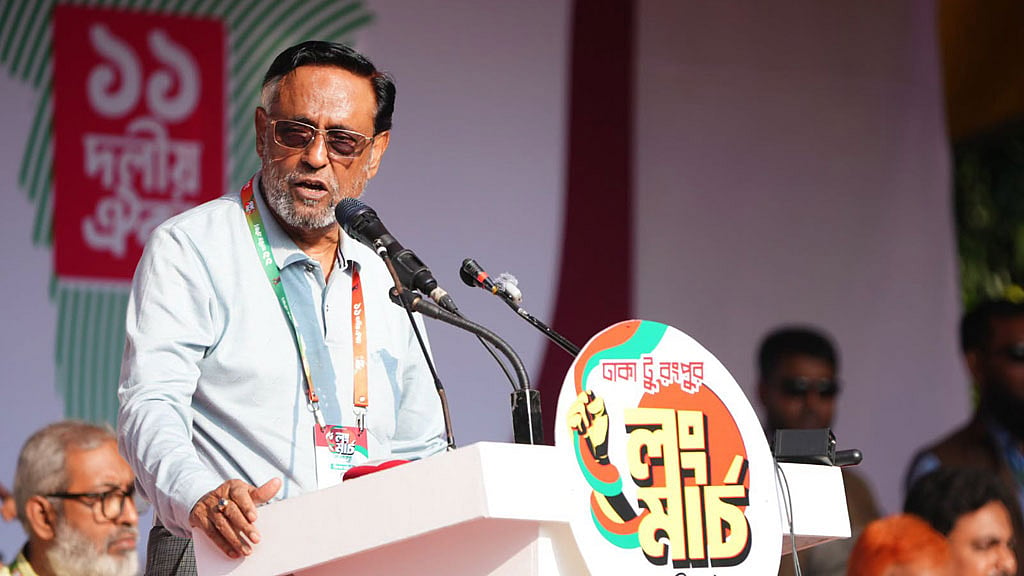
“If the demands of the people are not accepted, the BNP will be swept away by the tide of the people,” he said.
Liberal Democratic Party (LDP) Chairman Oli Ahmad also criticised the government, telling Tarique to “be careful”.
The long march is scheduled to stop for rallies in Gazipur, Tangail, Sirajganj, Bogura and Gaibandha before ending with a rally at Rangpur Zilla School ground on Saturday night.