Published : 15 Aug 2026, 06:44 AM
Updated : 08 Sep 2026, 09:32 AM


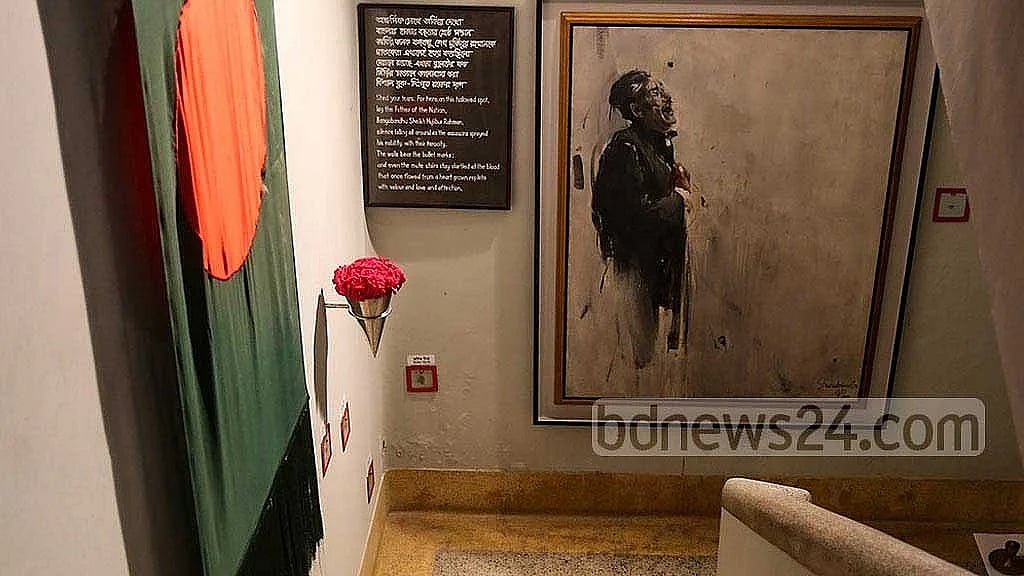
Aug 15 has returned to Bangladesh — 51 years after independence leader Bangabandhu Sheikh Mujibur Rahman was assassinated with most of his family — but once again without the elaborate state and party programmes that marked the day during the Awami League’s years in power.
The anniversary comes with the party’s activities banned, many of its senior leaders in hiding or in prison, and its activists scattered after the fall of Sheikh Hasina’s government in a student-led mass uprising.
During the Awami League’s 15 years in office, Aug 15 was observed as National Mourning Day. Programmes were held throughout the month.
This is the third Aug 15 since that government’s fall without any major observance.
The interim government of Muhammad Yunus abolished the Aug 15 public holiday in 2024. The BNP government, which took office in February this year, has not reversed that decision.
Sheikh Mujib’s elder daughter, former prime minister Hasina, is now in India facing a death sentence over the killings of hundreds of protesters. More than 600 cases against her are pending in courts across Bangladesh.
The Awami League built by Mujib remains barred from political activity over allegations that it took part in the crackdown aimed at suppressing the July Uprising.
Against that backdrop, some Awami League and Chhatra League activists in hiding have been posting on Facebook ahead of the 51st anniversary of Sheikh Mujib’s assassination. Hasina’s son Sajeeb Wazed Joy has also been sharing posts about programmes from abroad.
Dhanmondi 32 Under Tight Security
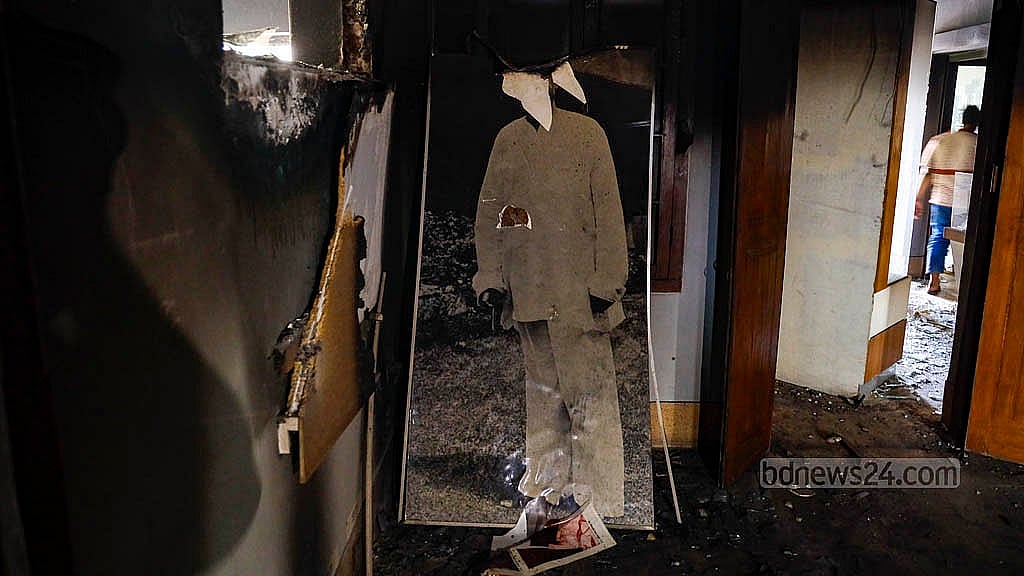
In February 2025, six months after Hasina’s fall, Bangabandhu’s house on Dhanmondi Road 32 was demolished with excavators after protesters announced they would “bury Mujib-ism”.
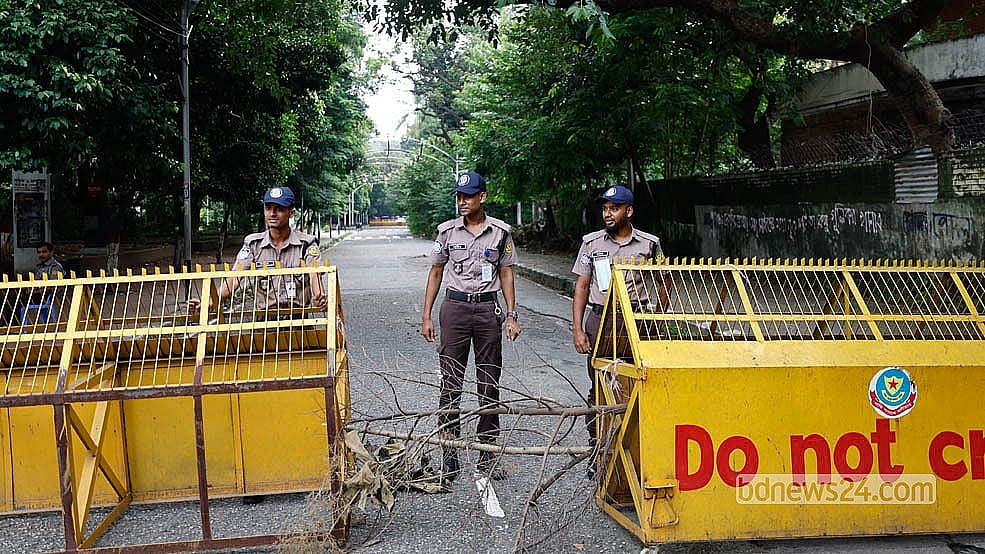
Ahead of this year’s Aug 15, Dhaka Metropolitan Police has announced extensive security measures to “maintain normal law and order” in the capital and ensure public safety.
Checkpoints and searches have been intensified at all entrances to Dhaka, while important installations have been placed under special security plans.
Police say CCTV cameras and drones will be used for surveillance.
Authorities have also tightened security in Gopalganj, Sheikh Mujib’s birthplace.
Deputy Commissioner Md Arif-uz-Zaman said five platoons of Border Guard Bangladesh personnel, alongside district police and other law-enforcing agencies, would be deployed at “sensitive” locations in Tungipara, Kotalipara and elsewhere in the district.
Relations between Bangladesh and India came under renewed strain after Hasina virtually addressed a news conference in New Delhi on Aug 5, the second anniversary of the July Uprising. Bangladesh lodged a strong protest over the event.
At the event, the Awami League chief said she planned to return to Bangladesh in December. She has also said in earlier interviews that she plans to return with party leaders and activists and surrender before the courts.
The Bangladesh government, meanwhile, has repeatedly asked India to send Hasina back under the extradition treaty between the two countries. So far, it has received no positive response.
Sheikh Mujib, the Man
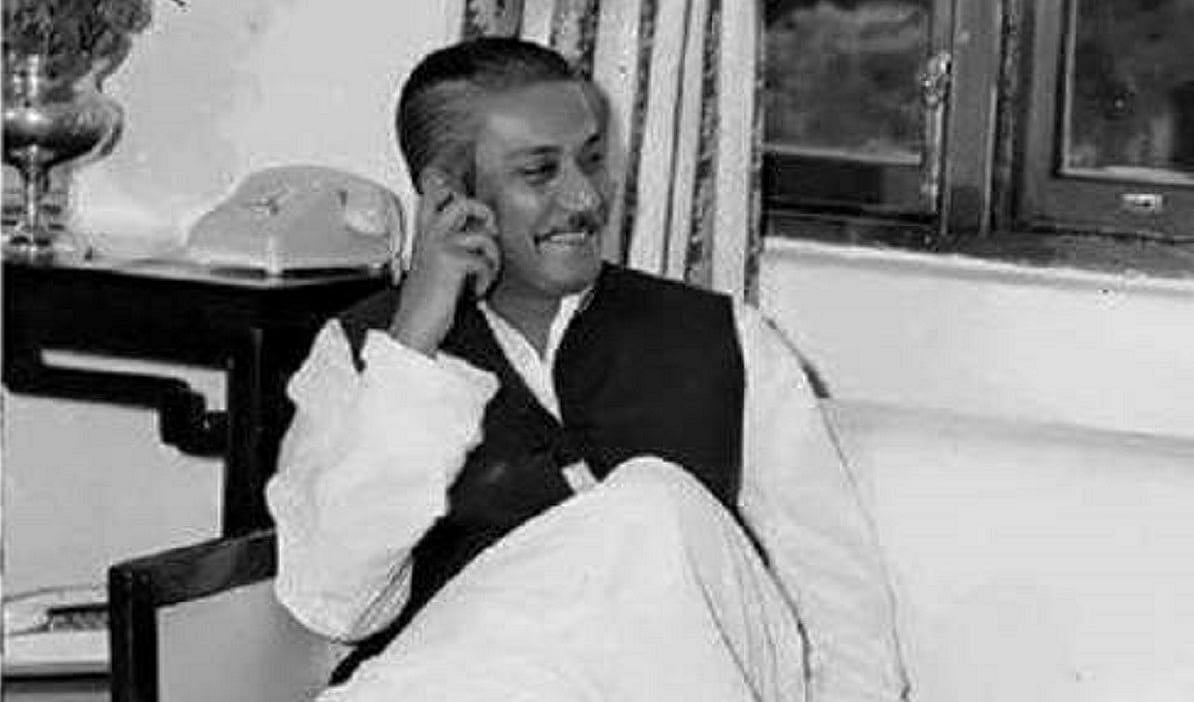
Four years after Bangladesh won independence, then president Sheikh Mujib and most of his family were killed by a group of army officers and soldiers on Aug 15, 1975.
Among those shot dead were a 6-year-old child and a pregnant woman.
Sheikh Mujib was born in Tungipara, Gopalganj, on Mar 17, 1920.
After British colonial rule ended in 1947, he rose to prominence in East Pakistan through the formation of the Chhatra League.
He went on to play leading roles in the 1952 Language Movement, the United Front election of 1954 and the Six-Point Programme of 1966.
When the Pakistan government made him the principal accused in the so-called Agartala Conspiracy Case in 1968, Sheikh Mujib emerged as the undisputed leader of the Bengalis.
He was freed from prison during the 1969 mass uprising and was subsequently given the title “Bangabandhu” by students and the public.
In the turbulent March of 1971, Sheikh Mujib called on Bengalis to fight for freedom in his historic address at what is now Suhrawardy Udyan, then the Racecourse Ground.
Bangladesh emerged as an independent state through the bloody war that followed.
After independence, the task of rebuilding a war-ravaged country began, with Sheikh Mujib leading the government.
Then came Aug 15, 1975, changing the course of Bangladesh’s history.
The Killings of Aug 15
Besides Sheikh Mujib, the killers murdered his wife Begum Fazilatunnesa Mujib; their three sons Sheikh Kamal, Sheikh Jamal, and Sheikh Rasel; Sheikh Kamal’s wife Sultana Kamal; Sheikh Jamal’s wife Rosy Jamal; and Sheikh Mujib’s younger brother Sheikh Naser.
Also killed that night were Sheikh Mujib’s brother-in-law Abdur Rab Serniabat, Serniabat’s son “Arif”, daughter “Baby” and young grandson Sukanta Babu.
Sheikh Mujib’s nephew and Jubo League leader Sheikh Fazlul Haque Moni and his pregnant wife Arzu Moni were also killed, along with relatives Shahid Serniabat and “Rintu”.
Special Branch sub-inspector Siddiqur Rahman and security officer colonel Jamil Uddin Ahmed were shot dead at the Dhanmondi residence as well.
Sheikh Mujib’s daughters Hasina and Sheikh Rehana survived because they were abroad at the time.
The president was buried in Tungipara, his birthplace. Other members of the family were buried at Banani graveyard in Dhaka.
An indemnity ordinance was subsequently issued protecting the self-confessed killers from prosecution.
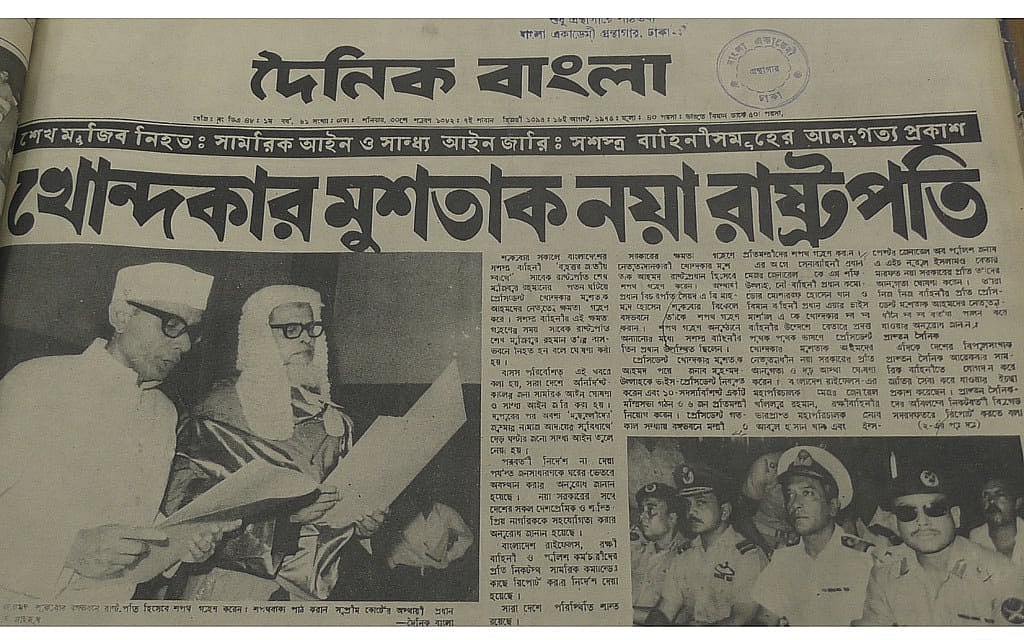
The trial began 21 years later, after the Awami League returned to power in 1996.
Following the final legal proceedings, five convicts were executed in 2010. Another convict, Abdul Majed, was hanged in 2020.
For more than two decades after the 1975 killings, Sheikh Mujib was largely absent from official commemoration.
After the Awami League returned to power in 1996, Aug 15 was declared National Mourning Day, allowing Sheikh Mujib to be commemorated at the state level.
The BNP-Jamaat-e-Islami coalition government again removed the observance during its five years in power from 2001.
Following a High Court ruling during the caretaker government, Aug 15 began to be observed again as National Mourning Day from 2008, with official ceremonies and a public holiday.
The Awami League and political, social and cultural organisations also held programmes to commemorate the day.
After the 2024 uprising, the interim cabinet of Nobel laureate Yunus abolished the National Mourning Day holiday at its first meeting.
A Changed View of Mujib’s Legacy
Since the ouster of Hasina’s government, Sheikh Mujib’s three and a half years in power have increasingly been portrayed as a period of “authoritarian rule”, much as critics characterised his daughter’s 15-and-a-half-year tenure.
Critics in particular cite the establishment of the one-party BAKSAL system in 1974.
JaSaD was among the political forces that opposed Sheikh Mujib’s government at the time.
A faction led by Sharif Nurul Ambia and General Secretary Nazmul Haque Prodhan now operates as Bangladesh JaSaD.
Ambia said the party would commemorate Sheikh Mujib this year. as it did last year.
“We will place wreaths at a temporary portrait of Bangabandhu at our office on Topkhana Road,” he said.
“A discussion will also be held after the tribute at 5pm on Saturday.”
In a statement, Bangladesh JaSaD expressed “deep grief and strong condemnation” over the killings of Sheikh Mujib and his family members, colonel Jamil and others on duty, members of the families of Sheikh Fazlul Haque Moni and Abdur Rab Serniabat, members of two families in Mohammadpur and others killed on Aug 15, 1975.
“This barbaric incident will remain an indelible stain on the history of Bangladesh,” the party said.
“Bangladesh JaSaD believes that this stain on the nation can be removed only by ensuring the rule of law, justice and democracy in the country.”