Published : 18 Feb 2026, 08:24 AM
Updated : 21 Aug 2026, 03:22 PM


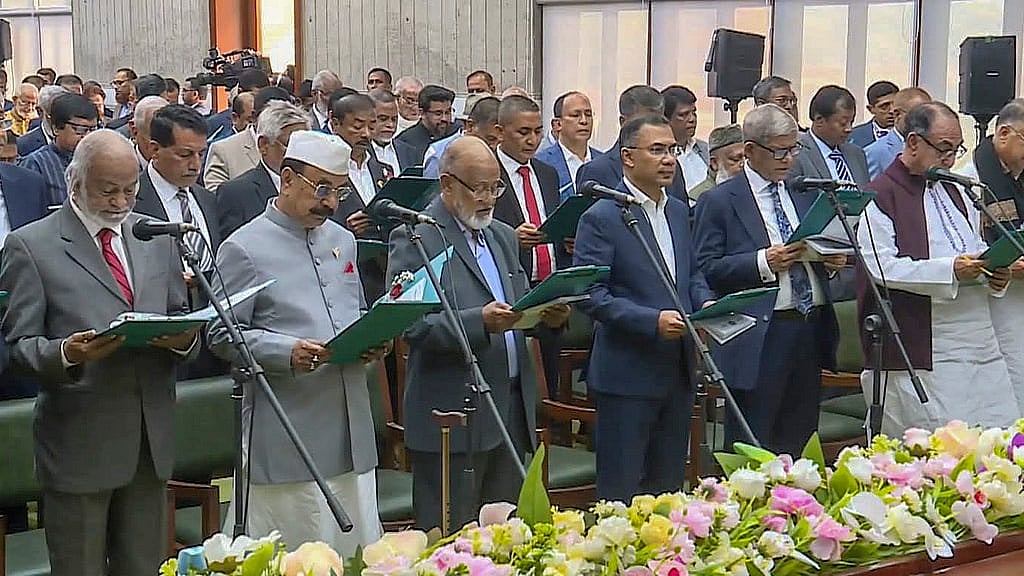
In a cabinet designed as much for symbolism as for governance, Prime Minister Tarique Rahman brings together seasoned politicians and young aspirants, each carrying the hopes and anxieties of a nation eager for stability and transformation.
When Bangladesh emerged from the convulsions of the 2024 mass uprising, regime collapse and an uneasy interim rule, the country did not merely return to electoral politics -- it stepped into an altered political landscape.
It is within this transformed reality that Tarique, invoking the slogan “Bangladesh First”, has assembled his first cabinet: a carefully balanced team of veterans and newcomers, continuity and rupture, loyalty and calculated outreach.
The government he has formed is neither a wholesale break from the past nor a simple restoration. Instead, it reflects the long arc of a political journey that began with exile and ended, nearly two decades later, at the apex of state power.
Tarique’s rise -- through a competitive election after years of repression -- is itself the most consequential political statement of this moment.
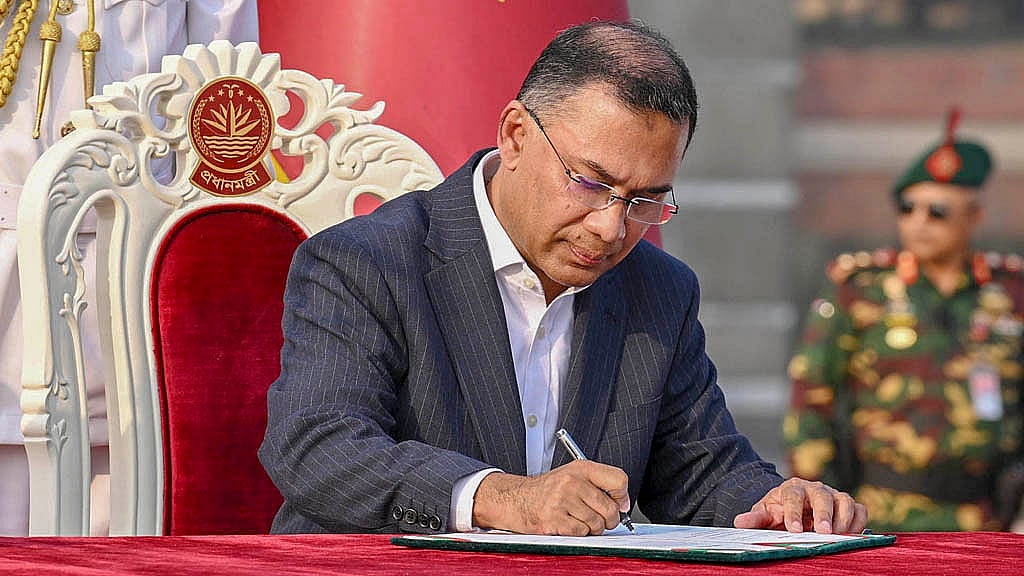
His cabinet, analysts say, is designed to consolidate that moment while preparing for a future shaped as much by generational change as by unresolved national fractures.
Although Tarique had previously floated the idea of a broad-based national government, he ultimately stepped back from that model ahead of the election. Yet the logic of alliance politics remains visible.
Three partners who stood shoulder to shoulder with the Bangladesh Nationalist Party (BNP) through the long anti–Awami League movement have been given space in government -- a nod to the coalition discipline that helped carry the party across the electoral finish line.
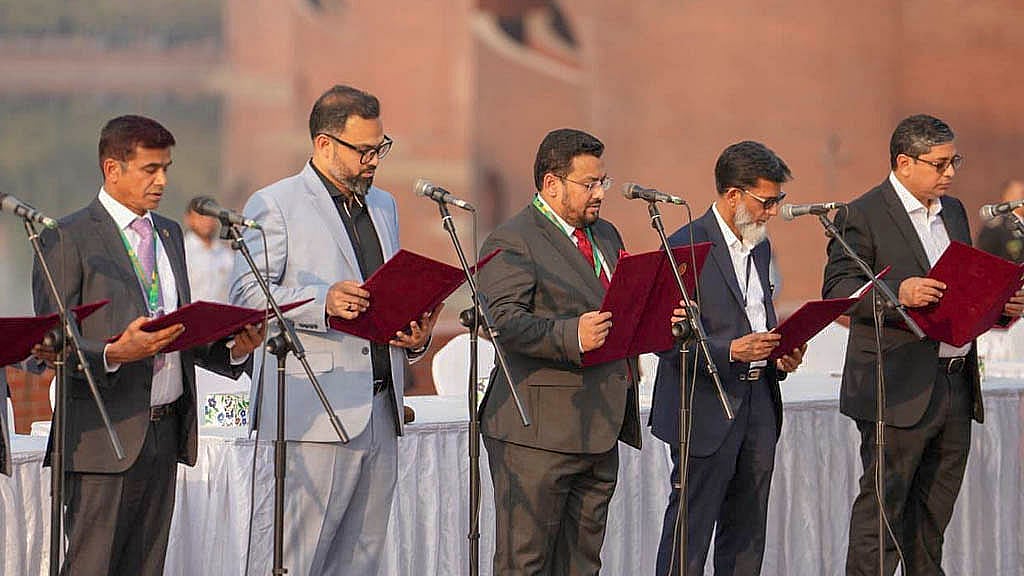
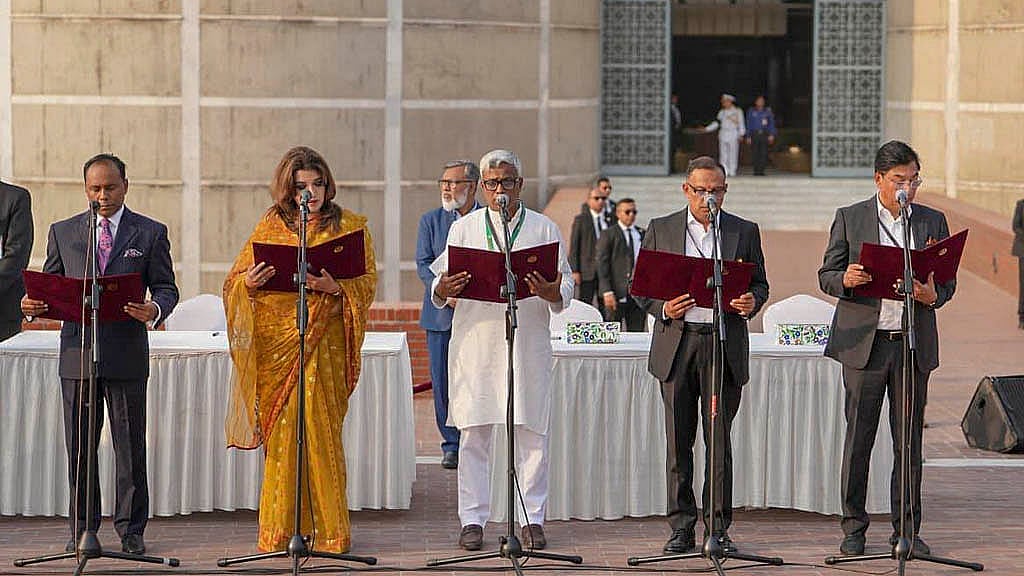
At the same time, Tarique has moved decisively to foreground youth. Alongside a core group of veterans -- many of whom endured years of political marginalisation -- his cabinet features a striking number of younger ministers and state ministers, signalling what several observers describe as a deliberate generational handover within the BNP’s governing elite.
For some analysts, this marks long-overdue recognition of activists who remained on the streets through 17 years of political struggle. Others, however, see little surprise in the line-up, arguing that the cabinet broadly reflects expectations shaped by weeks of speculation and informal briefings.
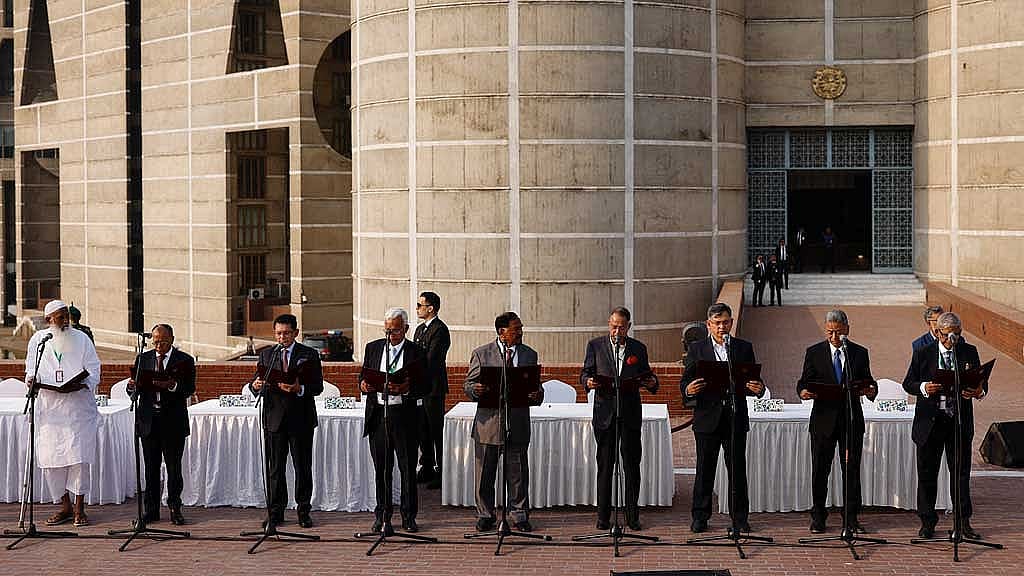
“There is a clear shift in the composition of the governing team,” said analyst Kazi Mohammad Mahbobor Rahman, a professor of political science at Dhaka University.
“A new generational current has emerged through Tarique Rahman’s premiership. This did not exist before. The cabinet combines the old and the new.”
He added that the symbolism of Tarique’s swearing-in carries weight beyond the cabinet list itself.
“After nearly 19 years of persecution, someone has risen to power through a fair election by dismantling authoritarian and fascist structures. That is the most significant development.”
In Mahbobor’s reading, the cabinet reflects three deliberate choices: rewarding longstanding party loyalists, recognising alliance partners who remained committed until election day, and injecting youth to reconnect the party with a younger electorate.
“This is not about Tarique personally,” he said. “It is about positioning the party’s future. Young people need to see themselves represented in government.”
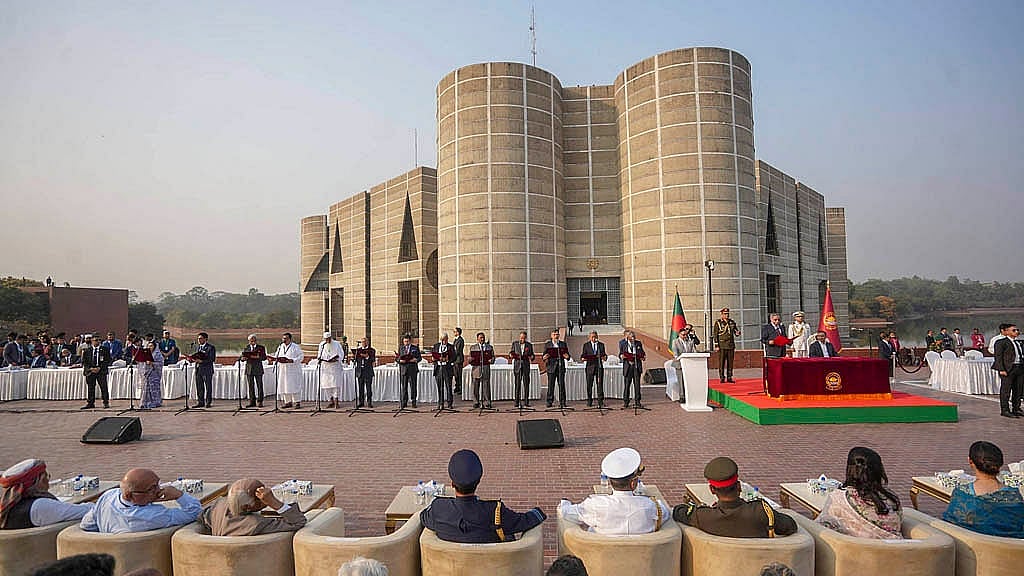
Others are more restrained in their assessment. Writer and researcher Mohiuddin Ahmad said the cabinet contained little that could be described as startling.
“There is no real surprise,” he said. “What people were discussing informally is more or less what has happened.”
In his view, the mix of familiar figures, alliance partners and younger faces reflects standard political calculation rather than bold experimentation.
“Now we will see how they perform,” he said. “That is where the real judgement lies.”
Political analyst Mushtuq Hosain echoed that sentiment, arguing that balance -- rather than novelty -- is the organising principle of any cabinet.
“If everyone were new, that would raise questions. If everyone were old, that would raise questions too,” he said.
“Every prime minister weighs experience, geography, sectoral needs and representation.”
He cautioned against drawing definitive conclusions before the government’s performance becomes visible.
“Governments are evaluated on implementation,” he said. “Policy execution will ultimately matter more than composition.”
The Khalilur Rahman Question
If most of the cabinet slots reflect continuity or careful renewal, one appointment has cut sharply across expectations.
The inclusion of Khalilur Rahman as foreign minister stands out as the most controversial decision in Tarique’s cabinet.
During the interim government, Khalilur served as national security advisor -- a role that placed him at the centre of some of the most contentious debates of that period.
What makes his elevation politically striking is not merely his transition from an interim administration to an elected one, but the fact that senior BNP figures had once demanded his removal, branding him a “foreign citizen” and accusing him of endangering national sovereignty.
Mushtuq described the appointment as “surprising”, questioning the considerations behind it.
“Many controversial actions of the interim government were attributed to him,” he said. “Will this government now carry forward those same decisions? That remains unclear.”
He also raised a broader ethical question. “Interim governments are supposed to be non-partisan. When someone moves directly from such a role into a party cabinet, questions will arise about whether neutrality was compromised.”
Others offer a different interpretation. Prof Mahbobor argued that the interim administration was neither a caretaker nor a neutral government in the traditional sense.
“There was no strict concept of neutrality,” he said. “People from different political and ideological backgrounds were involved.”
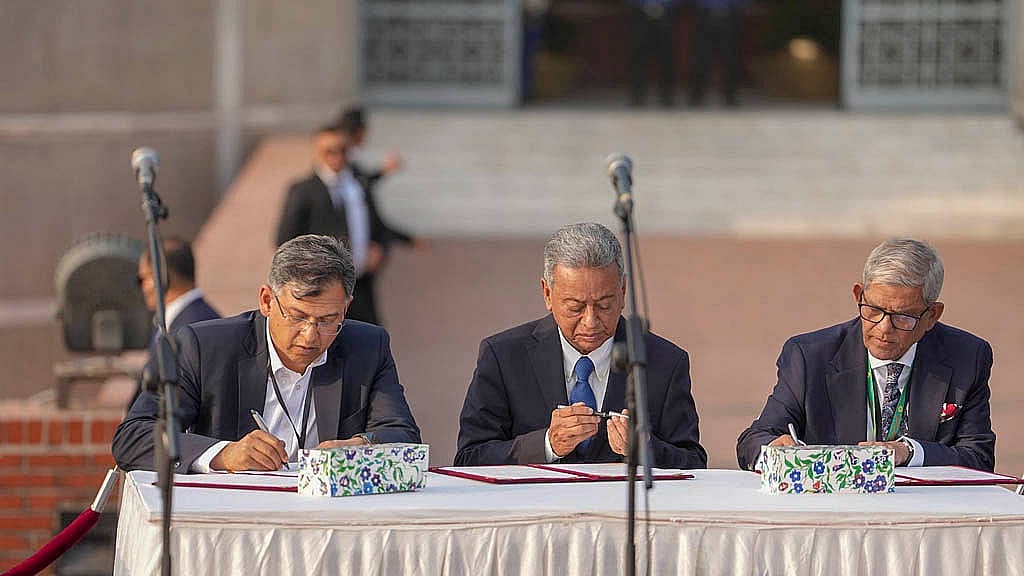
From this perspective, Khalilur’s appointment reflects pragmatism rather than contradiction.
“The prime minister may believe that Khalilur Rahman’s regional and international connections are an asset,” Prof Mahbobor said. “And a prime minister has the right to make that judgement.”
Researcher Mohiuddin noted that Khalilur’s name had circulated for weeks in cabinet speculation.
“There was discussion about him long before the announcement,” he said. “His role in facilitating Tarique Rahman’s return may have mattered.”
During the interim government led by Muhammad Yunus, Khalilur served first as a high representative on the Rohingya crisis and priority issues, before being appointed security advisor.
It was during this period that a UN-backed proposal for a “humanitarian corridor” through Myanmar’s Rakhine State triggered fierce backlash from the BNP and other groups.
At a rally in Khulna on May 17, 2025, senior BNP leader Salahuddin Ahmed -- now a member of the cabinet -- had launched a blistering attack, accusing the interim government of appointing a “foreign citizen” to oversee national security.
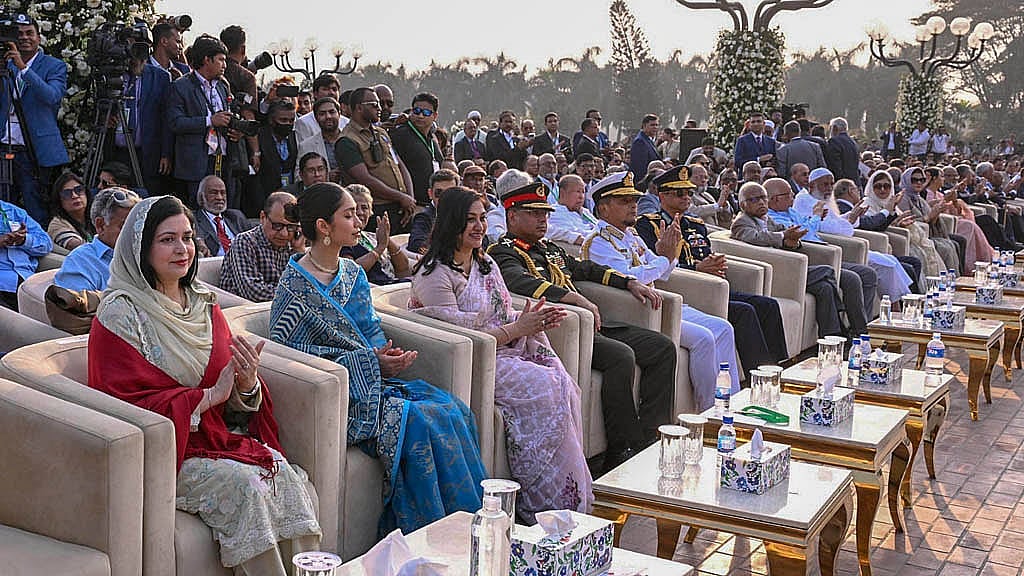
“You made a foreign citizen the national security advisor,” he said. “Did you not realise that the country’s military would be submitting security reports to him? Under the guise of a humanitarian corridor, he wanted to turn Bangladesh into a battlefield.”
Salahuddin demanded Khalilur’s removal, warning of what he described as a conspiracy to destabilise the country.
Ruhul Kabir Rizvi, the BNP’s senior joint secretary general, echoed that call, saying: “There is no room for experiments with national security.”
Yet Khalilur remained in office and went on to play a central role in trade negotiations with the United States, UN conferences on Rohingya repatriation, and the organisation of the Yunus–Tarique meeting in London.
Khalilur, a career diplomat, worked closely with the United Nations for over 25 years in Geneva and New York. He previously served as private secretary to chief advisor Latifur Rahman in the 2001 caretaker government.
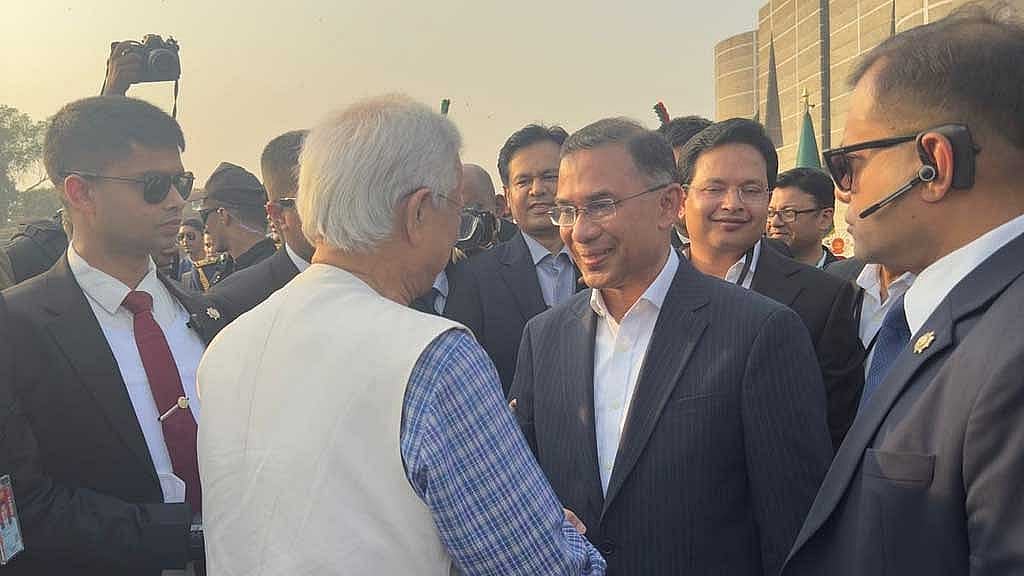
Educated at Dhaka University, Tufts and Harvard, he holds a PhD in economics and has worked in both diplomacy and international banking.
Whether that résumé proves to be political strength or liability is now one of the defining questions of Tarique’s early premiership.
The Burden of Expectation
If the cabinet’s first signal is continuity through experience, its second is urgency through renewal.
The most sensitive portfolios have gone to trusted hands. Power, energy, finance, home affairs, and foreign relations are dominated by figures with institutional memory and political scars from years in opposition.
The logic is defensive as much as administrative: these ministries will bear the first shocks -- currency pressure, energy shortages, policing legitimacy, and foreign scrutiny.
Privately, senior BNP figures concede that the margin for error is thin. Public patience, built over two decades of waiting, is finite. Any early stumble in electricity supply, price control, or law and order could puncture the honeymoon instantly.
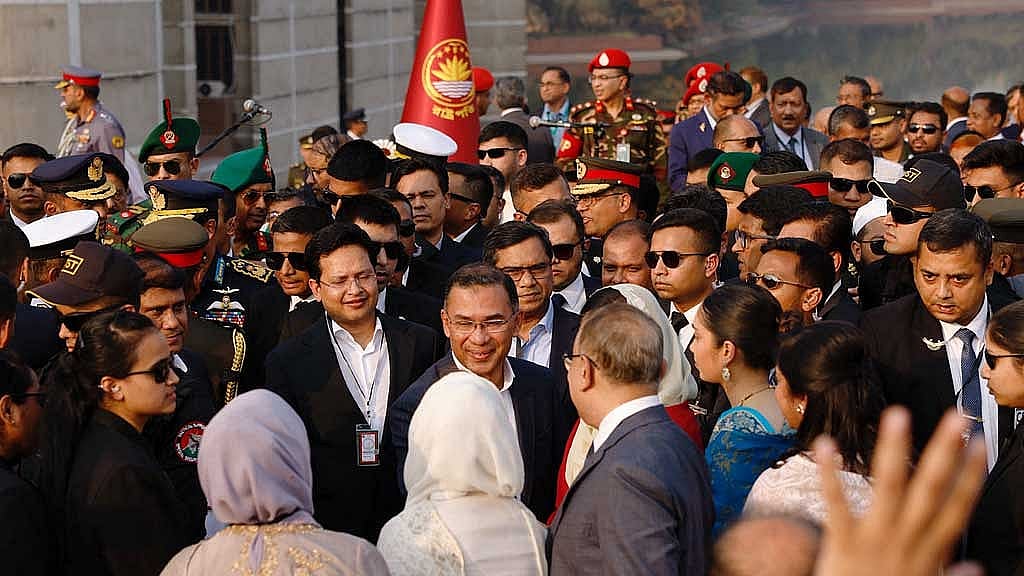
Alongside the veterans is a conscious injection of younger politicians and first-time ministers -- many drawn from the movement years rather than electoral cycles. Their appointments are meant to speak to a generation that came of age outside the BNP’s last stint in power.
Yet youth here is burdened with symbolism. These ministers are expected not merely to govern, but to prove that the BNP can evolve beyond its own past -- less reactive, less patronage-driven, more policy-literate. Whether they are empowered or merely showcased will become clear within months.
Coalition Arithmetic and Ideological Messaging
The inclusion of figures like Zonayed Saki and Nurul Haque Nur is politically louder than their numerical weight. Their presence reframes the government as broader than a single-party return, allowing the BNP to argue it represents a post-July Uprising consensus rather than a restoration.
It is also a hedge. By sharing ownership of governance, the BNP diffuses blame if reforms stall -- and shares credit if they succeed. Fakhrul’s remark that this must be called a “joint administration” was not rhetorical flourish; it was strategic framing.
A smaller but significant layer of technocrats and non-electoral appointees sits beneath the political surface. Their task is unglamorous but critical: stabilise systems hollowed out by years of politicisation.
Here lies one of the cabinet’s biggest risks. Technocrats can advise, but they cannot command party machinery. Their success depends entirely on whether political ministers allow competence to override loyalty.
The cabinet makes visible efforts at regional spread and female representation, but the gaps are just as loud. Noakhali’s exclusion has already hardened into grievance, a reminder that symbolism cuts both ways.
For Tarique, managing these internal disappointments may prove harder than confronting the opposition. Expectations inside the party are as elevated -- and volatile -- as those outside it.
The Real Test Ahead
This cabinet is less about ideology than timing. It is built for a country impatient for repair, wary of rhetoric, and exhausted by transition.
The question is no longer whether the BNP can govern. It is whether it can govern differently -- faster, cleaner, and with fewer excuses.
After two decades of waiting, Bangladesh is not asking for perfection. But it will not tolerate drift.