


Published : 17 Jan 2013, 06:25 PM
Updated : 23 Apr 2022, 03:58 PM


In a major policy shift, the USAID has scrapped franchising of one of its key health projects and tied up with NGOs to focus more on services than cost-recovery.
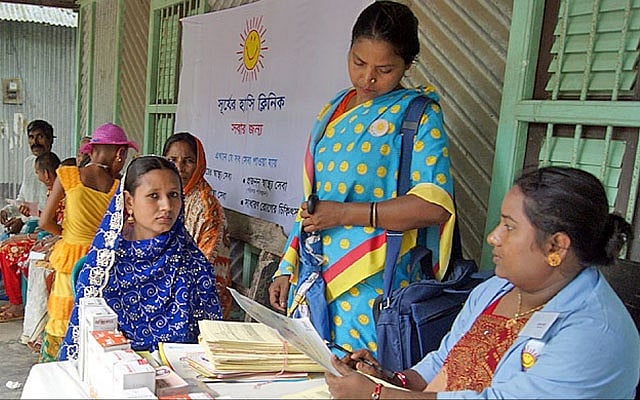
From now on, the Smiling Sun Franchise Programme, which ran from 2008 to 2012 in 327 clinics across Bangladesh, will be called ‘Smiling Sun’, and will run under NGO Health Services Delivery Project.
The move came after an external evaluation of USAID found that health service use rate was similar in project and non-project areas while the market share of the Smiling Sun declined between 2008 and 2011.
Senior Secretary at the Health Ministry Md Humayun Kabir inaugurated the new four-year $ 55 million-project in Dhaka on Thursday night. He said the government is working with NGOs and private sector to improve the health outcomes.
Speaking on the occasion, USAID Mission Director Richard Greene said the Smiling Sun is not a parallel programme. “It aims to directly support the government’s health system.”
The project, to be managed by a network of 26 NGOs, will support delivery services at low cost, strengthen health systems and develop public-private partnership to improve health outcomes.
The project’s Chief of Party Dr Halida Hanum Akhter told bdnews24.com that in the franchise programme emphasis was given on cost-recovery. “But now it will not be our priority objective.”
“We’ve to give services to the poor. At the same time, we have to recover costs. We will try to find our different models to make a balance. But of course, cost-recovery will not be our priority,” she added.
According to Dr Akhter, the project would ensure that “no one goes back without getting services for not having money”.
Presenting the evaluation report, USAID Monitoring and Evaluation Adviser Dr Kanta Jamil said the franchise programme had been providing family planning, maternal and child health services and treatment of tuberculosis covering 20 million people in areas where government services were scanty.
She said a person had to pay for getting services while there had been a provision of 30 percent discount for the poor.
The evaluation found that change in health service use rate in the franchise project areas was same as in non-project areas while utilisation of antenatal care during pregnancy had declined in urban areas.
On the other hand, the market share of Smiling Sun Franchise declined between 2008 and 2011, she said.
Citing ‘possible reasons’ of market share decline, she said the government programme was strengthened in 2009 and because of the cost recovery system, service prices of the Smiling Sun were hiked twice.
Before the franchise programme, USAID ran NGO Service Delivery Programme from 2003 for the services and the clinics were popularly known as ‘Sobuj Chhata (green umbrella).’







