Published :
16 Feb 2013, 08:08 AM
Updated :
09 Aug 2022, 10:14 AM
“If we could make the CAPD (Continuous Ambulatory Peritoneal Dialysis) procedure popular, then they could receive the treatment at home,” Prof Harun-Ur-Rashid, President of Bangladesh Kidney Foundation said on Saturday.
The foundation organised a seminar at its Mirpur hospital to make medical staff aware of the CAPD procedure which is cheaper than hospital-based haemodialysis. CAPD will spare the patient the need to travel to a hospital three days a week compromising work in office.

He said the procedure was ‘very popular’ in America, Europe, Canada, China, Japan and many other countries. “In Mexico and Hong Kong, 80 percent of the total dialysis is on the CAPD mode while in US it is 40 percent.”
But in Bangladesh, he said, due to lack of awareness, “patients believe the procedure at home was risky while doctors lack understanding about it.”
“But it’s a simple procedure that doctors need to tell their patients about,” he told bdnews24.com.
He said in Bangladesh about 30,000 kidney patients need dialysis, but the machines available at hospitals can provide the treatment to only around 5,000 patients a year.
“So if we can popularise the home dialysis system, then we can cover all,” he said. " In this procedure, there is no need for a doctor or a nurse. A four day training of one of the family members is enough.”
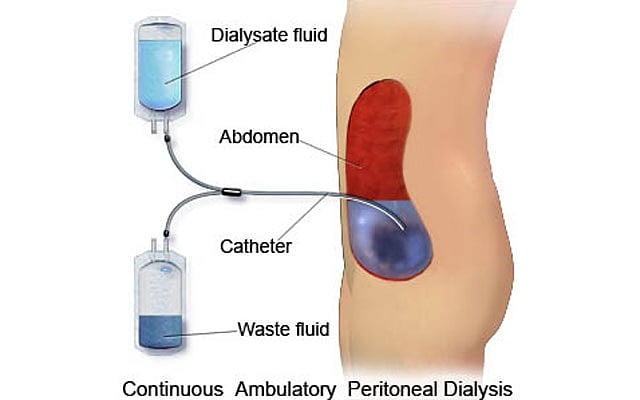
With this type of treatment, body waste products and extra fluid are removed inside the peritoneal cavity –the area in the abdomen around the organs.
A soft tube –catheter– is surgically placed into the cavity that stays all the time except a short period of time when the waste fluid is drained out and fresh fluid put in.
“It (waste water draining out) has to be carried out every 8-hr,” Prof Rashid said as one can carry maximum two litres of water in the plastic bag with him.
“They can easily match the time with their office time, so that they can easily do it at home and work properly at office.”