Published : 28 Jul 2026, 03:59 PM
Updated : 08 Sep 2026, 09:28 AM


Health experts and international agencies say Bangladesh still has more than 10 million people living with hepatitis, as gaps in awareness, testing and vaccination keep the burden high.
They warn the global commitment to eliminate hepatitis by 2030 will remain out of reach unless these gaps are addressed.
The World Health Organization (WHO) has cautioned that hepatitis B and C spread "silently" across countries.
In a message marking World Hepatitis Day on Jul 28, the WHO said an estimated 1.3 million people die of the disease worldwide each year, mostly from liver cirrhosis and liver cancer.
Around 95 percent of hepatitis deaths are caused by hepatitis B and C, the organisation noted, adding that Bangladesh ranks among the top 10 countries by number of hepatitis C cases.
It also features on the list of 10 countries accounting for 69 percent of all hepatitis B-related deaths.
Mohammad Ali, secretary general of the National Liver Foundation of Bangladesh, said hepatitis, or inflammation of the liver, is generally caused by five types of virus: A, B, C, D and E.
Hepatitis A and E spread through contaminated food and water, and usually clear up within four to eight weeks through the body's own immune response.
He said infections from these two viruses resolve on their own, with no antiviral drugs available for them, though some cases can trigger sudden liver failure requiring life-saving multi-organ support.
As per the WHO, an estimated 43 million people are living with viral hepatitis in the South-East Asia region.
In 2024 alone, the region recorded about 266,000 new hepatitis B and C infections and 200,000 hepatitis-related deaths.
Bangladesh's Situation
The WHO said the hepatitis C infection rate among Bangladesh's general population stands at around 0.6 percent, though the rate is higher among at-risk and underserved groups, particularly Rohingya refugees.
According to the National Liver Foundation, close to 10 million people in the country are infected with hepatitis B and C.
No accurate data, however, exists on hepatitis A and E infections nationwide.
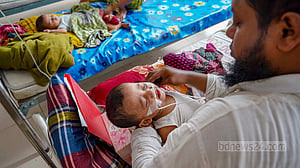
Ali said the disease poses a greater threat to children, with 80 to 90 percent of those infected at birth or in early childhood developing chronic hepatitis, and around 20-25 percent dying before reaching adulthood.
Prevention
The WHO says hepatitis B can be prevented through effective vaccination, while both hepatitis B and hepatitis C have effective treatments.
However, limited access to diagnosis and care continues to drive infections.
Experts say early detection and immunisation remain the most effective tools against the disease.
Prof Ali said preventing hepatitis A and E depends largely on safe food, clean water, proper hygiene and sanitation because both viruses spread through the faecal-oral route.
He said hepatitis A can be prevented with a safe and effective vaccine that provides about 95 percent protection after the first dose.
Hepatitis B and C, however, spread through blood, blood products and body fluids such as semen, saliva and tears.
Routine vaccination effectively prevents hepatitis B, but no vaccine has yet been developed for hepatitis C, making personal preventive measures the only protection against the virus.
Public health expert Tajul Islam A Bari said the most important steps are identifying infections and ensuring vaccination.
He said Bangladesh should urgently introduce the hepatitis B birth dose, which is administered within 24 hours of birth, followed by additional doses at one month and six months.
Although the country uses the pentavalent vaccine, he said adding the birth dose before the routine schedule would significantly strengthen protection.
Bari said at least 90 percent of newborns must receive the birth dose if Bangladesh is to achieve the 2030 elimination target.
He said the programme has yet to begin despite vaccine alliance Gavi being ready to support it, urging policymakers to act quickly.
In a statement marking World Hepatitis Day, WHO Representative to Bangladesh Ahmed Jamsheed Mohamed said many people are missing out on testing and treatment because infections are diagnosed too late.
Prime Minister Tarique Rahman also issued a message marking the day, saying the government is expanding specialist liver care, modern diagnostic facilities and related infrastructure across the country.
He said advanced medical equipment is being added to specialist institutions, including the National Institute of Gastroenterology and Liver Diseases Hospital, to strengthen liver treatment services and reduce the need for patients to seek care abroad.