Published : 20 Sep 2026, 12:12 AM
Updated : 20 Sep 2026, 12:24 AM


Toxic Trail from Soil to Table
Widespread contamination: Commercial guavas and greens across key farming hubs contain unsafe lead, arsenic and cadmium levels
Industrial roots: Polluted soil, toxic runoff and unchecked battery waste are driving poisons straight into crops
Call for vigilance: Experts urge nationwide monitoring and strict pollution controls over panic, protecting future food
The warning is beginning to emerge from foods that sit closest to the everyday Bangladeshi table.
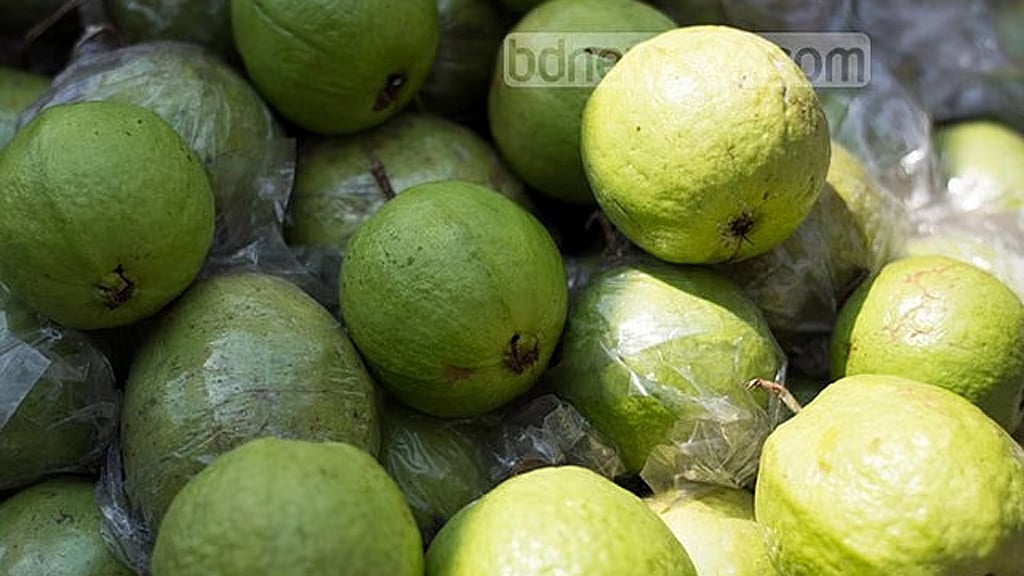
After researchers found excessive levels of lead, cadmium and other heavy metals in vegetables grown around industrial areas of Dhaka and Mymensingh divisions, a new study has detected elevated contamination in commercially grown guava in Rajshahi Division.
Researchers, however, are urging caution rather than alarm. The findings do not represent guava across Bangladesh, they say, but point to a problem that warrants closer scrutiny: contamination in the soil and water that ultimately enters the food chain.
The study, titled Comparative Assessment of Heavy Metal Contamination and Non-Carcinogenic and Carcinogenic Health Risks in Guava from Home Garden and Commercial Farms in Rajshahi Division, was published in August in the Journal of Food Composition and Analysis.
Lead researcher Md Sakhawat Hossain, a lecturer in the Department of Nutrition and Food Engineering at Daffodil International University, said guava was collected from 20 locations across 10 areas in all eight districts of Rajshahi Division.
Commercially grown fruit showed comparatively higher levels of some heavy metals.
“This result does not represent guava from all areas of Bangladesh. The sample and scope of the research were limited to specific regions and locations,” he said.
“Our main objective is not to create fear, but to bring an important issue to the fore. Our findings have shown the presence of heavy metal contamination in guava as well, and the issue needs to be taken seriously. Because guava is an extremely popular and widely consumed fruit in the country.
“Commercially grown guava contains more heavy metals than guava from homesteads. It is important to work on this issue now to ensure safe food for future generations.”
Sakhawat said broader research was needed because so many people regularly eat the fruit, and called for farmers and others involved in fruit production to be encouraged to control contamination.
What Was Found in Guava
The 2025 study tested guava collected from Rajshahi, Natore, Naogaon, Chapainawabganj, Pabna, Sirajganj, Bogura and Joypurhat for lead, cadmium, arsenic and copper.
The acceptable level of lead is 0.1 milligrams per kilogram, but researchers found 2.05mg. Arsenic was 3.84mg per kilogram against an acceptable 1mg, while cadmium reached 1.88mg against 0.05mg. Copper measured 9.04mg, compared with an acceptable 4.5mg.
Among 60 samples, 30 percent contained excessive arsenic, 70 percent excessive lead and 90 percent excessive cadmium.
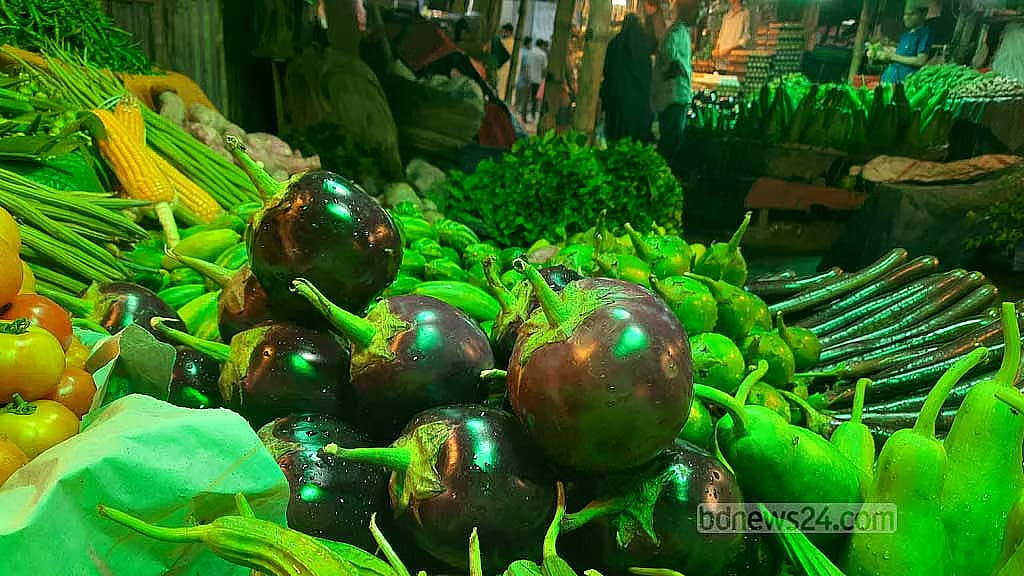
The findings echo a separate 2024 study by Bangladesh Agricultural University soil scientists Shafiqul Islam and Mohammad Golam Kibria, who collected nine vegetables -- potato, aubergine, okra, tomato, red amaranth, pointed gourd, cabbage, cucumber and peas -- from six districts in Dhaka and Mymensingh divisions.
Lead, chromium, cadmium and other heavy metals were found at elevated levels, with red amaranth showing the highest contamination. The study was conducted with support from the Bangladesh Food Safety Authority, and its paper is being prepared for publication.
Kibria said contamination was particularly high in vegetables from industrial areas.
“First of all, the biggest thing we need to do is take preventive measures so that less of these enter the soil. Besides, there is no way to discard it (heavy metals). Because plants will absorb nutrients from the soil. Along with these nutrients, the metals enter and accumulate in the plant.”
Cadmium was measured at 704.32 micrograms per kilogram in red amaranth, 275.66 in aubergine, 349 in okra and 195 in tomato, against a maximum acceptable level of 190 micrograms.
From Soil and Water to the Plate
Kibria said industrial waste, autorickshaw batteries and fertiliser can introduce heavy metals into soil, while irrigation water is another source.
“There is actually a lot to do about this. The heavy metals in vegetables or fruit, lead or cadmium -- these remain in the soil, and they will inevitably mix; there is no way to stop them.
“Industrial waste, autorickshaw batteries and fertiliser can contain heavy metals, which mix into the soil. The only way to reduce this is to prevent them from being added to the soil. One major source is soil, and another is irrigation water. If the soil or water is polluted, it will inevitably mix with the seedlings or plants.”
He said tackling contamination required a broader approach.
“This cannot be controlled by a ministry or institute; it is very difficult. That is why assigning responsibility to any one entity is very difficult.…When we eat it, we need research into how much remains after cooking or actually enters the body. There is nothing to panic about here; awareness is what matters.”
Public health specialist and epidemiologist Mushtuq Husain called excessive heavy metals in food dangerous and urged ministries to act. Public Health Institute Director Syed Abu Ahmed Shafi said toxic substances, metals and microplastics are now being detected across the food supply, arguing that food safety requires large-scale action.
Sakhawat said heavy metals can accumulate in the body, bones and cells and may cause long-term harm, including cancer.
“Do not panic. There is no need to stop eating guava either. What is needed instead is awareness, proper research and appropriate monitoring.”
What the Government Says
Food Minister Afroza Khanam has called for coordinated action, saying food safety cannot be the government’s responsibility alone and that growing concern requires greater vigilance.
Fisheries and Livestock and Agriculture Minister Mohammad Aminur Rashid said heavy metals in soil and water had risen alarmingly, with lead and arsenic detected in water and concerns also emerging over rice.
“What is the source of these elements? Soil, groundwater, fertiliser or pesticides; the government has begun research to identify this.”
The government, he said, was making an “all-out effort” to tackle pollution, with no alternative to addressing contamination of soil and water.
The answer, researchers say, is not to fear guava or vegetables, but to prevent contamination at its source. Cleaner soil and water, tighter controls and regular testing could keep heavy metals from making their way onto the plate.
For now, the warning is simple: what goes into the soil can eventually reach us.