Published : 02 Apr 2026, 07:35 AM
Updated : 24 Aug 2026, 04:00 PM


Key Takeaways
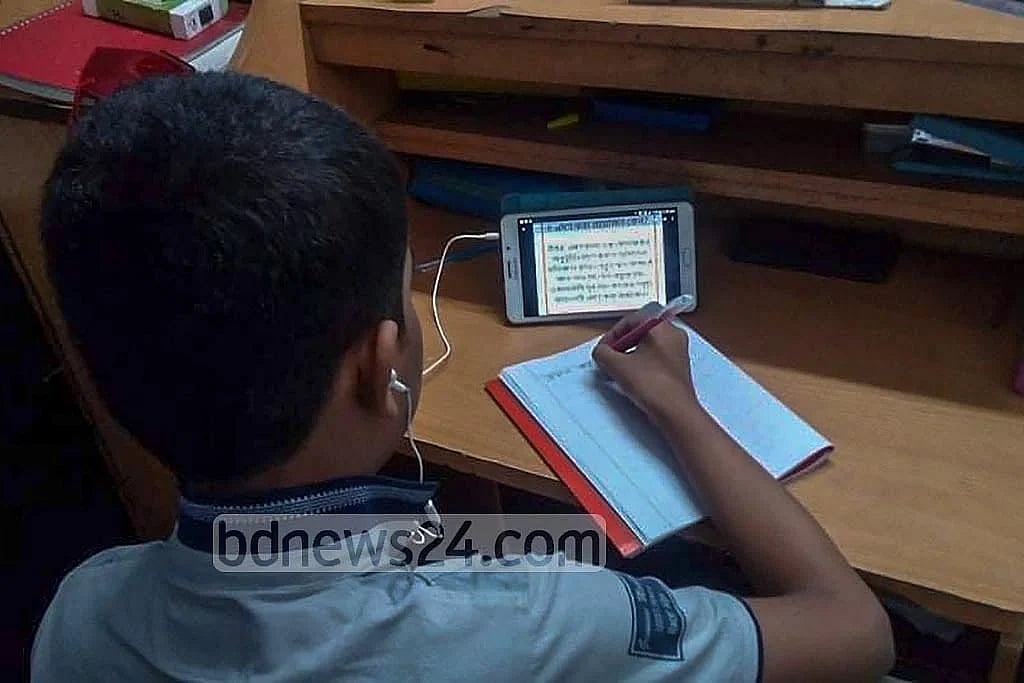
In a modest home in Dhaka’s Bhatara, the prospect of online schooling has stirred quiet anxiety. Shahadat Hossain Fahad, a sixth-grade student at Khilbarirtek Islamia High School, may soon be required to attend classes online -- yet his family lacks even a basic device.
His father, Md Mohon, who works as a security guard, said: “There is no device at home. If online classes are introduced, we will face difficulties. I am not in a position to buy a new smartphone right now.”
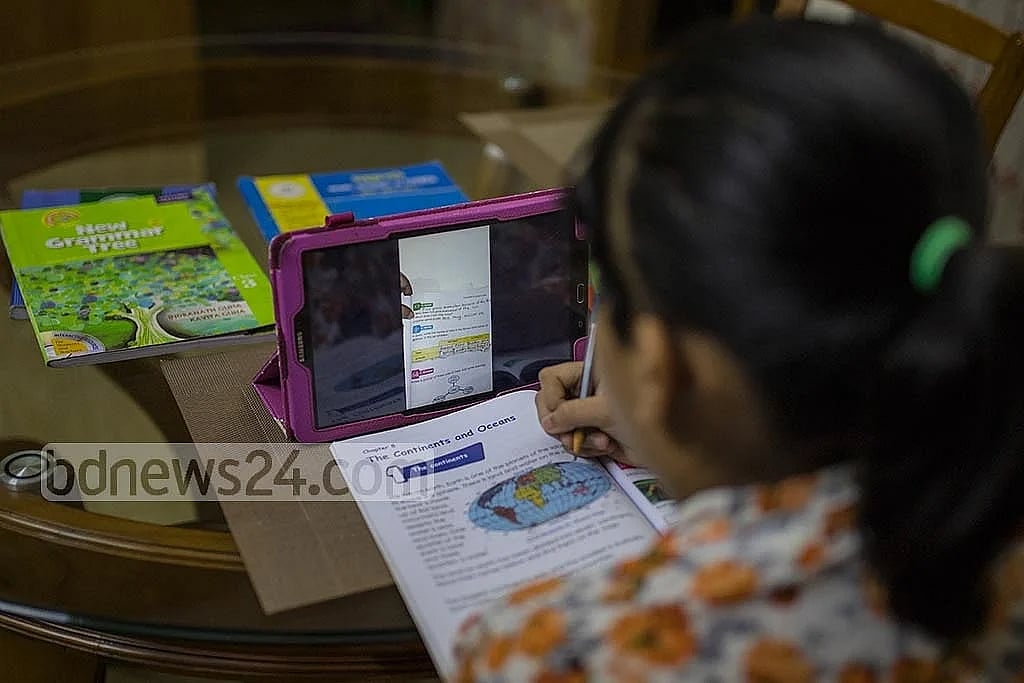
The government is considering introducing online classes alongside in-person teaching in metropolitan primary, secondary, and higher secondary institutions as part of energy-saving measures triggered by the Iran war.
The plan, discussed in meetings of the education ministry and the primary and mass education ministry, proposes extending the school week from five to six days -- three days online and three days in person.
A final decision is expected at Thursday’s cabinet meeting, Education Minister ANM Ehsanul Hoque Milon said.
But as news of the proposal spreads, concern is growing among lower and lower-middle-income families who lack the means to participate.
An employee at a private firm said his daughter, who is in primary school, does not understand the concept of online learning at all.
He noted that while two or three fans are sufficient for a classroom of 30 children, if students study online from home, a fan will be running in every single household, and additional electricity will be consumed to power their devices.
He added that the extra pressure on the power grid during the dry season must also be taken into account.
Others, however, are far better prepared.
In Uttara, Raisha, a fifth grader, and Rafi, a 10th grader, have access to their mother’s smartphone and a smart television.
Their father, tea seller Shanto Ahmed Ratan, said: “They can attend online classes on their mother’s smartphone. We also have a Chinese smart TV at home -- one of them can attend classes there as well.”
Teachers Push Back
Opposition has also come from teachers.
At a meeting held on Wednesday at the primary and mass education ministry, primary school teachers voiced objections in front of the minister.
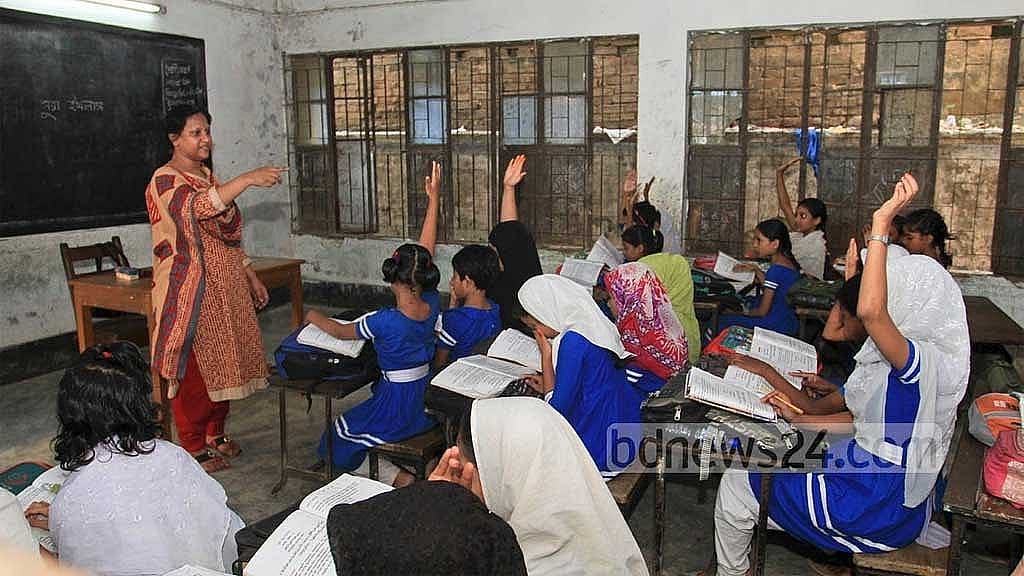
Assistant teacher Shahinur Al Amin said, “During the COVID-19 pandemic, we tried our best to bring children into online classes, but failed. Many teachers lack the technical skills to conduct online classes.
“Not all primary students have the ability to attend online classes, as many come from poor and disadvantaged families.
“We raised these issues in the meeting and said online classes should not be considered. But it seems the minister is determined.”
Another teacher Md Anisur Rahman said, “Not all students in government primary schools in urban areas have access to devices or the ability to attend online classes. And among those who do, there is a risk of misuse of digital devices.
“We informed the minister of these concerns, but he presented arguments in favour of online classes.”
Headteacher Dulal Chandra Chowdhury said, “Even during the pandemic, students did not benefit much.
“If there are three days of online and three days of in-person classes, it will simply give both teachers and students longer breaks. I do not think this will bring any real benefit.”
Uncertain Gains, Rising Concerns
Despite the sweeping proposal, education authorities admit they have no clear estimate of how much fuel could be saved.
A secondary education official said, “Discussions on online classes are not final yet. A final decision will be made at the cabinet meeting. We do not have specific data on how much fuel can be saved.”
A primary education official echoed this, saying: “We do not have calculations on fuel savings. However, traffic congestion may be reduced to some extent.”
Education expert Manzoor Ahmed said, “This is not an ideal solution. It can be started experimentally, but we must assess how effective it is and what problems arise, especially over teacher preparedness.
“We also need to consider whether all students can attend online classes and what impact it will have.”
Reflecting on experience, he added: “We already know from previous experience that it is not very effective. It will increase inequality -- students from affluent backgrounds will benefit more.”
Economist Khondaker Golam Moazzem said the government should make data on fuel savings public.
“If that information is made available, we can assess whether there are better alternatives. Without considering better options, prioritising this approach may impose additional pressure on students,” he said.
He suggested alternatives such as fuel rationing and reducing private vehicle use while encouraging public transport, warning that without such measures, students risk being unfairly burdened.
For families like Fahad’s, the policy is not just a proposal -- it is a divide they may not be able to cross.