Published : 23 Sep 2026, 07:38 PM
Updated : 23 Sep 2026, 07:38 PM


Bangladesh Bank has warned that higher fuel prices and a new payscale for government employees could make it harder to control inflation and meet the government’s target.
The observation came after a Monetary Policy Committee (MPC) meeting at Bangladesh Bank Headquarters on Wednesday, where it reviewed the country’s macroeconomic trends.
In a statement on the meeting minutes, the central bank said headline inflation remains on a downward trend but is still above the government’s 7.5 percent target for FY2026-27.
The MPC noted that global fuel prices remain volatile amid prolonged conflict in West Asia.
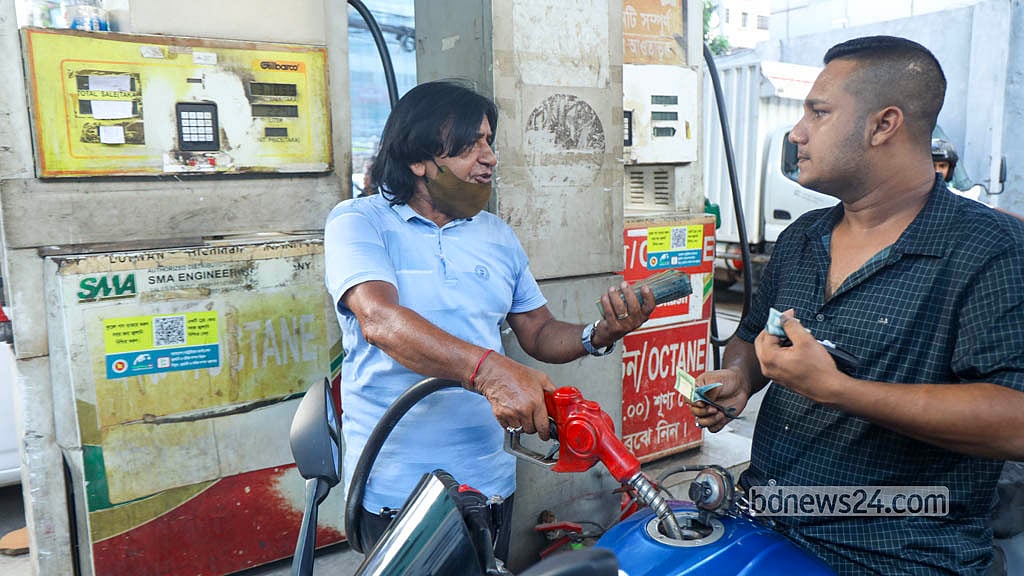
Against this backdrop, domestic fuel prices were raised in late September, while the government also announced implementation of a new payscale for public servants.
The central bank said both measures could intensify inflationary pressure.
From Sept 21, the government raised diesel, petrol, octane and kerosene prices by Tk 20 per litre.
Diesel rose to Tk 135 from Tk 115, petrol to Tk 160 from Tk 140, octane to Tk 165 from Tk 145 and kerosene to Tk 155 from Tk 135.
The Energy and Mineral Resources Division said the West Asian conflict had driven up international fuel prices and transport costs significantly since March.
Import costs and pressure on government fuel subsidies had also increased. It also cited the risk of fuel smuggling across the border because domestic prices were comparatively lower.
Fuel prices had previously been adjusted in April and June, before remaining unchanged in July, August and early September. The latest Tk 20 increase is therefore the third major adjustment this year.
Meanwhile, the new public-sector pay structure took effect on Jul 1. Basic pay for the lowest, 20th grade rose to Tk 20,000 from Tk 8,250, while first-grade basic pay doubled to Tk 156,000 from Tk 78,000.
The new pay will be phased in, with full implementation due from July 2027.
At the same time, headline inflation was 8.26 percent in August, compared with 8.32 percent in July, remaining well above the 7.5 percent budget target.
No Policy-Rate Change
The MPC decided to closely monitor the domestic and global factors and assess their impact on GDP growth and consumer prices before considering any change to the policy rate.
Bangladesh Bank said the rate would therefore remain unchanged for now.
After years of raising rates to curb inflation, the central bank cut its policy or repo rate by 50 basis points to 9.5 percent in July. The new rate took effect on Aug 2.
The rate had been raised steadily from late 2022 and reached 10 percent in October 2024, where it remained for nearly two years despite inflation hitting 11.66 percent in July 2024.