Published : 13 Nov 2026, 01:15 PM
Updated : 13 Nov 2026, 01:15 PM


Jensen Huang's abrupt resignation from Nvidia has turned revelations about his private life into a wider controversy over alleged Chinese espionage and America's technological rivalry with Beijing.
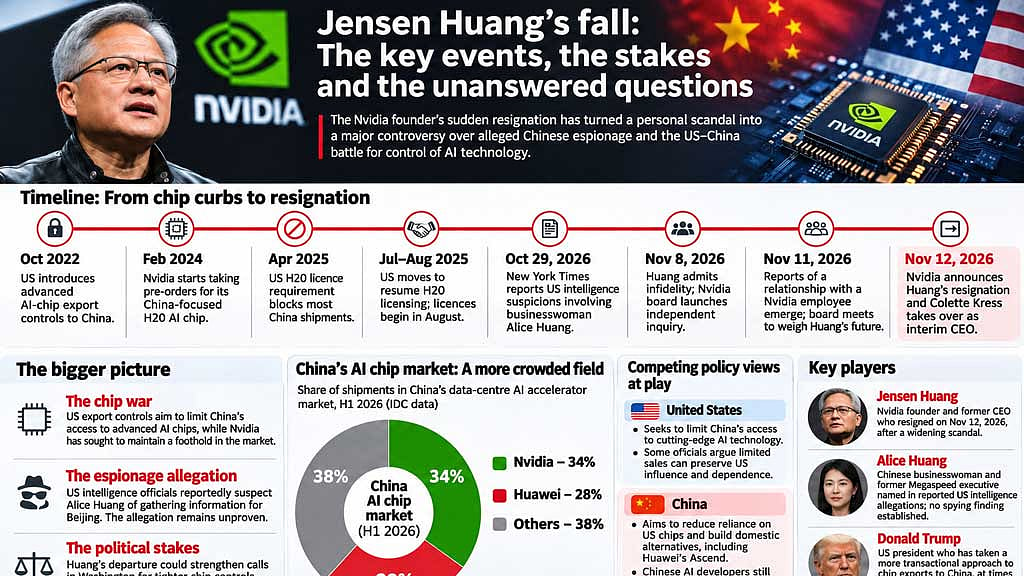
The 63-year-old stepped down as chief executive and president on Nov 12, ending more than three decades of leadership at the company he helped build into an artificial intelligence powerhouse.
Nvidia confirmed his departure and appointed Chief Financial Officer Colette Kress as interim chief executive, without specifying why he had resigned.
But the circumstances surrounding his downfall have prompted competing explanations, ranging from corporate misconduct and an alleged Chinese intelligence operation to suggestions that his departure could benefit American officials opposed to his China strategy.
At the heart of the controversy lies a particularly intriguing question: Why would Beijing allegedly seek intelligence from Nvidia while simultaneously discouraging Chinese companies from buying its chips?
How the Scandal Unfolded
The controversy centres on Alice Huang, also known as Huang Le, a businesswoman formerly associated with Singapore-based cloud-computing company Megaspeed International, an official Nvidia cloud partner.
Reuters, citing corporate records, reported that she had worked in Chinese finance before becoming a controlling shareholder of Megaspeed in 2023.
Singaporean authorities began investigating the company in February 2025 over suspected offences involving server purchases and commercial declarations.
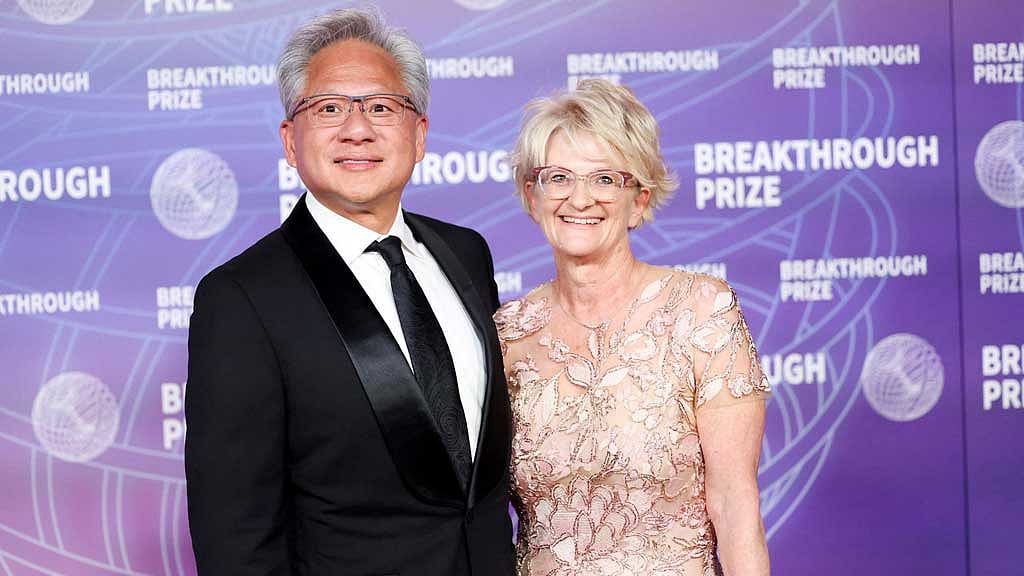
Meanwhile, Jensen Huang and Alice Huang, who are not related, were photographed together at a technology conference in Taiwan in June 2024. Reuters also identified footage showing them attending a private dinner in Taipei in May 2025.
Their association came under public scrutiny following investigations into Megaspeed's activities and possible shipments of restricted Nvidia processors to China.
The controversy escalated on Oct 29, 2026, when The New York Times reported that US intelligence officials suspected Alice Huang of gathering information for Beijing while maintaining a close relationship with Nvidia's chief executive.
China rejected the allegations, which Reuters said it could not independently verify.
On Nov 8, Huang acknowledged being unfaithful to his wife and apologised to his family and employees. He did not identify the person involved.
That same day, Nvidia's board announced an independent investigation into reports that Jensen had been targeted by a foreign intelligence operation.
The board said it had no reason to believe national security information or company secrets had been compromised and expressed confidence in his leadership.
Further allegations emerged on Nov 11, when The New York Times reported that Huang had also had a relationship with Nvidia healthcare vice president Kimberly Powell, who reported to him.
Reuters subsequently reported another alleged relationship involving a company employee, citing people familiar with the matter.
Nvidia's board met on Nov 11 to consider Huang's future. His resignation followed the next day.
The central espionage allegation, however, remains unresolved.
US Attorney General Todd Blanche said on Thursday that the Justice Department had not determined whether Alice was a Chinese spy, although the FBI was investigating the matter.
Singapore's Ministry of Home Affairs separately confirmed that its investigation concerned suspected commercial offences, not espionage.
Authorities found insufficient evidence to establish her involvement in suspected false declarations concerning server purchases. However, police concluded that she had knowingly provided inaccurate information about her role in Megaspeed. She received a stern warning and was barred from re-entering Singapore.
Investigations into Megaspeed and six other individuals remain ongoing.
On Friday, Malaysia also announced an investigation into whether AI chips imported by SpeedMatrix, a Megaspeed subsidiary, had subsequently been re-exported in violation of Malaysian law.
Megaspeed has said it takes export-control compliance seriously and has cooperated with American inspections.
The Chip War Behind the Scandal
The struggle over Nvidia's China business began long before the revelations about Huang's personal life.
In October 2022, the Biden administration introduced restrictions on exports of advanced semiconductors and chipmaking technology to China, citing national security concerns.
The measures limited Nvidia's ability to sell powerful processors such as the A100 and H100 to Chinese customers.
Nvidia subsequently developed less powerful alternatives, including the H20, designed to comply with American export rules.
But the restrictions continued to evolve.
In April 2025, the Trump administration imposed new licensing requirements on H20 exports, effectively blocking shipments to China. Nvidia subsequently recorded a $4.5 billion charge associated with excess inventory and purchase commitments.
Huang criticised the restrictions, arguing that excluding Chinese developers from American technology would accelerate the development of domestic alternatives.
He cultivated close ties with President Donald Trump and advocated restoring Nvidia's access to the Chinese market.
In July 2025, Nvidia announced that Washington had assured it that licences for H20 sales would be granted. The government began issuing approvals the following month.
Trump subsequently authorised limited sales of Nvidia's more powerful H200 processors to approved Chinese customers, subject to licensing and tariff requirements.
Huang's argument was that keeping Chinese developers within Nvidia's hardware and software ecosystem would preserve American technological influence.
But lawmakers favouring tighter restrictions warned that advanced processors could strengthen China's military and AI capabilities.
The Nvidia founder had consequently become an influential advocate for one side of a much larger American policy dispute.
Why China Might Not Want Nvidia's Chips
One of the more intriguing aspects of the scandal is an apparent contradiction in Beijing's policies.
While US intelligence officials reportedly suspect Alice Huang of gathering information for China, the Chinese government has itself been discouraging purchases of Nvidia processors.
Beijing has spent years promoting domestic alternatives, including Huawei's Ascend processors and chips developed by Cambricon and Alibaba's T-Head.
Those efforts are producing measurable results.
According to market research firm IDC, cited by Reuters in October, Nvidia accounted for 34 percent of shipments in China's data-centre AI accelerator market during the first half of 2026, while Huawei captured 28 percent.
Nvidia's own regulatory filings acknowledge the pressure.
The company said Chinese authorities had encouraged customers to buy from domestic competitors while discouraging purchases and imports of Nvidia's data-centre products.
Reuters reported on Nov 5 that approximately 600,000 Nvidia H200 chips were sitting in Hong Kong awaiting permission to enter mainland China, despite demand from Chinese technology companies.
The situation reflects competing priorities.
Chinese AI developers want access to Nvidia's powerful processors and established software ecosystem, while Beijing wants to reduce dependence on American technology and promote domestic manufacturers.
This has prompted an alternative interpretation of the controversy: that demand for overseas Nvidia-powered computing services reflects the commercial interests of Chinese companies rather than necessarily demonstrating a state-directed intelligence operation.
Chinese developers can rent computing capacity from data centres abroad without physically importing the processors.
Reuters reported on Nov 12 that some companies were rushing to secure such access amid fears that Washington might restrict the arrangement.
These commercial incentives help explain the demand for businesses such as Megaspeed, although they do not establish whether any particular company violated export regulations or engaged in espionage.
Could Beijing Have Had Other Motives?
China's pursuit of domestic chipmaking capabilities does not necessarily rule out intelligence gathering.
Even if Beijing wants to reduce its reliance on Nvidia, information about the company's technology, business relationships and discussions with American policymakers could still prove valuable.
Jessica Brandt, a senior fellow at the Council on Foreign Relations and former US intelligence official, has identified several potential objectives.
These include understanding Nvidia's China-specific processor designs, anticipating changes to American export restrictions and identifying disagreements between the company and Washington.
But these are possible intelligence objectives, not findings about Alice Huang.
No publicly established evidence demonstrates that she obtained sensitive information from Jensen Huang or passed it to Chinese intelligence.
Did Washington's Chip Hawks Benefit?
Another interpretation focuses less on Beijing's intentions and more on the political consequences of Huang's departure.
His opposition to sweeping export restrictions had put him at odds with American officials and lawmakers who consider advanced AI technology a national security priority.
The disagreement extended into the Trump administration itself.
In July 2025, Commerce Secretary Howard Lutnick argued that allowing Chinese developers to use American technology could preserve their dependence on the US computing ecosystem.
Others favoured tighter restrictions, warning that access to advanced processors could accelerate China's technological and military capabilities.
The scandal has intensified that debate.
Reuters reported on Thursday that lawmakers from both major US parties were pressing for tougher controls on advanced chip exports.
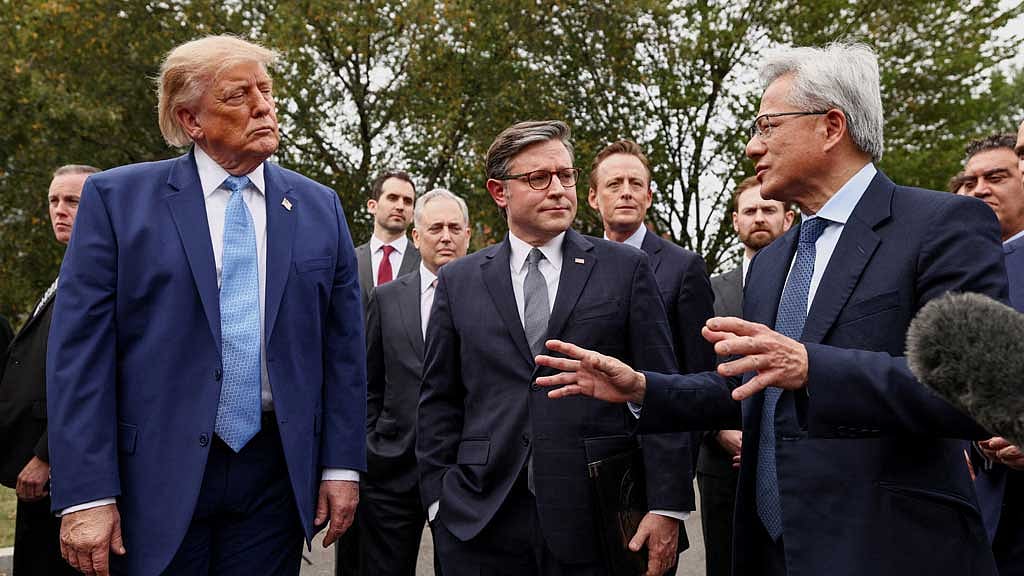
Republican House Speaker Mike Johnson said a consensus was developing in Congress around stronger restrictions, explicitly referring to recent developments involving Nvidia.
Lawmakers are also considering measures to restrict Chinese companies' remote access to Nvidia-powered data centres overseas.
Huang's departure therefore removes an influential advocate of continued technology trade with China just as calls for tighter controls are gathering momentum.
But does that mean his downfall was engineered to achieve precisely this outcome?
A Political Plot or an Unproven Theory?
A more speculative interpretation circulating online suggests that American intelligence officials or opponents of Huang's China strategy deliberately encouraged damaging disclosures to force him from Nvidia.
Under this theory, the espionage allegations and subsequent revelations about his personal conduct provided a means of discrediting an executive who had repeatedly challenged tighter export restrictions.
But no publicly established evidence demonstrates that American intelligence agencies, policymakers or journalists coordinated such an operation.
Researchers William Hannas and Huey-Meei Chang, writing for Georgetown University's Center for Security and Emerging Technology, have raised a narrower concern.
In a Nov 11 analysis, they noted that the timing and dissemination of intelligence-related allegations can influence political outcomes, with interested parties potentially using unresolved cases to reinforce positions they already hold.
They cautioned, however, that an allegation's political usefulness does not establish that it was fabricated, orchestrated or deliberately timed.
There is also a more straightforward possible explanation for Huang's departure.
The reported relationships with company employees raised corporate governance questions separate from the suspected intelligence activity. Potential conflicts of interest and concerns about commercially sensitive information added to the scrutiny facing Nvidia's board.
Those matters could have influenced its decision independently of the wider struggle over chip exports.
Nvidia has not publicly identified the decisive reason for Huang's resignation.
Who Stands to Gain?
Huang's departure could have far-reaching consequences for the global AI industry.
American lawmakers seeking tighter export controls may find it easier to advance their proposals without Nvidia's founder actively opposing them as chief executive.
Chinese chipmakers, including Huawei, could benefit if restrictions accelerate the adoption of domestic processors. But Chinese AI developers dependent on Nvidia's technology could face higher costs and reduced access to computing power.
Nvidia itself must navigate a leadership transition at a sensitive moment for the AI industry.
The scandal has exposed competing commercial and strategic interests, but identifying those who might benefit from Huang's departure is not the same as establishing who caused it.
What happens next may depend less on the speculation surrounding his resignation than on decisions made in Washington and Beijing over access to the technology powering artificial intelligence.