


Published : 05 Nov 2021, 04:01 PM
Updated : 08 Apr 2022, 01:19 PM


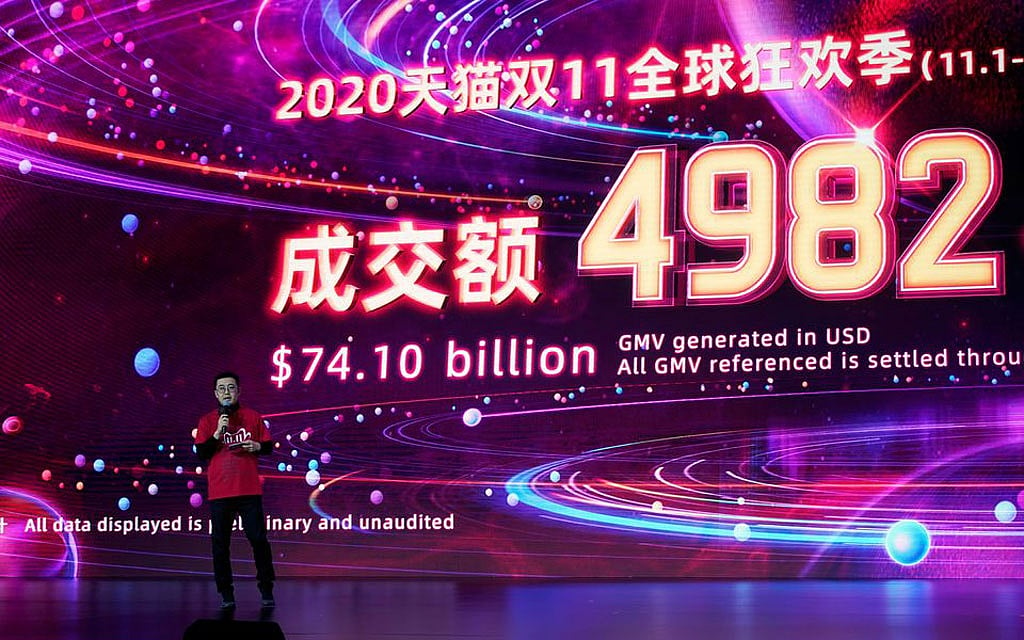
Started over a decade ago to coax Chinese shoppers onto Alibaba's online sites, Singles' Day has morphed into a national obsession featuring glitzy galas and performances and plenty of addictive discounts with a tap on a smartphone screen. Last year, the company processed a whopping $74 billion in transactions over an 11-day period. This year’s numbers will dazzle again: A record 290,000 brands will offer some 14 million deals to over 900 million bargain-hunters. Rival sites like JD.com, have joined in too.
It's an impressive feat involving millions of workers handling billions of packages. Alibaba's logistics arm mobilised 3,000 planes during last year's event to ship foreign products into the country; this year, it has already pre-stocked some 300 million goods from abroad.
Such excess will have an environmental cost. Figures are scarce, but Greenpeace estimated that deliveries of 2016 Singles’ Day orders generated 52,400 tonnes of carbon dioxide. A more recent report in 2019 forecast the volume of packaging material used by e-commerce and delivery sectors would more than quadruple to 41.3 million tonnes by 2025 from 2018.
For its part, Alibaba plans to cut order-related carbon emissions by 30 percent this year, though it has yet to disclose actual numbers. It's touting recycling services, data centres that run on renewable energy and even algorithms that match products with the right-sized parcel to cut waste. The company is also offering 100 million yuan worth ($15.6 million) of vouchers for eco-friendly brands.
Those are welcome steps. Still, against the backdrop of the United Nations climate summit underway in Glasgow and President Xi Jinping's goal read more for China to be carbon neutral by 2060, the country's corporate titans can afford to be bolder. Besides, Singles' Day has outlived its intended purpose as a marketing gimmick and is financially not as significant these days: Last year’s transactions accounted for just 6 percent of Alibaba’s total for the fiscal year. The company is better off ditching it entirely.
Alibaba on Oct 20 officially kicked off its 13th annual 11.11 Global Shopping Festival, known as Singles' Day. A record 290,000 brands are participating, according to Alibaba, and will offer more than 14 million deals to over 900 million Chinese consumers.
- As part of this year's emphasis on sustainability, the company plans to issue 100 million yuan-worth ($15.6 million) of so-called green vouchers to "incentivise shopping decisions that contribute to an environmentally-friendly lifestyle". Alibaba also expects to reduce its carbon emission per order, though has offered no further elaboration.
- The volume of packaging material used by the e-commerce and express delivery sectors hit 9.4 million tonnes in 2018 and is on course to reach 41.3 million tonnes by 2025, according to a 2019 report cited by Reuters from Greenpeace and other non-government bodies.







