Published : 16 Sep 2026, 08:05 AM
Updated : 16 Sep 2026, 11:50 AM


Bangladesh’s footwear industry is starting to benefit from a shift in global trade triggered by higher US tariffs on China, with exporters betting they can turn the opening into a multibillion-dollar expansion.
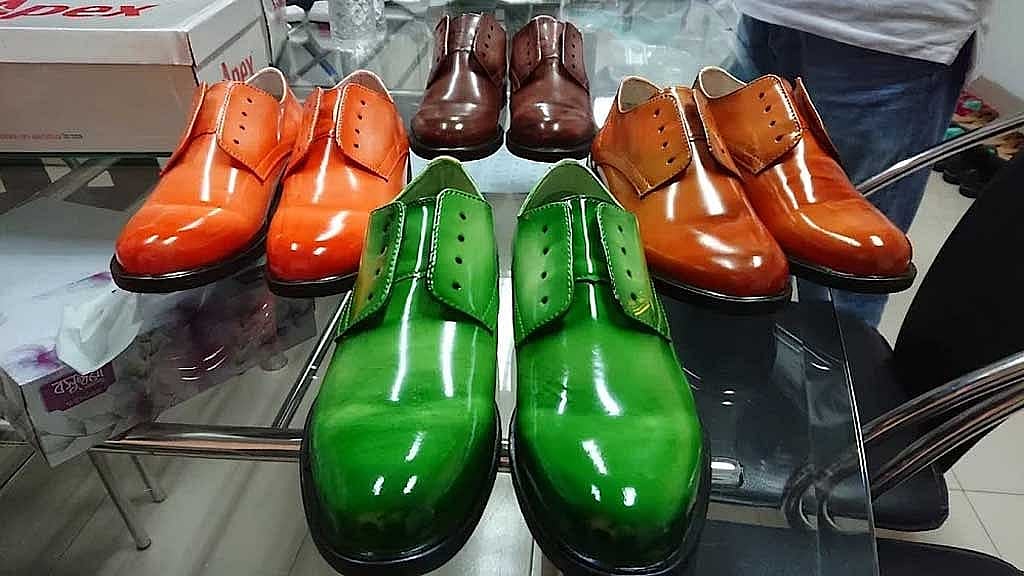
Exports of both leather and non-leather footwear are rising, while China, long the dominant supplier to the US market, is losing ground.
Industry players say Bangladesh could lift export earnings from the sector to $5 billion within two years if persistent energy shortages are resolved and the government provides the policy support needed to expand production.
The latest data point in that direction.
Bangladesh earned $258.45 million from leather and non-leather footwear exports in July and August, the first two months of the 2026-27 financial year, according to the Export Promotion Bureau.
That was 11.5 percent more than a year earlier. At the current exchange rate of about Tk 123 to the dollar, the exports were worth more than Tk 30 billion.
Export Picture
Footwear exports reached a record $1.23 billion in the financial year that ended on Jun 30, up 2.35 percent from the previous year, according to an analysis of EPB data.
When raw hides and other leather goods are included, total export earnings from the broader leather and footwear sector rose to roughly $1.76 billion.
The growth has continued into the new financial year. Leather footwear exports generated $151.03 million in July and August, up 8.91 percent from the same period a year earlier.
Non-leather footwear grew faster, rising 15.29 percent to $107.42 million.
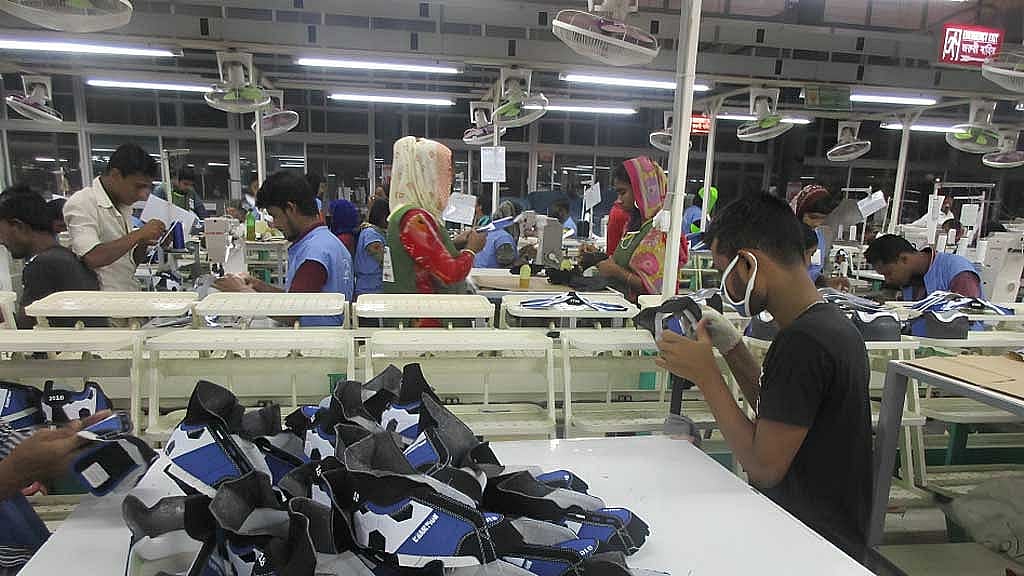
The figures underline a gradual change in an industry once overwhelmingly associated with leather. Synthetic, textile, and other non-leather footwear are becoming an increasingly important part of Bangladesh’s export mix.
China’s Retreat
The US is Bangladesh’s single biggest market for footwear.
US Department of Commerce data from the Office of Textiles and Apparel (OTEXA) show that the country imported $226.9 million worth of footwear from Bangladesh in the first seven months of 2026.
That was 9 percent more than in the same period last year.
The bigger shift is happening around China.
Only a few years ago, China controlled more than 60 percent of the US footwear market. Higher tariffs imposed as part of Washington’s trade confrontation with Beijing have begun to eat into that dominance.
China’s footwear exports to the US fell by about 38 percent in the first seven months of this year, according to OTEXA data cited by industry officials.
Vietnam, Indonesia, Cambodia, and India have been among the main beneficiaries. Bangladesh sees room to join them.
Nasir Khan, vice-president of the Leathergoods and Footwear Manufacturers & Exporters Association of Bangladesh (LFMEAB), said more than 30 percent of Bangladesh’s footwear and leather-goods export earnings come from the US.
“Trump’s tariffs have shaken China’s near-monopoly, and that creates a golden opportunity for us,” he said.
Nasir added that the tariff burden on Chinese goods was now more than four times that faced by Bangladesh under the US reciprocal tariff structure.
Footwear is also highly labour-intensive, giving Bangladesh an advantage because of its lower labour costs, he said.
“If we can capture even 2 to 3 percent of the market China is losing, we can reach $5 billion in export earnings within two years.”
Apex Footwear is seeing the same change in its order book.
Md Nasrullah, chief operating officer of the company’s export unit, said the tariff shift had created significant new opportunities.
“Trump’s tariffs have brought a lot of potential for us,” he said.
“We achieved double-digit export growth last financial year. We are receiving a huge number of orders, so many that we cannot take all of them.”
Bottlenecks and Fixes
The opportunity is considerable. So are the constraints. For manufacturers, energy remains the most immediate problem.
“The main issue is gas and electricity,” Nasrullah said. “We have no electricity for four to five hours a day.”
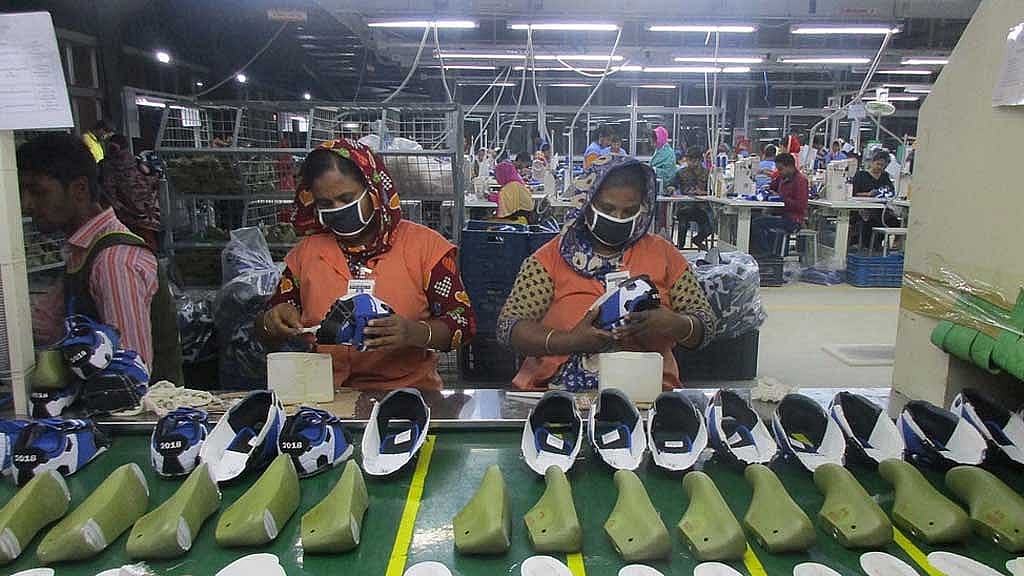
Factories are increasingly relying on diesel generation when grid power is unavailable, pushing up production costs.
That makes it harder for Bangladesh to compete with rivals such as Vietnam and Cambodia, he said.
The leather segment has another problem, which is the central effluent treatment plant at the Savar leather industrial estate.
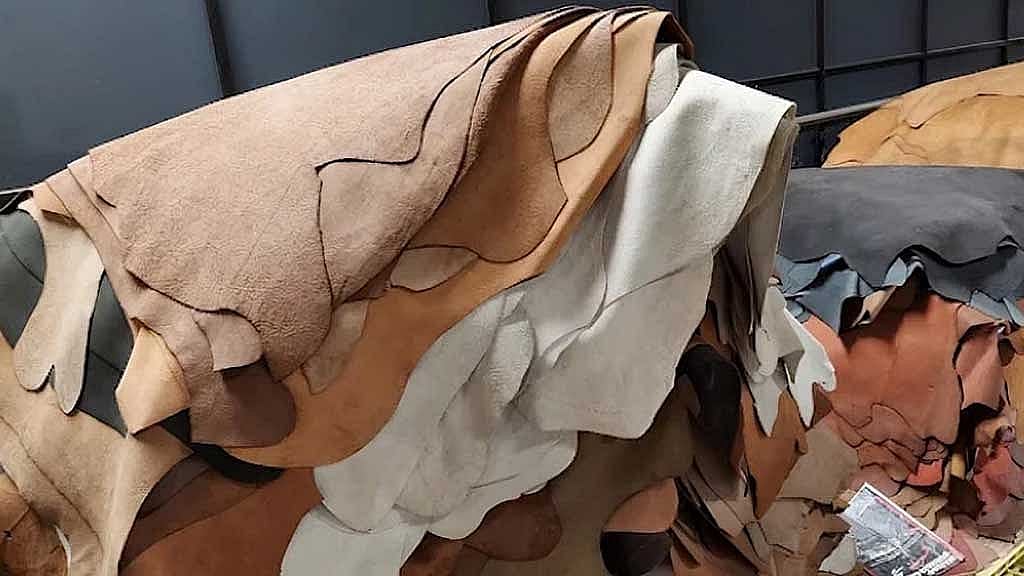
Foreign buyers are unhappy with the facility, according to exporters, forcing some manufacturers to source raw materials from outside the estate or import them instead.
That adds further cost to production.
Nasrullah said removing those obstacles would do more than strengthen footwear exports. It could also help Bangladesh reduce its overwhelming dependence on readymade garments, which continue to account for the vast majority of merchandise export earnings.
Non-leather Footwear: New Frontier
One of the industry’s fastest-growing areas is non-leather footwear.
Demand is rising globally for shoes made from synthetic and other materials because they can be fashionable, durable, and relatively inexpensive.
Bangladeshi manufacturers are expanding quickly to capture that market.
National Polymer Group (NPoly) has built a large non-leather footwear factory at Bhaluka in Mymensingh.
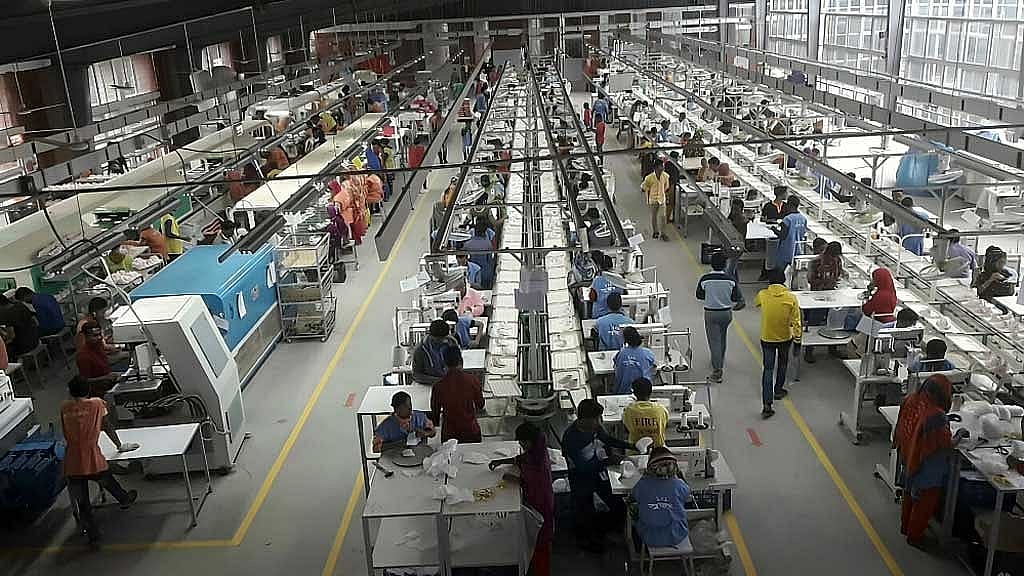
The Shoeniverse Footwear plant produces about 400,000 pairs a month and exports more than $3 million worth of shoes on average each month, according to Managing Director Riad Mahmud.
Around 4,000 people work at the factory.
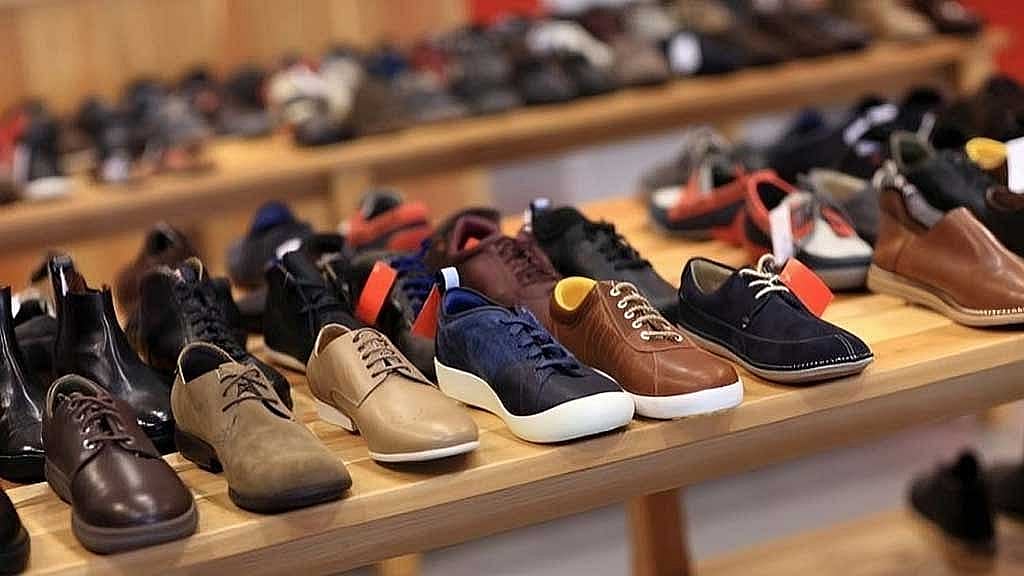
The company doubled production capacity at the beginning of last year after seeing stronger export prospects.
Now the additional capacity is filling up.
“We have orders covering our full production capacity through February next year,” Riad said.
“Big companies are turning away from China and moving towards Bangladesh.”
The challenge, according to him, is ensuring the industry has enough raw materials and skilled workers to meet that demand.
Export-focused factories are also emerging outside Bangladesh’s established industrial centres.
In 2017, brothers Mohammad Hasanuzzaman and Mohammad Selim set up Bling Leather on 3.84 hectares of land in Taraganj, Rangpur. Selim later died.
The factory is now fully export-oriented, shipping footwear to markets including Poland, Turkey, Germany, Canada, the US, and India.
Managing Director Hasanuzzaman said the business was originally established partly to create jobs for women in rural communities.
Its ambitions have since grown.
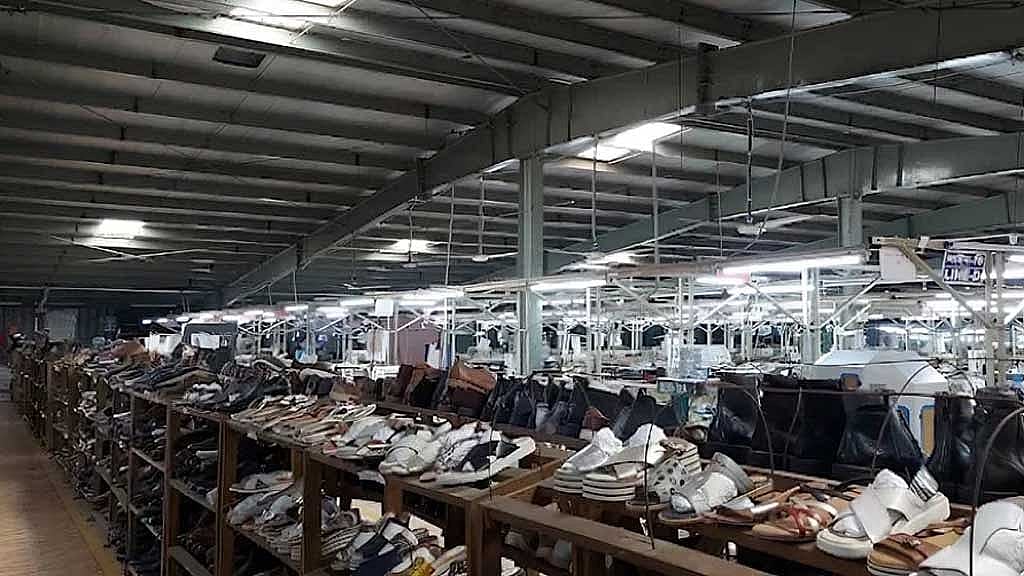
The company now plans to expand production to 50,000 pairs of shoes a day.
Hasanuzzaman said Bling Leather also intends to build its presence in Bangladesh’s domestic market.
Another part of the expansion drive is aimed at reducing dependence on imported components.
Jennys Group has developed an industrial park called Bangladesh Shoe City Ltd, or BSCL, on 14.16 hectares of land at Mouchak in Gazipur.
Nasir Khan, the group’s chairman, said about 50 important footwear components and materials are being manufactured at the site.
“We export both leather and non-leather footwear. We designed this city so that every type of raw material needed to make shoes can be available here, without having to import it,” he said.
That could become increasingly important if Bangladesh wins more orders from global brands moving production away from China.
China still dominates global footwear exports, with around 60 percent of the market, according to industry estimates cited in the report.
Vietnam, Indonesia, Germany, Turkey, and India are among the other major exporters. Bangladesh’s share remains small.
But manufacturers argue the combination of changing trade flows, low-cost labour, expanding non-leather capacity and a growing supply chain gives the country a rare chance to move much higher up the global rankings.
Their $5 billion ambition rests on whether Bangladesh can move quickly enough.
Orders, exporters say, are already appearing.
The harder task is supplying the power, gas, raw materials, skills, and policy support needed to fill them.