Published : 02 Nov 2025, 04:16 AM
Updated : 21 Aug 2026, 02:39 PM


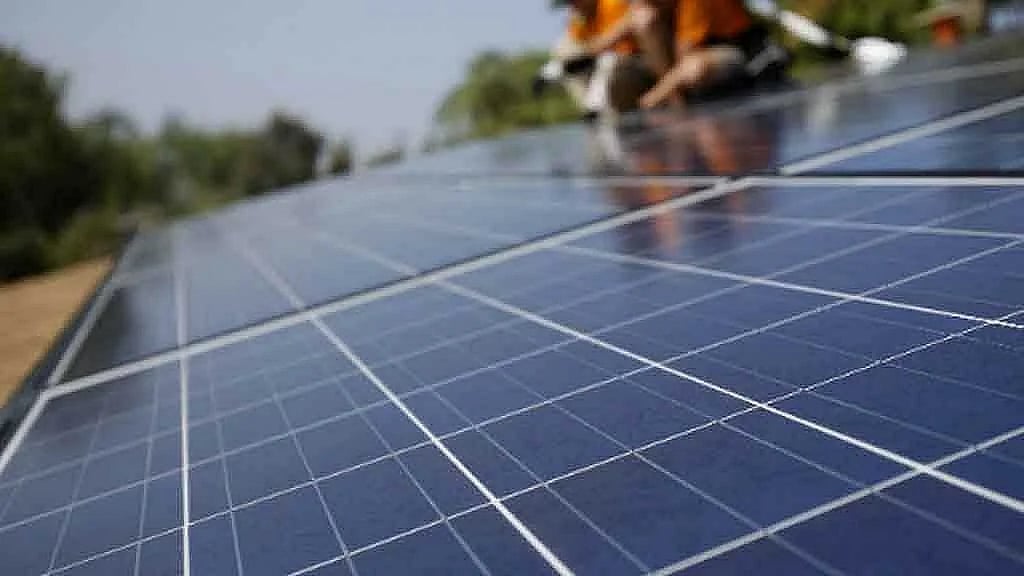
With open land scarce in Bangladesh, the textile industry is playing a part in the nation's clean energy transition by using roof space for solar power.
Under pressure from global brands to go green, textile suppliers, which account for 85 percent of Bangladesh's exports, are hoping new initiatives can help find the funds they need to expand rooftop solar power systems.
Small and medium-sized factories that form the bulk of Bangladesh's garment and textile manufacturers often lack financing to build their own solar plants, and few energy companies have came forward to make the investments - wary of failing to get returns in case smaller factories default on their obligations.
To break this deadlock, fashion brands are teaming up with energy companies to co-invest in building rooftop solar capacity for smaller Bangladeshi suppliers, creating a synergy of brand investment and commitment with energy company expertise.
One example is the Greener Garments Initiative (GGI), in which the Danish clothing brand Bestseller joined with the solar energy company SOLShare to jointly invest in construction of rooftop solar plants at garment factories in Bangladesh.
"Scaling up brand support to suppliers' solar growth could speed up the industry's energy transition," said Aziza Sultana Mukti, Deputy CEO at SOLShare.
Involvement of fashion brands encourages suppliers to switch to solar power faster while making the investment financially safer for the solar energy company that builds the photovoltaic system, she added.
The joint initiative catering to small and medium-sized factories has already installed a combined capacity of more than seven megawatt-peak (MWp) in the last two years, said Mukti.
While such a capacity is not terribly large, GGI's solar installations have grown by more than 200 percent in the last 18 months and it plans to build out capacity in the coming years, he added.
Other initiatives being tested include the Apparel Impact Institute, which is pooling contributions from brands and philanthropic organisations to support Bangladeshi factories in developing rooftop solar capacity.
Bangladesh's textile-dominated industrial sector could build roughly 5,000MW of solar power, about fifth of the country's total generation capacity, while rooftop solar installations now make up less than 1 percent, according to an analysis by the Institute for Energy Economics and Financial Analysis (IEEFA), a global think tank.
"Industrial rooftop solar has not been reaching its true potential as many manufacturers struggle to access the required finance," said Shafiqul Alam, IEEFA's lead energy analyst for Bangladesh.
SMALLER FACTORIES IN FOCUS
Most of the progress in building rooftop solar capacity so far has come from large manufacturers.
The DBL Group, one of the country's biggest manufacturers with 50,000 workers, invested to build 5.42 MW capacity on its factory rooftops - a significant amount for a single business group - and plans to multiply its solar generation in the next few years.
"Arranging finance for renewable energy projects is not a big challenge for us - and we have made our own investments in our rooftop solar plants," said Mashook Mujib Chowdhury, senior manager of sustainability at the DBL Group.
Large suppliers are more likely to build rooftop solar plants with their own investments using capital expenditure, said Chowdhury.
Smaller joint initiatives like the GGI by SOLShare and Bestseller, on the other hand, are implementing operational expenditure projects in the textile sector, he said.
This means an energy company builds, owns and runs the rooftop solar plant and charges the factory for the power generated - while selling any surplus power to the grid.
Such a model "works better for smaller suppliers to meet their gaps in finance, knowledge and technical know-how," said Mohiuddin Rubel, former director of Bangladesh Garment Manufacturers and Exporters Association and also managing director of Denim Expert Ltd.
BRAND PERSPECTIVE
For fashion brands like Bestseller, reducing suppliers' emissions is key to their decarbonisation goals as these account for 96 percent of the sector's emissions, said a study published last year by the Apparel Impact Institute.
"As a big buyer from Bangladesh - one of our key sourcing regions - we are committed to support suppliers who are navigating more and more climate targets," said Felicity Tapsell, head of responsible sourcing at Bestseller.
Bestseller is also considering supporting suppliers with big ticket clean technology investments like biomass boilers or heat pumps, said Tapsell.
"Financing solar plants on factory rooftops may not be enough - as they need a few more things for energy transition," said Rubel.
For decarbonisation to be sustainable, suppliers need long-term partnership from brands, low-cost financing and tax cuts from the government, he added.