Published : 07 Nov 2026, 07:47 PM
Updated : 07 Nov 2026, 07:47 PM


Kashmir's saffron production has fallen sharply over the past decade as changing weather, urban development and counterfeit products put pressure on farmers and the region's renowned spice trade, reports the BBC.
The production of saffron, often called "red gold" because of its high value, has dropped from eight tonnes in 2010-11 to 2.6 tonnes in 2023-24 across Kashmir and nearby Jammu, Indian government figures show.
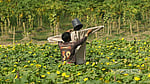
The BBC reports that farmers in Kashmir's main saffron-producing area Pampore are struggling with increasingly unpredictable rainfall and longer dry spells.
The crop depends on moisture during August and September, when its underground stems develop and prepare for flowering.
Farmer Mohammad Asif told the BBC that his family harvested just 250g in 2025, compared with nearly 1.5kg the previous year.
"Saffron depends on timing. If rain does not arrive when the crop needs moisture, flowering suffers very quickly," he said.
Rising temperatures, changing snowfall patterns, and declining groundwater levels have added to the difficulties.
Although India launched a National Saffron Mission in 2010 to improve irrigation and cultivation, some growers say water supplies remain unreliable.
The BBC also highlights the loss of farmland to road expansion, housing and commercial construction.
Farmers say younger generations are increasingly reluctant to continue cultivating the crop as their livelihoods become less secure.
Imported saffron, particularly from Iran, is sometimes repackaged and sold as Kashmiri.
Some products are also adulterated with safflower, turmeric or artificial dyes, making it difficult for consumers to identify genuine saffron according to the BBC.
Food scientist Shazia Malik warns that fraudulent labelling damages both consumers and local growers by weakening confidence in genuine Kashmiri saffron.
Efforts to protect the industry include certification and electronic tracking systems, while researchers are exploring controlled indoor cultivation to reduce climate-related risks.
But farmers fear that once saffron fields are replaced by buildings, cultivation may never return.
For families who have grown the spice for generations, the threat goes beyond lost income.
Asif said saffron farming had given local communities a shared identity for centuries, adding that people were worried about losing a way of life tied to the land.