Published : 29 Nov 2025, 03:52 PM
Updated : 21 Aug 2026, 02:49 PM


“They burned our homes. Why don’t you write about that? Just check Facebook.”
Standing amid the charred ruins of Dhaka’s Korail slum, a young man identifying himself only as Ashraf hurled the familiar accusation: his voice edged with anger, his eyes full of distrust.
Every time a fire rips through a slum in Dhaka, similar questions echo through the smoke. Newspapers cite the refrain: “Accident or arson?” The pattern is by now routine.
In old Dhakai films, villains were often shown torching slums as they laughed, while the hero raced in to rescue people.
The difference is that, in real life, even after multiple investigations, the villains are never found.
For Dhaka’s slum dwellers, survival means rebuilding again and again, and carrying on with suspicion and fear as constant companions until the next fire wipes everything away.
For years, slum fires have dominated headlines, and the scenes of human suffering scarcely change.
Though authorities routinely blame electrical short circuits or gas leaks, the illegal web of stolen electricity, water and gas lines in these settlements never disappears.
Those who occupy the land illegally collect rent from the shacks and control the underground utility networks. It is an extortion economy worth billions of taka.
Locals often allege that disputes over the division of this money among criminal groups and political actors lead to deliberate arson.
A World Bank report published 18 years ago also noted that incidents of fire were sometimes used as a tool to assert territorial control inside slums.
And after nearly every major fire, rumours swirl again: Was the blaze set to clear the settlement?
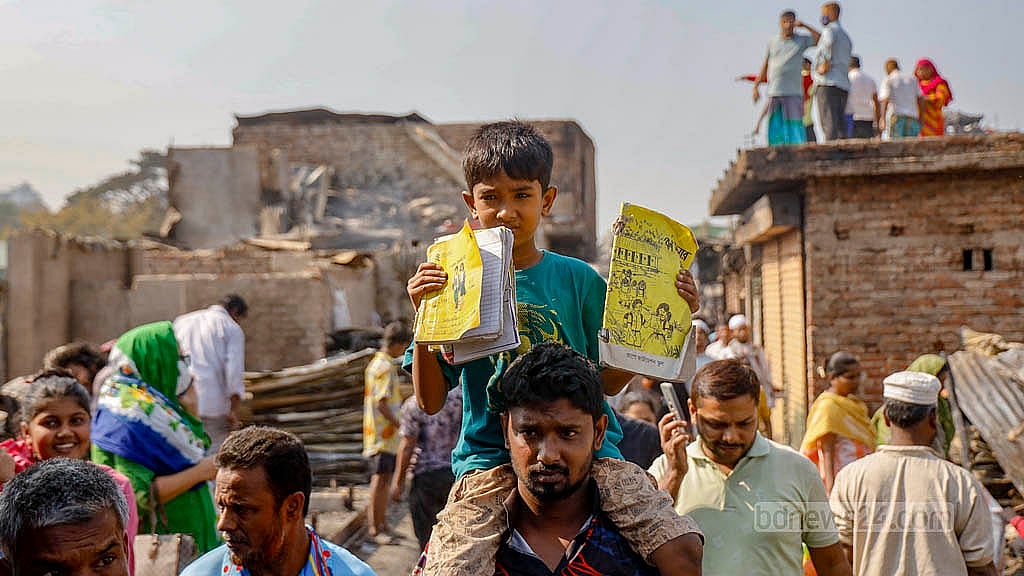
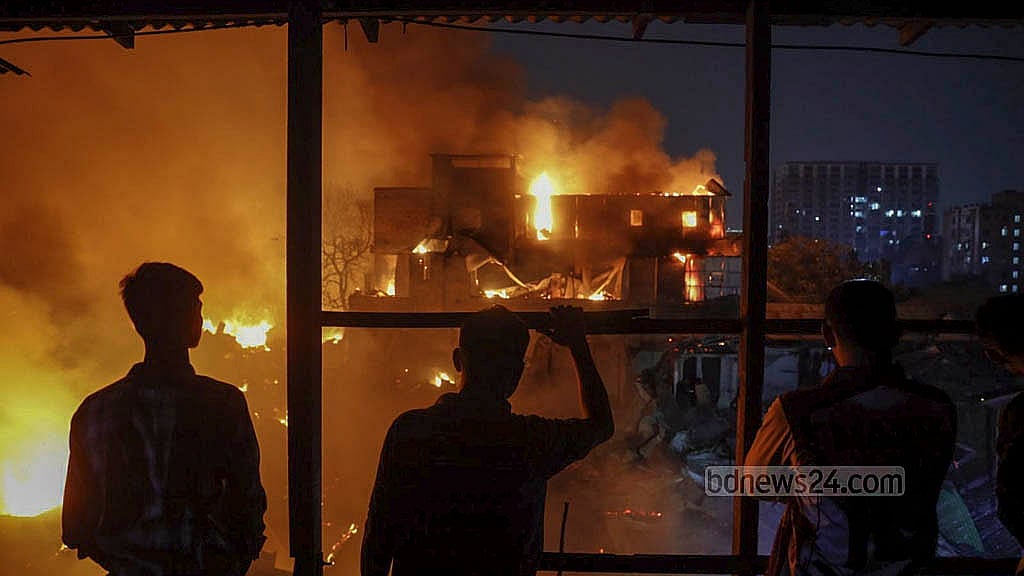
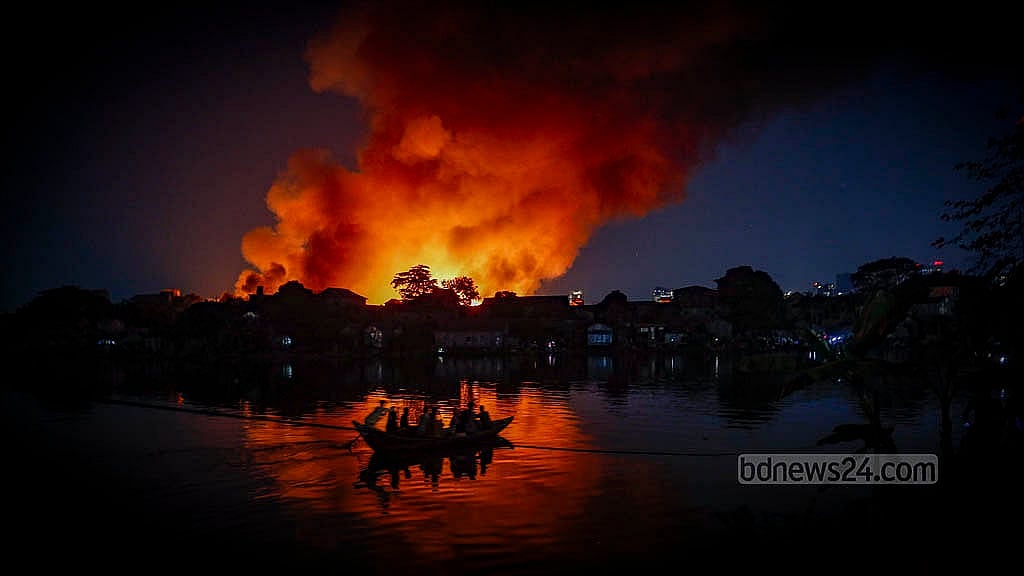
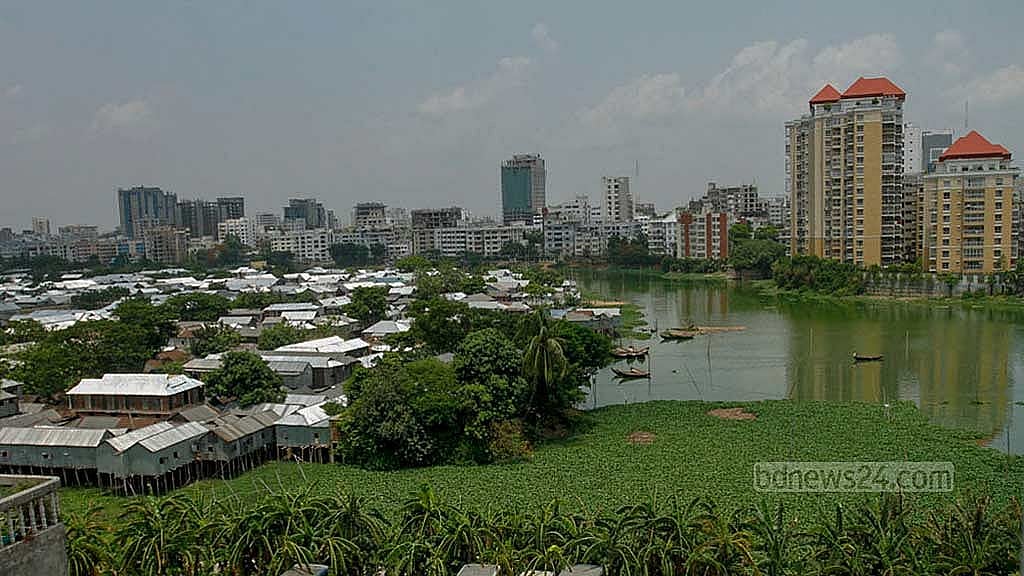
The latest disaster came last Tuesday evening, when a massive blaze tore through the Korail slum beside Gulshan and Banani, one of Dhaka’s most affluent neighbourhoods.
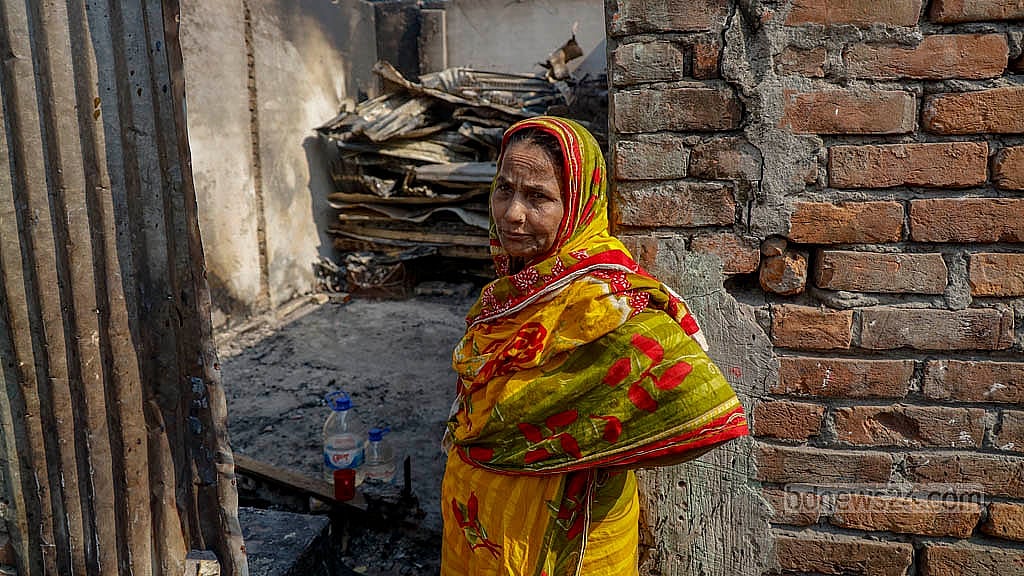
According to the Fire Service, around 1,500 homes were destroyed.
There were no deaths, but the stories of loss, fury and despair sounded painfully familiar -- almost an exact repeat of every slum fire that has come before.
CONTROL THROGH FIRE?
Before Bangladesh’s independence, slums sprang up in Dhaka as migrants fleeing river erosion, storms and poverty sought cheap shelter. Fires in these settlements stretch back through that entire history.
A 2007 World Bank report described Dhaka as one of the world’s fastest-growing megacities, drawing 300,000 to 400,000 new migrants each year -- most of them poor.
The report, Dhaka: Improving Living Conditions for the Urban Poor, identified arson among the crimes that blight slum life.
Researchers surveyed four slums and found that 93 percent of respondents had suffered losses from crime and violence in the course of a year.
They listed 33 types of crime, from extortion and gang violence to drug trafficking, land grabbing, illegal weapons, gambling, abuse of women and children, arson, killings, abductions and domestic violence.
In Shahidnagar, Rayerbazar, Pallabi and Mohammadpur, 44 percent of residents believed fires were set “to establish control”.
Parvez Khan, a crime reporter for nearly four decades and former president of the Crime Reporters Association of Bangladesh, said: “A major cause behind slum fires is grabbing or re-grabbing land. Such incidents tend to increase when governments change.
“You’ll notice the burnt homes belonged to one group. They won’t be able to rebuild there. Someone new will take over.”
He added, “If someone controls 200 shacks and collects Tk 3,000 to Tk 4,000 per month for rent, plus separate payments for gas, electricity and water, the amount becomes enormous.
“Slums also offer cover for drug trade and other crimes, making evasion easy. Criminal networks have grown around these settlements for years.”
WHEN FILM MIRRORED REALITY
In the 1980s and 1990s, Dhaka’s FDC studios frequently portrayed slum fires. Even when there was no fire, forced eviction and demolition to build new structures formed the backbone of many stories.
Asked how these scenes entered film narratives, director Delwar Jahan Jhantu said: “Stories come from reality with a touch of imagination. Except for magical plots, most of our material came from life.”
On whether arson scenes reflected truth or fiction, he replied: “Slums do catch fire. Sometimes wealthy people set them ablaze to clear land. The poor become even poorer -- hand to mouth.
“Sometimes it’s from stoves or accidents. We showed all of it. Writers blended real incidents with dramatic needs,” he added.
DHARAVi
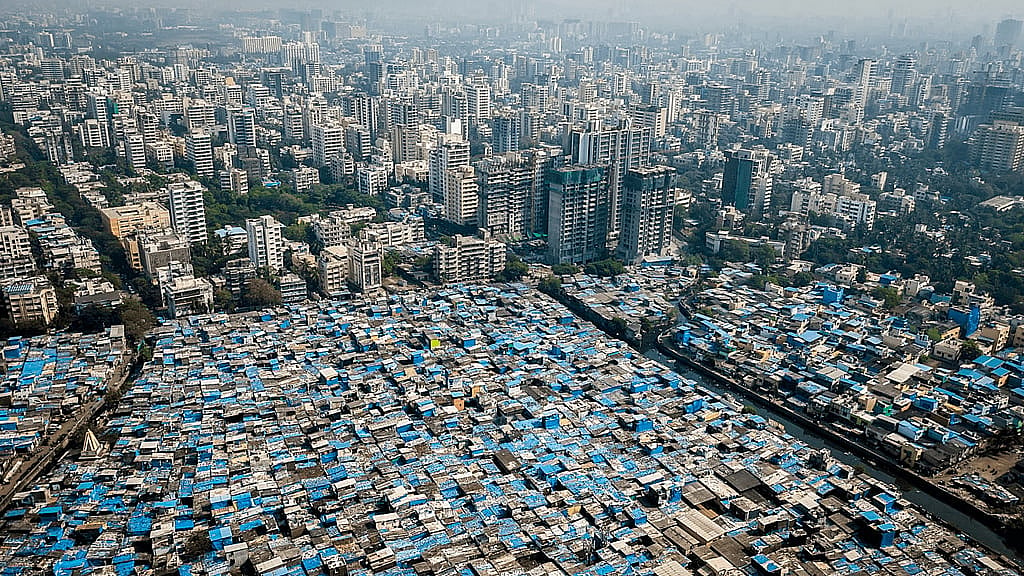
To see whether slum fires are unique to Bangladesh, one must look at Mumbai’s Dharavi.
Online reports show at least four fires there since 2023. Dharavi spans 238.76 hectares and houses nearly one million people, marking it as one of the world’s largest slums.
A 2016 World Economic Forum report listed Orangi Town in Karachi as another giant slum, with 2.4 million inhabitants.
Pakistani media archives reveal multiple fires there since 2023, including incidents that killed at least five people.
The latest occurred on Nov 2 this year, with two deaths reported by Daily Times.
In January 2023, Dawn reported the deaths of three children in another Orangi Town blaze.
KORAIL’S TROUBLED HISTORY OF CONTROL
BRAC’s data shows Karail spans about 40.87 hectares and is home to more than 50,000 people.
A 2020 study by Sanzida Ahmed Synthia in the International Journal of Urban and Civil Engineering traced the slum’s origins to a large tract of land allocated in 1961 for the then Telegraph and Telephone Board (T&T), meant for exclusive T&T use.
In 1990, 36.42 hectares were reallocated to the Public Works Department, prompting the original landowners to sue over the breach and demand the land back.
Legal disputes stalled development, opening the way for T&T staff, criminal groups and local political figures -- including ward councillors -- to occupy parts of the land and rent out shacks.
As job opportunities grew nearby, the slum expanded.
Korail is divided into two main sections -- Bou Bazar and Jamai Bazar. The latest fire hit Bou Bazar, within wards No. 19 and 20 of the Dhaka North City Corporation.
For years under the Awami League administration, followers of councillors Mofiz Uddin and Md Nasir controlled extortion in these areas. Money was collected for illegal gas, electricity and water lines, as well as waste removal.
Bou Bazar’s committee was headed by Mawlana Abdus Sobhan, whom residents also accused of extortion.
Former controllers are now in hiding; their phones are switched off. Residents would not say who seeks control today.
LAYERS OF SUSPICION
Abdul Malek, a security guard at Banani Club, said he paid Tk 4,000 rent for his tiny shack and Tk 500 extra for using a fridge.
Who received the money? “There are landlords. They manage everything,” he said.
Asma Begum wept beside the ruins of her home. She had borrowed money from an NGO and purchased a shack for Tk 250,000 last year.
Others told her she would not regain ownership after the fire. She spoke of her grief and the pressure of loan repayments.
Another owner said although the slum sits on government land, the shacks have owners. A single unit now costs Tk 200,000 to Tk 250,000 to purchase, much of which goes to those who “control” the settlement.
Rent, water, electricity and waste fees form additional income streams for local groups.
Rumours of eviction spread quickly on social media, deepening residents’ fear. Many insisted the fire had been “set deliberately”, citing Facebook posts rather than anything they personally saw.
An elderly resident named Abdul Matin said, “They say a market will be built here, so they set the fire to clear us out. If they told us kindly, we would have left.”
After the blaze, social media buzzed with claims that the government planned a “hi-tech park” on the site.
Faiz Ahmed Taiyeb, chief advisor’s special assistant on ICT, refuted the rumour on Facebook, calling it an “attempt to embarrass the government”
Taiyeb wrote, “An unsolicited proposal regarding the construction of a high-tech park in the Korail slum has come to our attention. We urge private sector software entrepreneurs to refrain from making such irresponsible statements when thousands of people are destitute and homeless.
“Some have already made such proposals verbally and in writing. For valid reasons, the government has not taken these proposals into consideration. At present, the government has no plans to construct any facility on the Korail slum site.”
He added, “Especially when thousands are suffering in insecure and desperate conditions after the fire, attempting to raise the issue of a high-tech park to embarrass the government is entirely condemnable.”
A HISTORY OF ‘SLUM FIRES’ REVISITED
Citing a 1996 survey, Sanzida Synthia’s study noted that Dhaka then had 3,007 slums and squatter clusters sheltering 1.6 million people.
The survey was conducted by the Asian Development (ADB), the then Bangladesh government and the Centre for Urban Studies.
By comparing those findings with recent decades, it appears Dhaka’s slum count has dropped by more than half in 30 years.
In many areas, fires were followed not by reconstruction but by new developments.
On Feb 3, 2013, a fire destroyed hundreds of homes in “Agargaon Bazar slum”, located on 0.81 hectares of Public Works Department land.
At the time, an accounts officer said the plot was earmarked for the telecom regulator’s office and that eviction notices had been issued earlier.
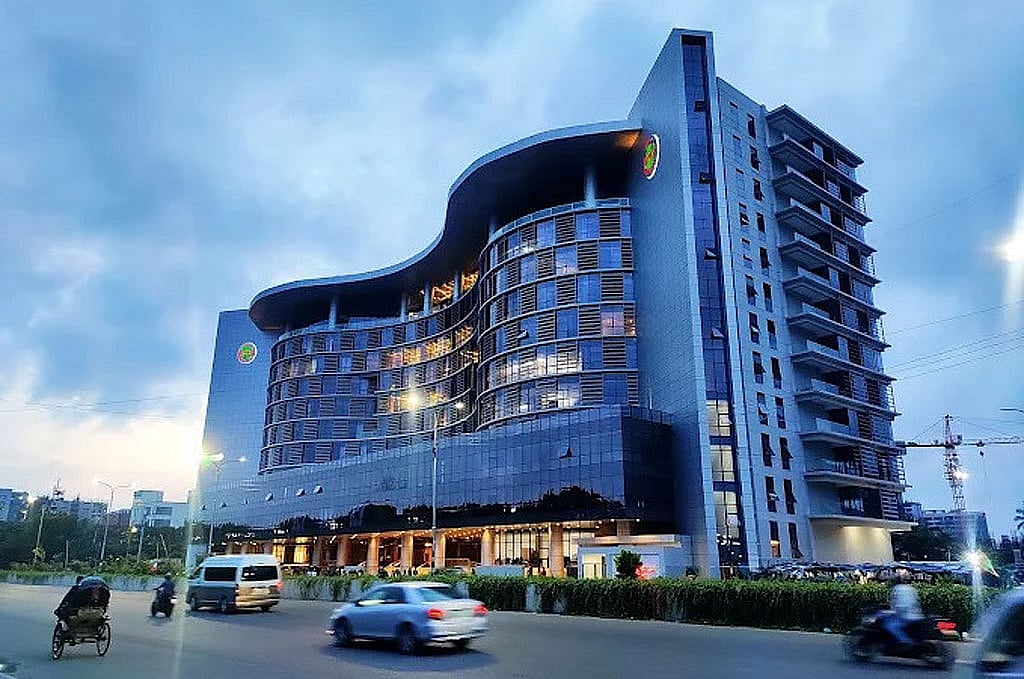
The slum never returned; the Bangladesh Telecommunication Regulatory Commission’s modern headquarters now stands there.
A similar pattern followed a fire on Feb 25, 2015 in a slum near the Islamic Foundation in Agargaon, where a child died.
No slums were rebuilt there. Construction began soon after. Government buildings, including the Parjatan Bhaban, now rise where shacks once stood.