Published : 22 May 2026, 07:45 AM
Updated : 21 Aug 2026, 03:46 PM


Digital Eyes vs Dhaka Chaos
Tech on the watch: AI cameras at major crossings now track six road offences, instantly matching plates with the BRTA database
Behavioural shift: Digital prosecutions are forcing drivers to halt at red lights, sparking sudden discipline on key capital roads
Data flood: Over 10,000 videos flooded DMP servers in eight days, forcing manual teams to filter minor lane deviations
Chaos barrier: Experts warn systemic disorder, manual reviews, and a flood of unregistered vehicles could still derail the system
For decades, Dhaka’s traffic lights have been little more than decorative objects -- blinking through the fumes and chaos while police officers, whistles in hand, wrestled control of intersections from the middle of the road.
Now, after three failed automation projects in nearly two decades, Bangladesh is trying once more to teach the capital to obey traffic signals.
This time, the city is relying not only on automated lights, but on artificial intelligence.
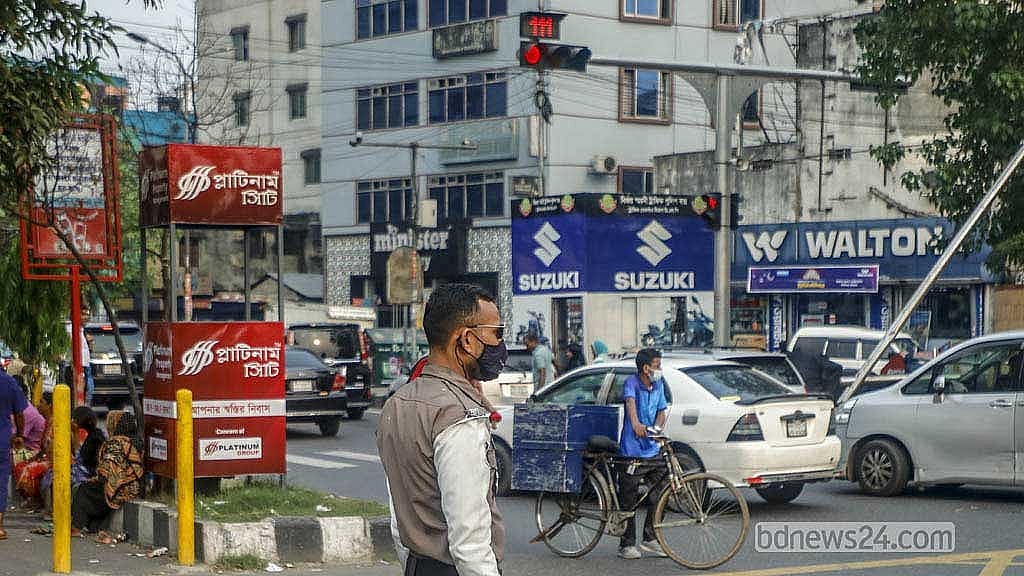
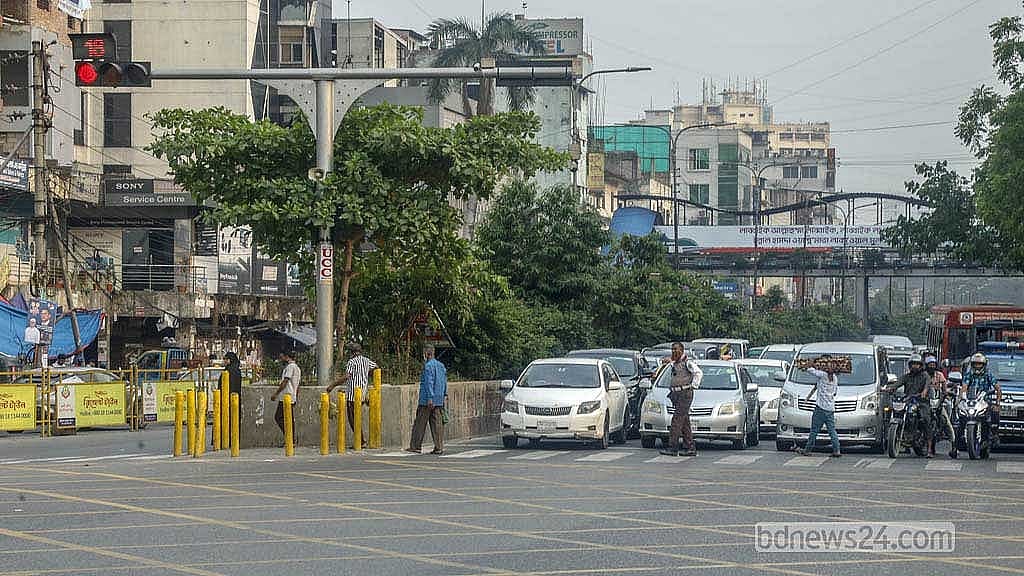
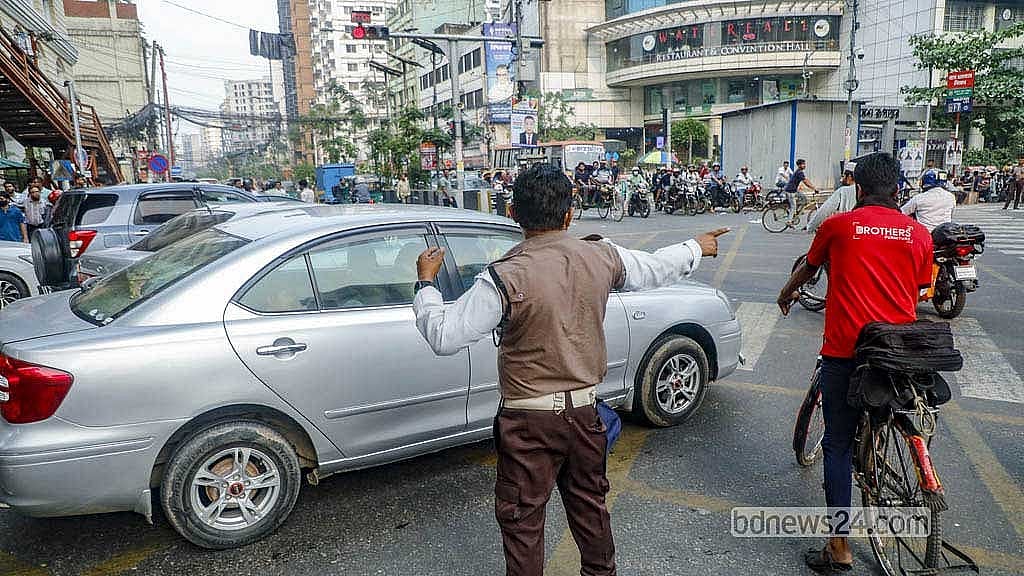
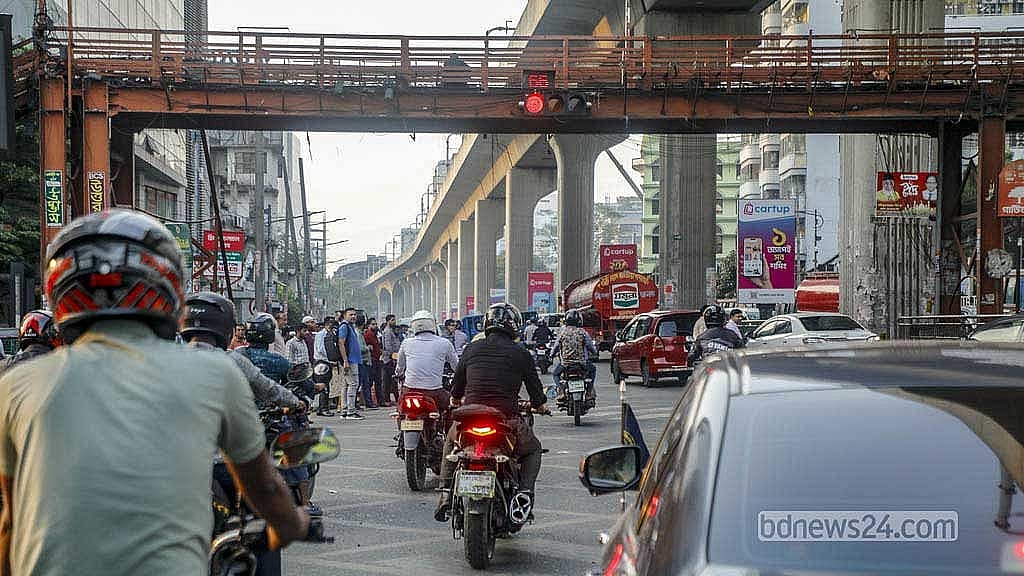
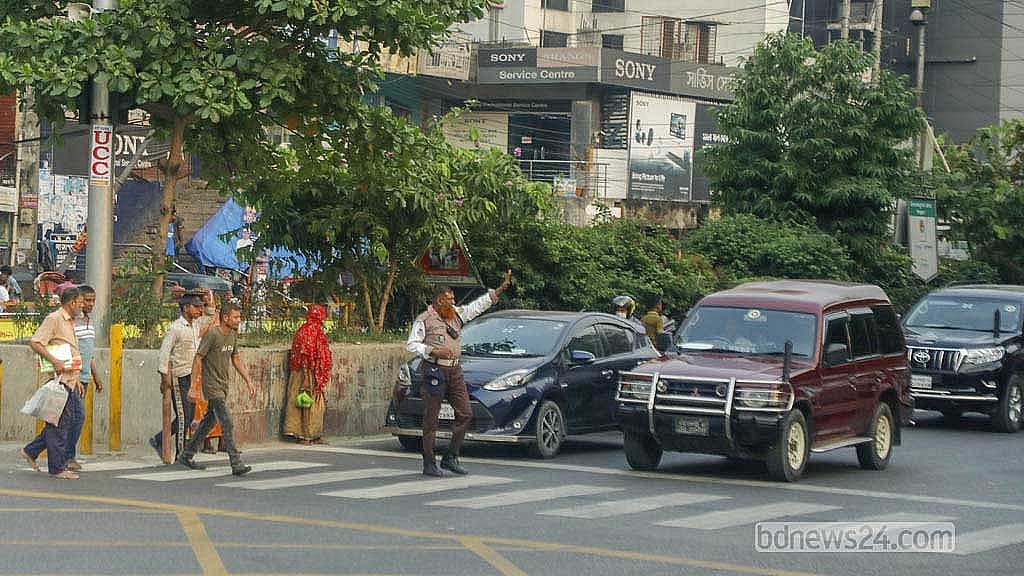
At the Sonargaon crossing in Karwan Bazar on a recent Saturday afternoon, traffic police officer Bidyut Hossain stood beside the intersection rather than in the middle of it. Eight months earlier, when the new automated signal system was introduced there, officers still had to sprint into traffic to force vehicles to stop.
That is now changing.
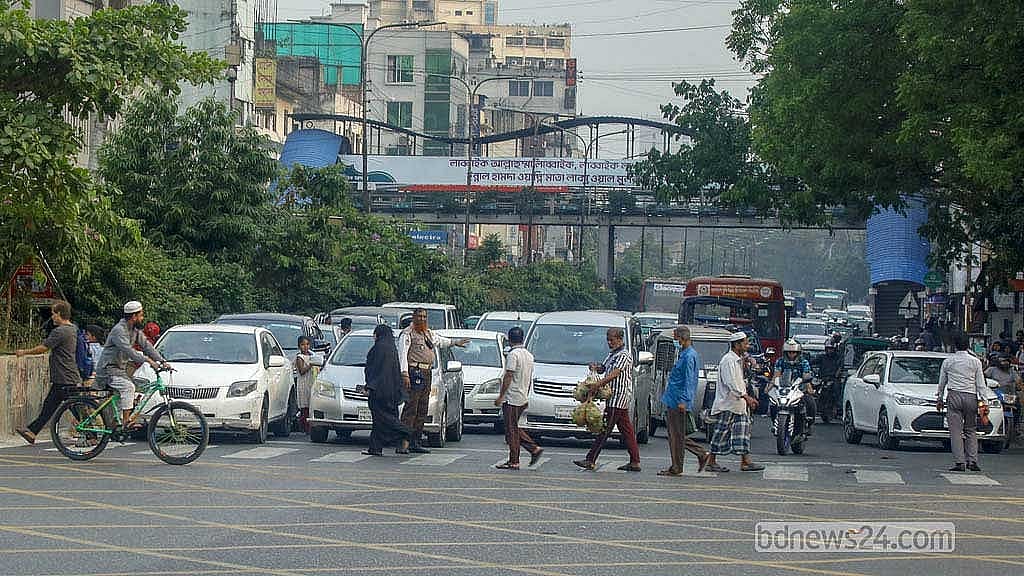
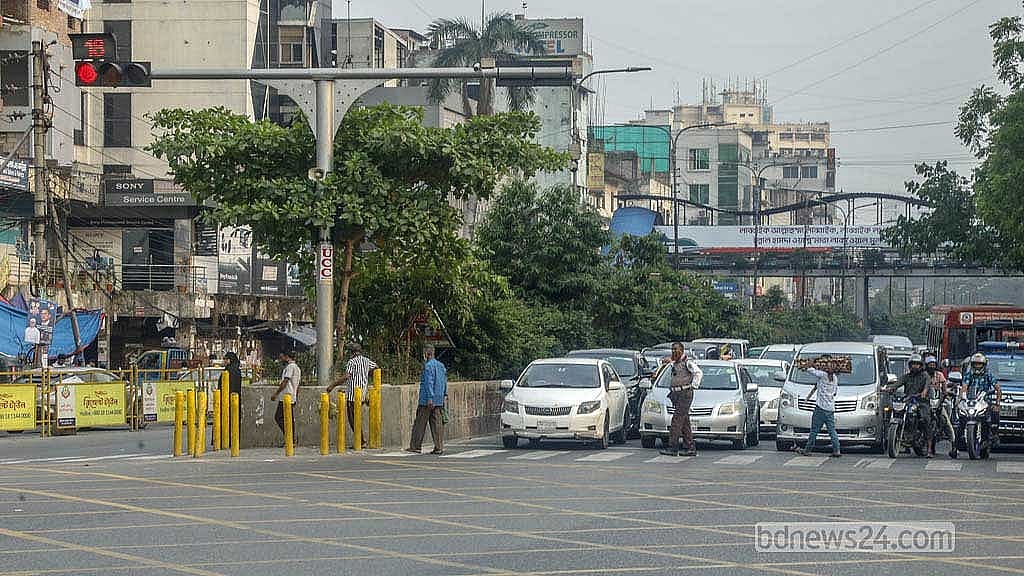
Drivers now slow at red lights. Buses hesitate before crossing zebra lines. Motorcyclists glance upwards at newly installed AI cameras before edging forward.
“People are no longer taking risks because of the cameras,” Bidyut said.
The transformation, however partial, marks a striking shift in a city long synonymous with traffic anarchy.
Since May 7, Dhaka Metropolitan Police (DMP) has started issuing digital traffic prosecutions using AI-powered PTZ -- pan-tilt-zoom -- cameras installed at major intersections.
Images and video footage of violations are automatically sent to police servers, reviewed before prosecution notices are sent to vehicle owners.
Police say compliance improved dramatically within the first week.
But transport experts remain cautious.
Dhaka’s Latest Traffic Experiment
Dhaka’s latest experiment began last August when seven intersections -- including Farmgate, Banglamotor, Bijoy Sarani and Jahangir Gate -- were brought under a semi-automated traffic system developed by Bangladesh University of Engineering and Technology (BUET).
The project followed a decision by the interim government in April last year to install automated traffic lights at 22 intersections across the two city corporations at a cost of Tk 180 million.
Authorities initially treated the project as an experimental fix. Yet even after eight months, traffic police were still manually directing vehicles at most intersections. The signals controlled timing, but not behaviour.
Authorities eventually concluded that drivers needed a stronger incentive to comply.
AI enforcement became the answer.
The cameras are programmed to detect six categories of violations, including lane breaches, illegal lane changes, ignoring stop lights, obstructing roads, illegal parking and driving against traffic.
The software is linked to the Bangladesh Road Transport Authority (BRTA) database, allowing police to instantly identify vehicle owners.
At DMP headquarters, members of the Traffic Technical Unit manually review footage before filing digital cases through the e-Traffic Prosecution system.
Sharmeen Afroze, a senior systems analyst at DMP Traffic, said the system was already generating overwhelming amounts of footage.
“We are receiving huge volumes of video,” she said. “Even a slight lane deviation is being flagged by the software. But since the system is new, we are overlooking minor violations and focusing on cases that actually disrupt traffic.”
More than 10,000 videos were uploaded to police servers within the first eight days alone. Officials say over 400 prosecutions have already been prepared.
Former DMP Commissioner Md Sarwar predicted the number could eventually reach 1,000 cases a day.
Where AI Meets Chaos
For many transport specialists, however, the real question is not whether AI cameras work at seven intersections -- but whether they can function in a city as chaotic as Dhaka.
Prof Md Hadiuzzaman of BUET’s civil engineering department said the current system still depended heavily on manual review.
“At a limited number of intersections, this can work,” he said. “But implementing it citywide will be extremely difficult.”
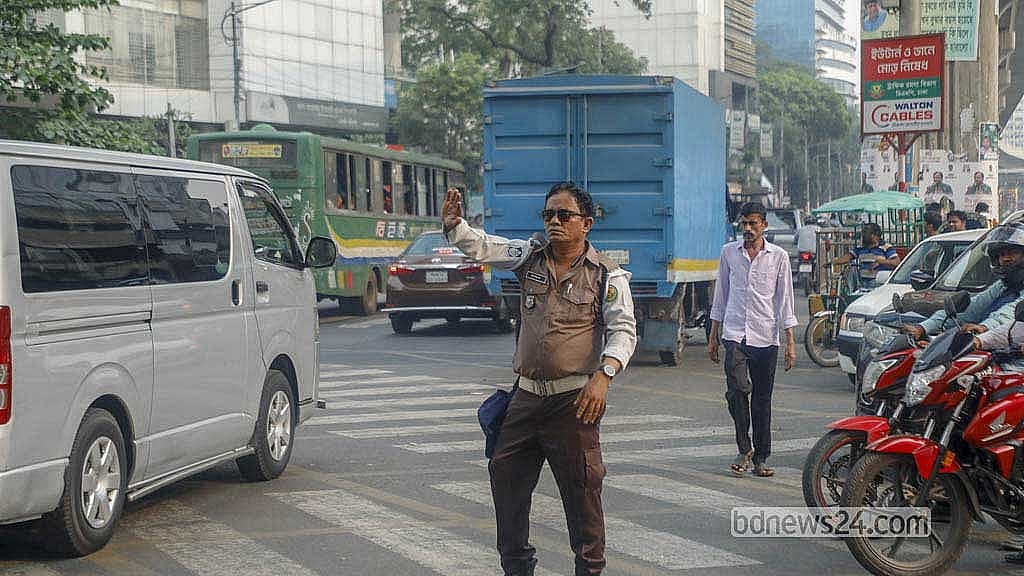
Dhaka has around 120 major intersections. Many are densely populated corridors where buses, trucks, rickshaws, motorcycles, autorickshaws and informal vehicles compete simultaneously for space.
“In developed countries, cases are not filed by manually reviewing footage,” Hadiuzzaman said.
“The process is fully automated. But in parts of Dhaka, AI will become confused by the sheer variety of vehicles.”
Police themselves acknowledge several limitations.
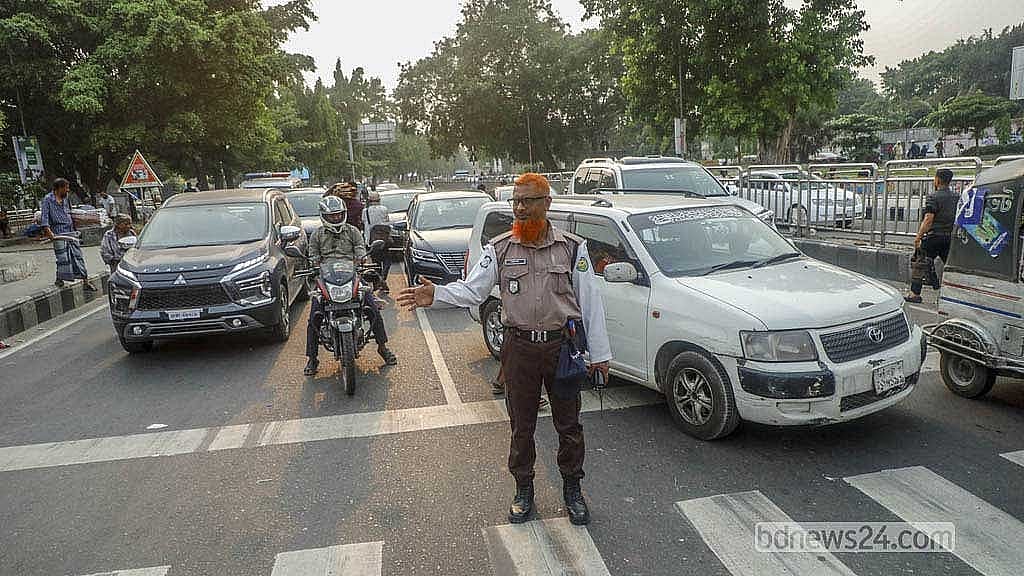
Traffic Inspector Abdul Mannaf at Karwan Bazar pointed to battery-powered autorickshaws illegally entering major roads.
“Who will stop them?” he asked. “If these vehicles are not controlled, cameras alone will achieve nothing.”
Hadiuzzaman warned that AI could also unfairly penalise lawful drivers forced into evasive manoeuvres by illegal vehicles.
“You may shift lanes to avoid an unregistered autorickshaw,” he said. “The AI camera will still treat that as a violation.”
According to him, Dhaka now has more illegal vehicles on its roads than legal ones.
The city’s traffic ecosystem, he argued, must be cleaned up before automation can fully succeed.
“Unregistered and unsafe vehicles must gradually be removed,” he said. “Without restoring order, we are simply imposing AI onto disorder.”
Learning from Failure
Dhaka’s history with traffic automation is littered with abandoned ambitions.
In 2001-02, under a World Bank-funded urban transport project, modern traffic lights were installed at 70 intersections at a cost of around Tk 250 million.
The system collapsed because preset timings failed to match real traffic volumes.
A second project under the Clean Air and Sustainable Environment initiative installed solar-powered automated systems at 92 intersections for Tk 120 million. That system also fell into disuse.
Then came the 2015 Dhaka Integrated Traffic Management project, funded by JICA loans, which installed intelligent traffic systems at several intersections for Tk 520 million.
Authorities later admitted the technology was unrealistic for Dhaka’s mixed traffic environment, especially because non-motorised vehicles had not been considered in planning.
BUET Prof Moazzem Hossain believes previous systems failed for two main reasons.
“The earlier technologies were imported without developing local backup support,” he said. “And city corporations treated these projects as installation exercises, not long-term operational systems.”
This time, BUET engineers insist local technology and maintenance planning could make the difference.
Officials say 30 intersections across Dhaka now have AI-assisted signal systems. The government plans to eventually automate all 120 major intersections.
The Real Test Ahead
For now, the answer remains uncertain.
At intersections where the new system operates, traffic police still wave vehicles through manually. Drivers often obey officers rather than the lights themselves.
Yet officials insist behavioural change has already begun.
Traffic Engineer Mir Muhammad Kamrul Hasan of the Dhaka Transport Coordination Authority said drivers were slowly becoming accustomed to signal timing.
“When people start crossing 40 or 50 automated signals regularly, an environment will develop where following traffic lights becomes normal,” Prof Moazzem said.
Authorities are optimistic.
DMP Additional Commissioner Anisur Rahman said a country cannot change habits built over 54 years overnight.
“It will naturally take time to overcome that. But we are trying, and we believe we can succeed.”
Still, even supporters concede that technology alone cannot discipline Dhaka’s roads.
“In Cantonment areas, people obey traffic laws because the ecosystem is orderly,” Hadiuzzaman said. “If the roads become user-friendly, 95 percent of people will obey the law automatically. Then AI should deal with the remaining 5 percent.”
For now, the cameras watch silently above Dhaka’s intersections -- recording violations, reshaping habits, and testing whether a city built on improvisation can finally learn to stop at red lights.