Published : 06 Sep 2025, 07:15 PM
Updated : 28 Aug 2026, 01:26 AM


Last monsoon, lawyer Saeed Ahmed and a group of 30 hired a houseboat to explore Tanguar Haor, or backwaters, in Sunamganj during the full moon of Ashar. The misty hills of Meghalaya, endless waters and tranquil greenery captivated him. But he returned to Sylhet with a rash that required medication.
“I swam near the watchtower area, and soon after, I developed an itch that lasted two days,” he said. “Doctors said it was from the polluted water. The big boats dump plastics and all sorts of waste into the haor. I even saw them operating at night. If this continues, the haor’s beautiful environment will be destroyed.”
For Saeed, the beauty was undeniable — but so was the need for urgent protection.
PARADISE UNDER PRESSURE
Tanguar Haor lies at the foot of Meghalaya’s hills, straddling the Madhyanagar and Tahirpur Upazilas of Sunamganj. It covers 9,727 hectares across 18 mouzas, with 51 interconnected haors. The watery core spans 28 square kilometres, swelling during monsoon and shrinking in winter, when 24 "Kanda" ridges rise and thousands of migratory birds arrive. Farmers cultivate Rabi crops and Boro rice in the exposed land.
The haor was declared an Ecologically Critical Area in 1999 and a Ramsar site in 2000. Conservation group IUCN has supported biodiversity efforts here. Yet the rise of mass tourism, particularly luxury houseboats, is straining this fragile wetland.
FLOATING HOTELS
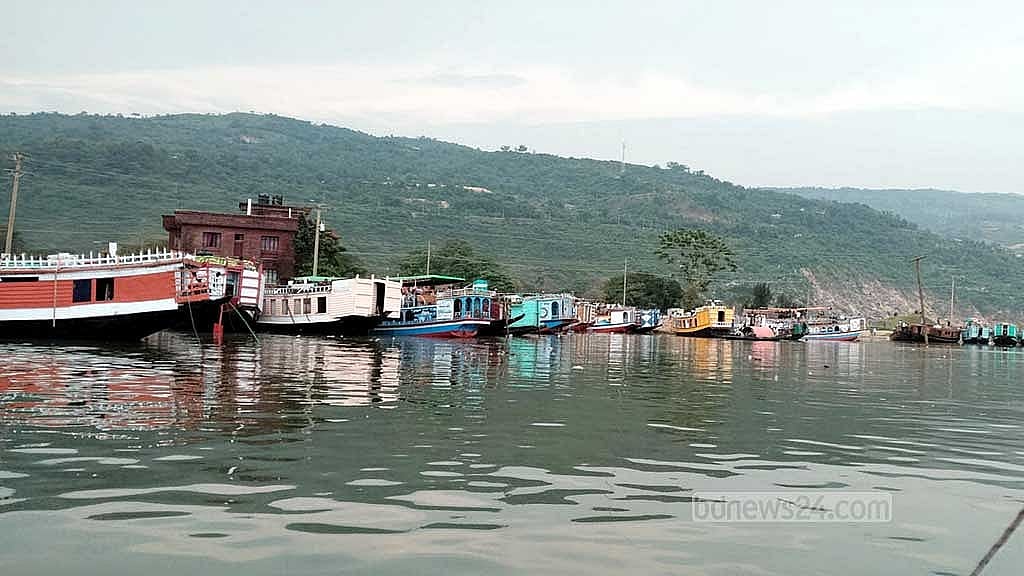
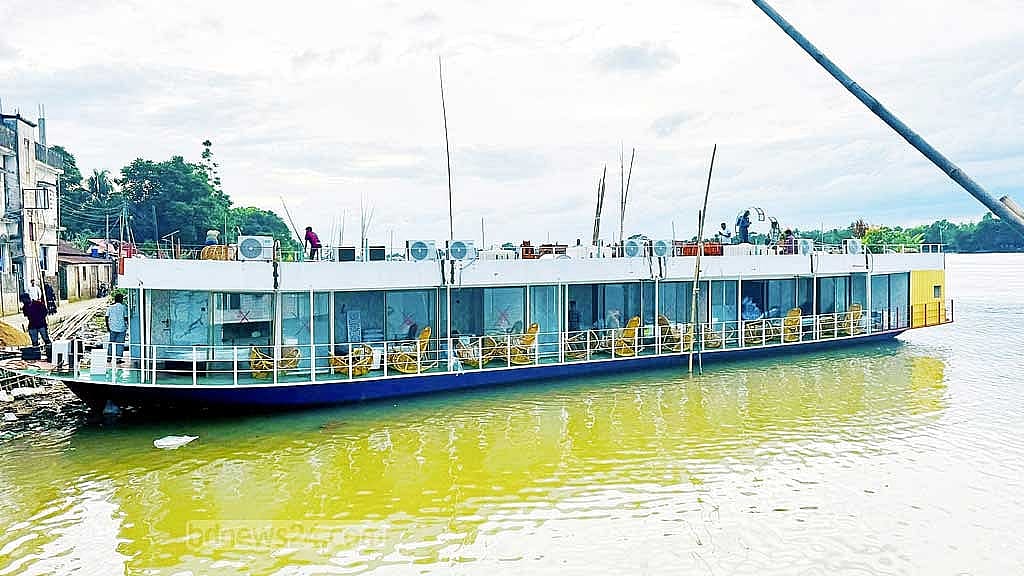
A recent visit found hundreds of wooden and steel-framed houseboats plying the waters, ranging from basic carriers to multi-storey floating hotels.
Inside, tourists lounge on sofas, enjoy AC-cooled cabins and blast music from sound systems. Some boats even feature rooftop baby pools, decorative turf, swings and potted plants. Gas stoves and colourful lights allow cooking and parties on board.
Owners boast they can offer “all the comforts of a hotel at sea”.
At night, instead of mooring at designated spots in Tahirpur or Tekerghat as required, many boats anchor at popular tourist points like Shimul Bagan or Anwarpur.
Arafat Akand, president of the Tanguar Haor Houseboat Owners’ Association, said investments range from Tk 2 million to Tk 10 million per boat, with six to 12 staff required to operate each.
“About 14 boats now have ACs. Pools are just baby pools for children. But yes, sometimes adults also jump in for fun,” he said.
“We built boats to meet VIP demand. It takes four to five years to recover investments. This year, we’ve had a surge in tourists. It keeps people’s spending inside Bangladesh, which is good.”
A BOOMING INDUSTRY
According to the Tahirpur Upazila River Tourism and Cooperative Society, there are 118 boats under its wing, while Sunamganj has another 90 with its own group. Altogether, 500 to 700 boats now operate in Tanguar Haor. On weekends, 400 to 500 ply the waters.
Packages range from Tk 3,500 to Tk 10,000 per person for two-day trips. Tourists board in the morning, sail across Shimul Bagan, Jadukata River and the watchtower area, stop for lunch, then anchor overnight beneath the Meghalaya foothills at Tekerghat.
Many boats also depart from Surma river ghats in Sunamganj town, or from Anwarpur, Jamalganj, Madhyanagar and even Netrokona and Kishoreganj.
“Every day, houseboats bring tourists here. Our registered boats do not dump waste. We even clean sites every few days,” claimed Akand. “But yes, tourists and some operators need to be more careful.”
LOCALS SEE IT DIFFERENTLY
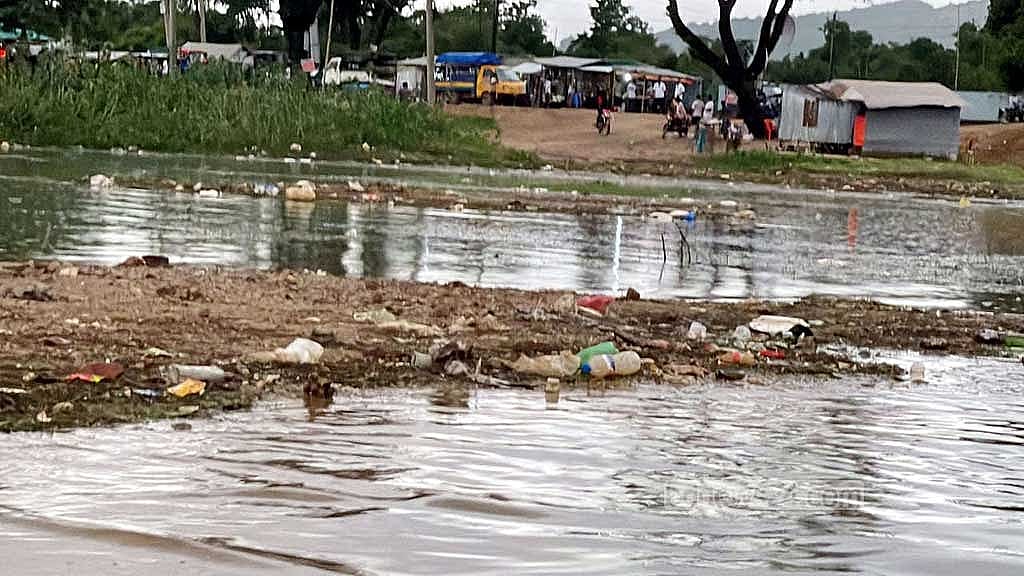
For villagers who live by the haor, the evidence is clear. “Tourists swim and shout in the water. Sometimes we see faeces and rubbish floating,” said Nur Mia of Joypur village. “We use this water for our daily needs, but we are forced to use polluted water.”
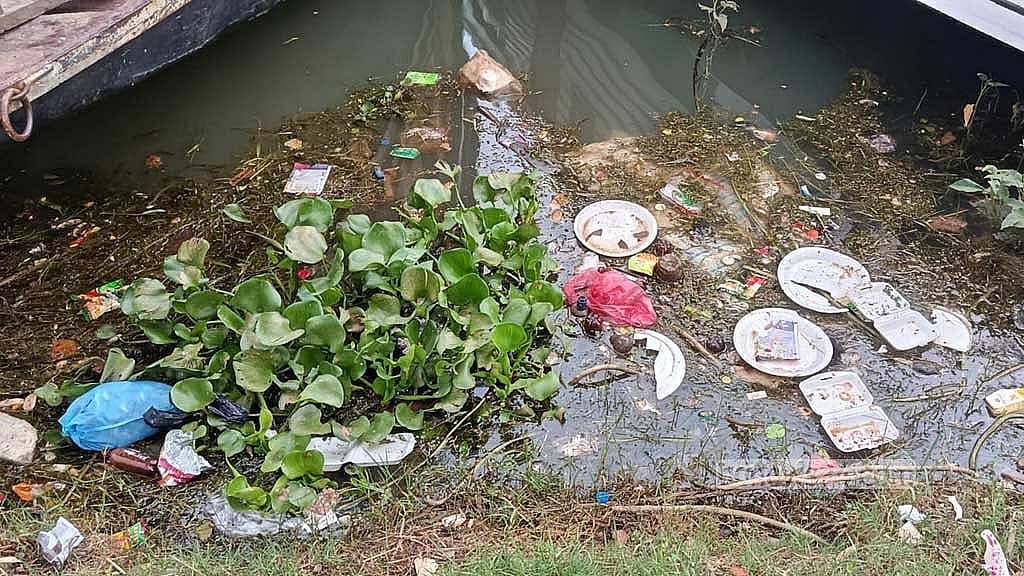
Plastic bottles, polythene, disposable plates and even liquor bottles can be seen around embankments, said Ripchan Habib of Pathabuka village. “If the haor was put into lockdown for a few years, maybe it could recover.”
IMPACT ON DIVERSITY
Former cooperative leader Ahmad Kabir said tourists and traders alike were harming the ecosystem.
“Tourists dump leftovers, faeces, and plastics, harming the fish. Large coal and stone-laden boats run at night in violation of rules. Instead of improving, the Ramsar site is under threat," he said.
Fisheries scientist Prof Mrityunjoy Kundu of Sylhet Agricultural University said houseboat traffic stirs the water, releases waste, and disrupts fish habitats.
“In our latest survey, we found 76 species. In 2022, it was 93. In 2007, IUCN reported 141. That steep decline shows how species are disappearing,” he said. “We need to declare five core wetlands as permanent sanctuaries and ban boats from those areas.”
RULES ONLY ON PAPER
Authorities have laid out environmental guidelines: stick to designated routes, wear lifejackets, hire local guides, avoid plastics, don’t light fires, don’t play loud music, don’t dump waste or detergents, don’t disturb birds, don’t cut trees or enter core zones.
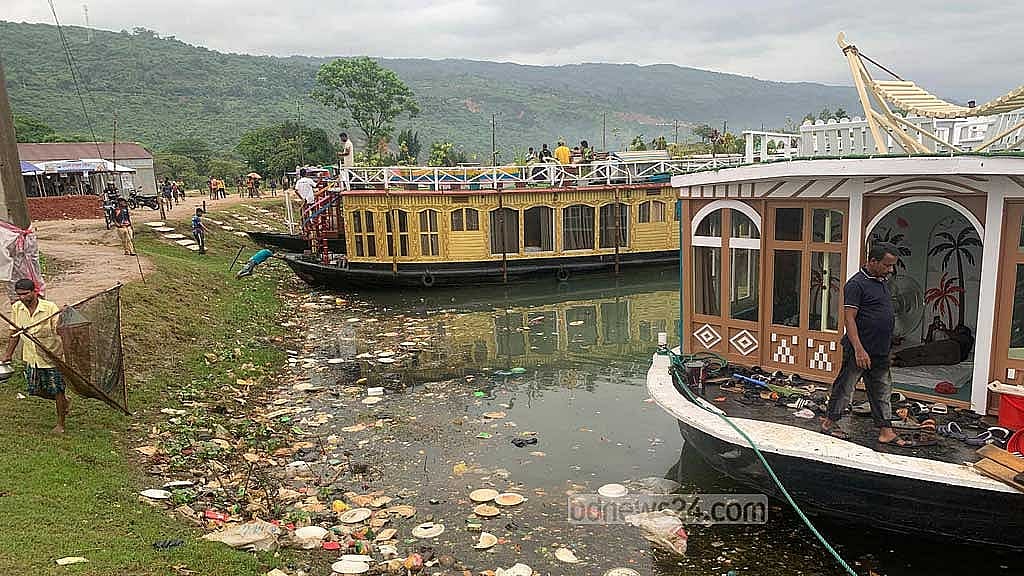
But enforcement is weak. Officials admit they lack manpower. Occasional raids impose token fines.
“Houseboats and other vessels will be asked to anchor only in designated areas at night. About 200 to 250 boats ply daily, of which 90 are registered,” said Tahirpur Upazila administrator (UNO) Md Abul Hashem. “We conduct regular monitoring to ensure eco-friendly tourism.”
Md Ferdous Anwar, director of the Department of Environment’s Sylhet divisional office, said discussions had been held on licensing boats on Tanguar Haor under the tourism corporation. He added that action was being taken against anyone polluting the environment, even beyond the department’s clearance requirements.
"Boat movement is being monitored," he said.
"The district administrations of Sunamganj and Sylhet are jointly carrying out this oversight. Operators have been warned not to enter the core haor areas. Boats coming from Netrokona have also been cautioned against using the main Beel. If pollution occurs, action is taken.’
Still, responsibility between the tourism board, ministry and corporations remains blurred. Bangladesh Parjatan (Tourism) Corporation Chair Saima Shahin Sultana said the issue of licensing boats “falls to the Tourism Board and ministry, not the corporation”.
Chief Executive of Bangladesh Tourism Board Abu Taher Muhammad Jaber could not be reached on his mobile phone for comment.
BALANCE AT STAKE
To many, the stakes are existential.
“Every Friday, 200 to 300 boats bring tourists. Visitors must act carefully so as not to harm biodiversity,” said Ahmad Kabir.
Prof Kundu was more blunt. “Houseboats must be limited," he insisted, "otherwise, fish and birds will vanish.”