Published : 25 Jul 2026, 07:06 AM
Updated : 08 Sep 2026, 09:27 AM


Solitary Departure
Custodianship in crisis: Presided over two elections, three prime ministers, and a mass uprising in a turbulent 39-month tenure
Defending continuity: Played a pivotal role maintaining constitutional order following the fall of the Awami League government
Exit under pressure: Steps down citing severe health issues after facing months of political isolation and demands to resign.
When Mohammed Shahabuddin walked into Bangabhaban in April 2023, he was regarded as an unlikely choice for Bangladesh's highest constitutional office. By the time he left, three years and three months later, he had become the reluctant custodian of one of the country's most turbulent political transitions.
Few presidents have presided over so much upheaval in so little time.
His tenure spanned two national elections, the swearing-in of three prime ministers, the collapse of the government that had elevated him to office, and the birth of an interim administration forged amid a student-led uprising.
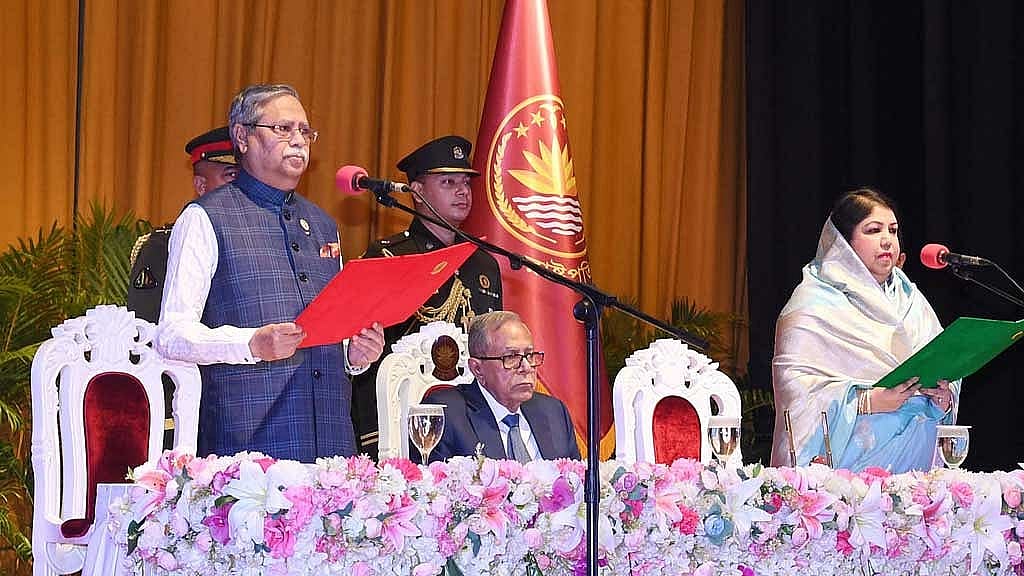
Along the way, he found himself defending constitutional continuity while weathering demands for his own removal, watching portraits of himself disappear from Bangladeshi missions abroad and admitting, with unusual candour, that he no longer wished to remain in office.
"I don't like it anymore," he said in an interview as pressure mounted during the interim government's tenure.
When he finally resigned on Friday, citing deteriorating physical and mental health, he became only the second Bangladeshi president since the restoration of parliamentary democracy in 1991 to leave office before completing a full term.
Whether history remembers him as a constitutional stabiliser or merely a ceremonial figure caught in extraordinary times remains deeply contested.
Surprise Pick
When the Awami League nominated Shahabuddin to succeed Abdul Hamid in 2023, the decision caught much of Bangladesh's political establishment off guard.
He was neither a senior party leader nor a nationally prominent political figure. Instead, the former district and sessions judge had built a career across the judiciary and public administration, later serving as a commissioner of the Anti-Corruption Commission.
His earlier political credentials, however, mattered to the Awami League. Shahabuddin had been active in the Jatiotabadi Chhatra League and Jubo League in Pabna, participated in the Liberation War, and was imprisoned during military rule after the assassination of Bangabandhu Sheikh Mujibur Rahman.
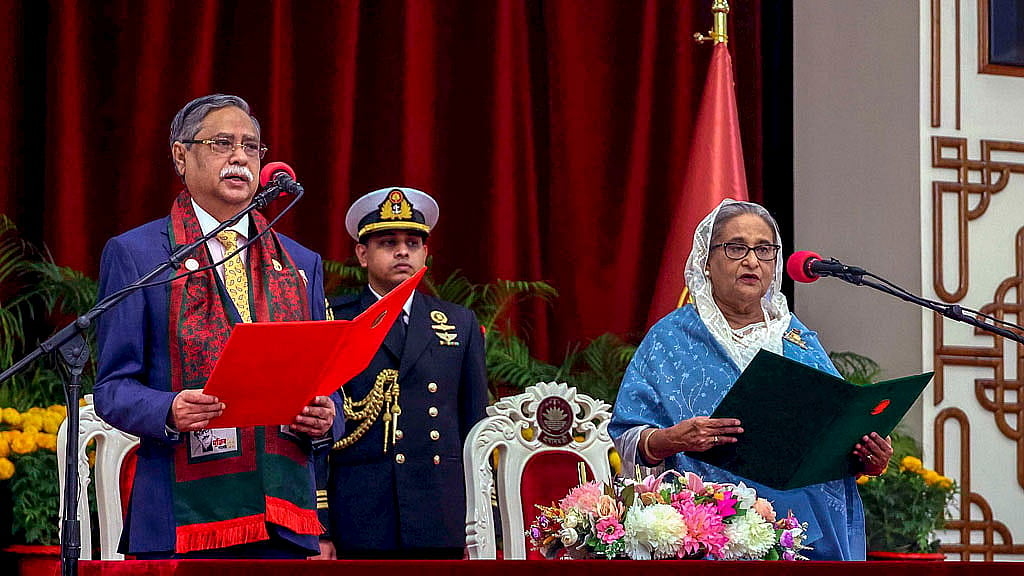
Presenting him as a veteran of the pro-Liberation movement with long administrative experience, the ruling party secured his unopposed election through its parliamentary majority.
Taking office as Bangladesh's 22nd president on Apr 24, 2023, Shahabuddin himself appeared taken aback by his sudden elevation.
"Everything is God’s will," he told reporters after submitting his nomination papers.
His first year in office passed largely without incident. Political tensions rose ahead of the January 2024 parliamentary election, but the president's role remained confined to constitutional formalities.
The calm did not last.
The election returned Sheikh Hasina's government to power for a fourth consecutive term, with Shahabuddin administering the oath of office. Just months later, the student-led uprising of July and August 2024 overturned Bangladesh's political order.
As Hasina fled the country and state institutions struggled to respond, Bangabhaban became one of the few constitutional centres still functioning.
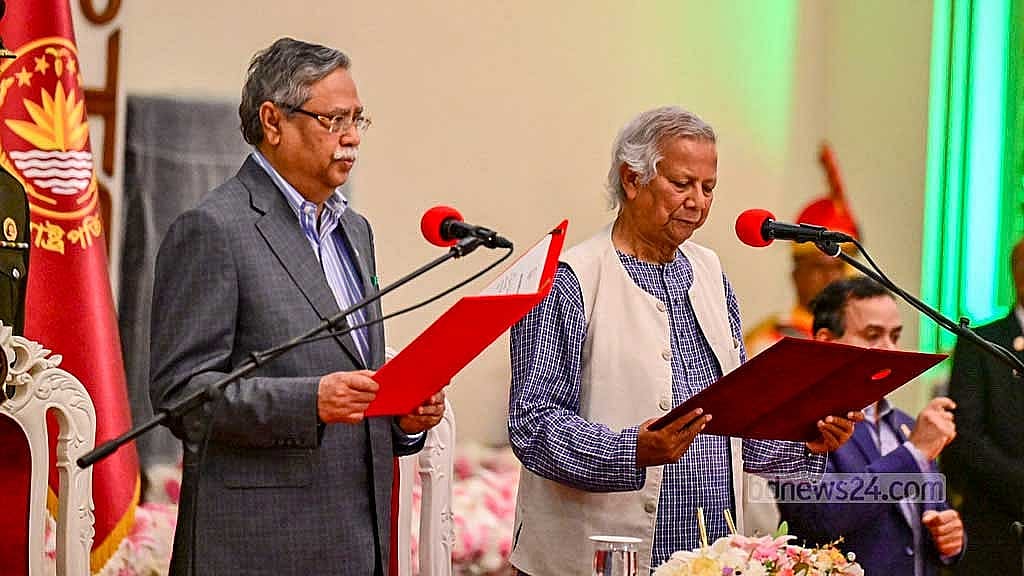
Meeting military leaders, political parties, student representatives and civil society figures, Shahabuddin oversaw the constitutional process that led to parliament's dissolution and, after seeking the Supreme Court's opinion, swore in Muhammad Yunus as head of the interim government on Aug 8, 2024.
It was the defining moment of his presidency.
Yet it also transformed him into an increasingly isolated figure.
Although his constitutional position remained intact, many questioned why a president elected under the Awami League should continue in office after the uprising.
Protesters gathered outside Bangabhaban, political groups demanded his resignation, and criticism intensified after he said in an October 2024 interview that he had heard Hasina had resigned but had never received documentary proof of it.
The remarks ignited fresh controversy over his role during the transition, even as the BNP argued that removing him would create a dangerous constitutional vacuum.
Alone at Bangabhaban
For much of the interim government's tenure, Shahabuddin remained in office but increasingly appeared to stand alone.
Although the presidency retained its constitutional authority, the political landscape around it had been transformed.
The man elected under the Awami League now found himself signing ordinances for an interim administration born out of the Uprising that had swept the party from power.
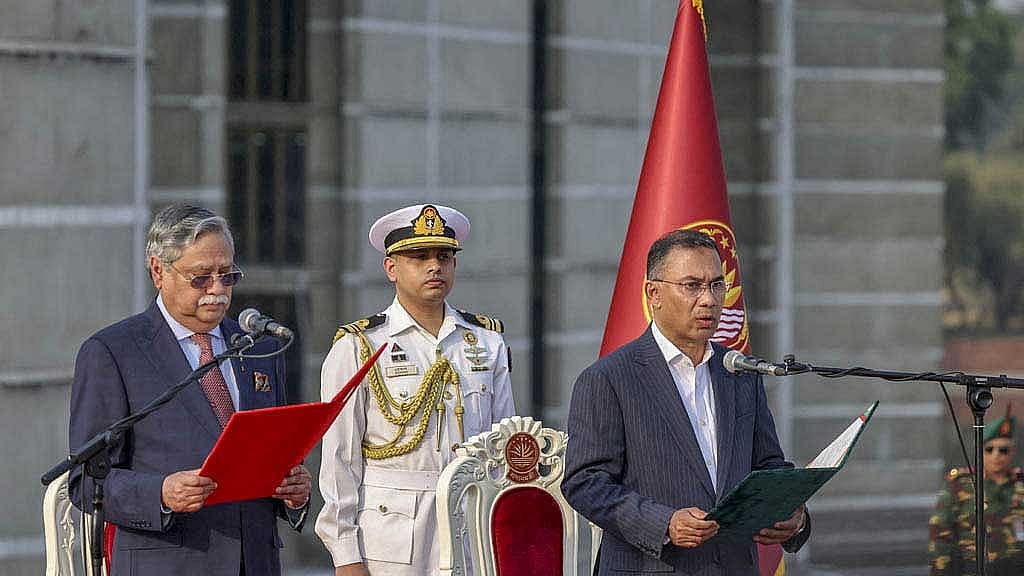
He also administered the oath to the BNP government after its sweeping victory in the February 2026 parliamentary election, completing an extraordinary political journey that few could have imagined when he entered office.
Yet his own position remained precarious.
Student leaders and several political groups repeatedly demanded his resignation, while Bangladeshi diplomatic missions quietly removed his portrait.
The presidency's press wing was scaled back, leaving Shahabuddin feeling increasingly marginalised.
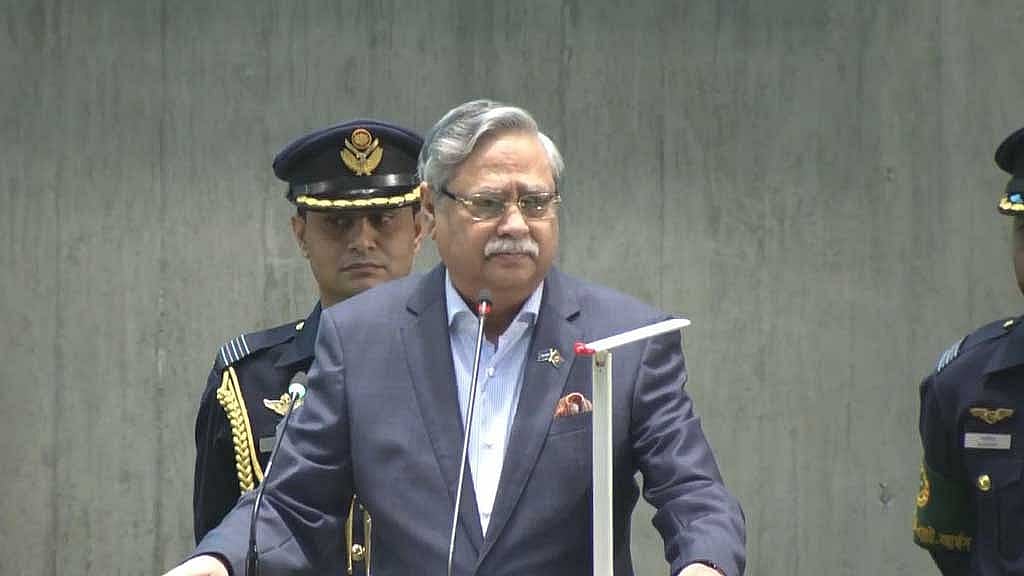
In a Reuters interview in December 2025, months before the election, he openly acknowledged that he wanted to leave.
“I am keen to leave. I am interested to go out.”
Asked separately by bdnews24.com when he hoped to resign, he replied: "When the new government comes... if the new government asks."
Why did he want to leave?
His answer was strikingly brief: "I don't like it anymore."
Despite forming the new government after February's election, the BNP did not immediately seek his departure. Shahabuddin remained in office, swore in Prime Minister Tarique Rahman and the new cabinet, and for several months political attention shifted elsewhere.
Then, suddenly, the rumours returned.
A Facebook post by exiled journalist Zulkarnain Saer claimed Shahabuddin was preparing to resign on health grounds and even suggested a possible successor.
Within days, officials close to the presidency confirmed that he had decided to step down, although the announcement had to wait for Speaker Hafiz Uddin Ahmad to return from medical treatment in Bangkok.
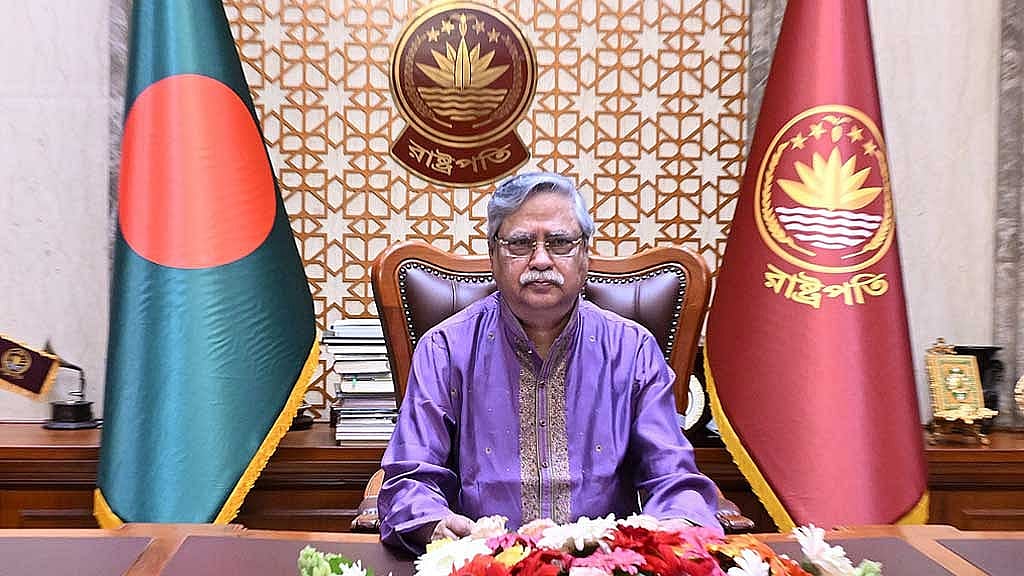
On Friday afternoon, Shahabuddin confirmed the news himself.
"It is already public knowledge. What is the point of hearing it from me? I am sick, so it’s done."
His resignation letter cited heart disease, diabetes, kidney complications and deteriorating physical and mental health.
At the same time, he argued that Bangladesh had avoided constitutional disaster after the Uprising because of his “firm and positive” role during the transition.
How History May Judge Him
For historians and political analysts, Shahabuddin's legacy is unlikely to produce an easy consensus.
Parliamentary affairs researcher Prof Nizam Uddin Ahmed argues that the office of president offers little executive authority, but says Shahabuddin's conduct during the 2024 constitutional crisis deserves recognition.
"Had he not sought the Supreme Court's opinion at that moment, there could have been a kind of stalemate."
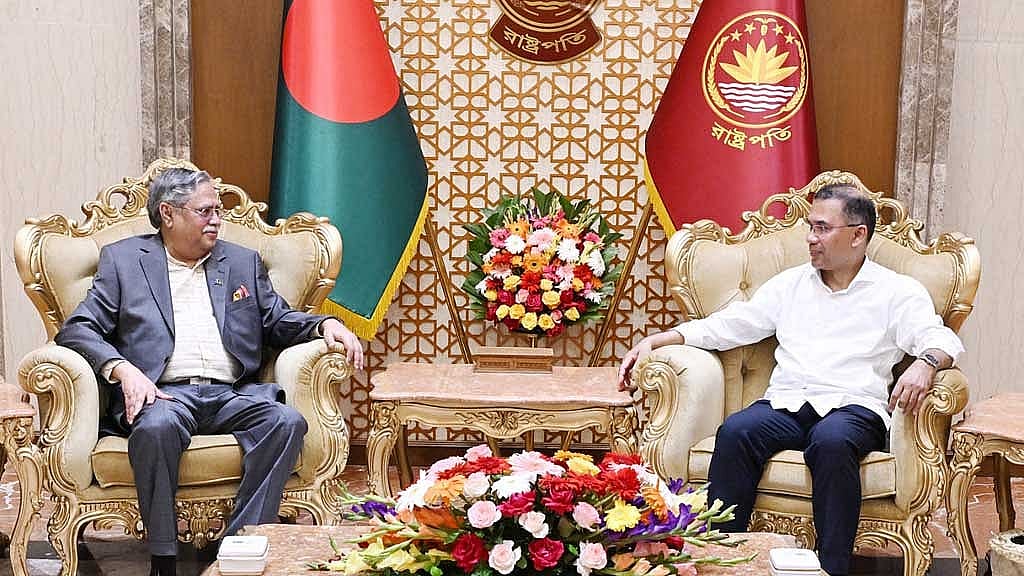
He believes Shahabuddin could have obstructed the transition but instead chose a course that reflected public sentiment.
"Although he had been elected under the Awami League, he could have resisted. He had the opportunity to obstruct the process... I think that remains a positive part of his legacy."
Yet Nizam Uddin also describes as controversial Shahabuddin's later claim that he had never received Hasina's resignation letter after earlier saying he had accepted it.
Political scientist Kazi Mohammad Mahbobor Rahman offers a harsher assessment.
He questions whether Shahabuddin should ever have become president, pointing to controversies surrounding his earlier public career and arguing that the Awami League elevated a divisive figure despite having many more qualified candidates.
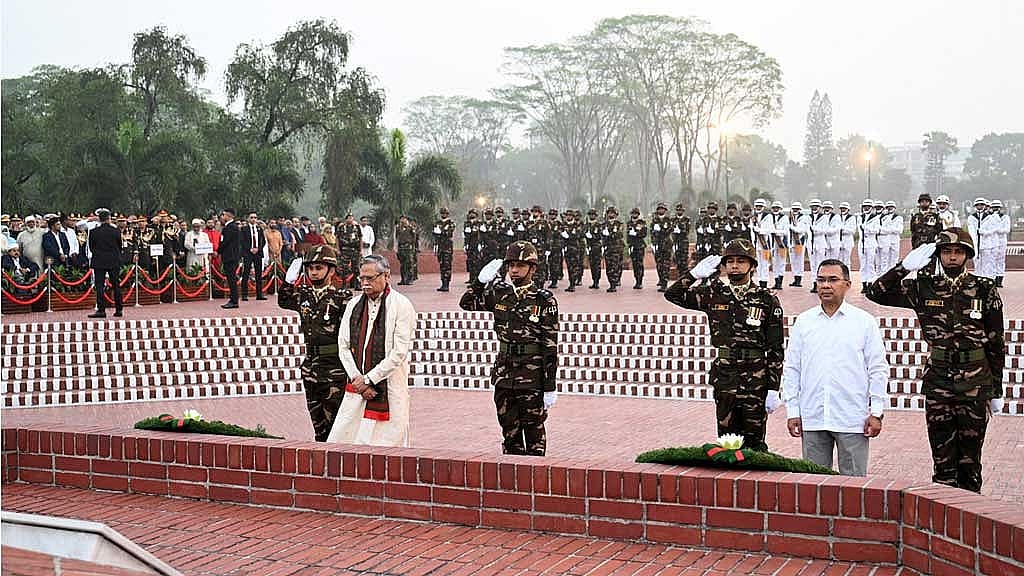
Rahman also believes the president failed to exercise meaningful leadership during the country's gravest political crisis.
“During those 15 to 20 days of extreme crisis, he could have played a major role. He had no role. After the 5th of August, he had no role in restoring peace and order."
Others see a more restrained legacy.
Bangladesh JaSaD leader Mushtaq Hossain argues that history may simply remember Shahabuddin as a president who fulfilled the limited constitutional duties entrusted to him.
That may ultimately define how his presidency is judged.
He arrived at Bangabhaban as an unexpected choice who surprised even himself.
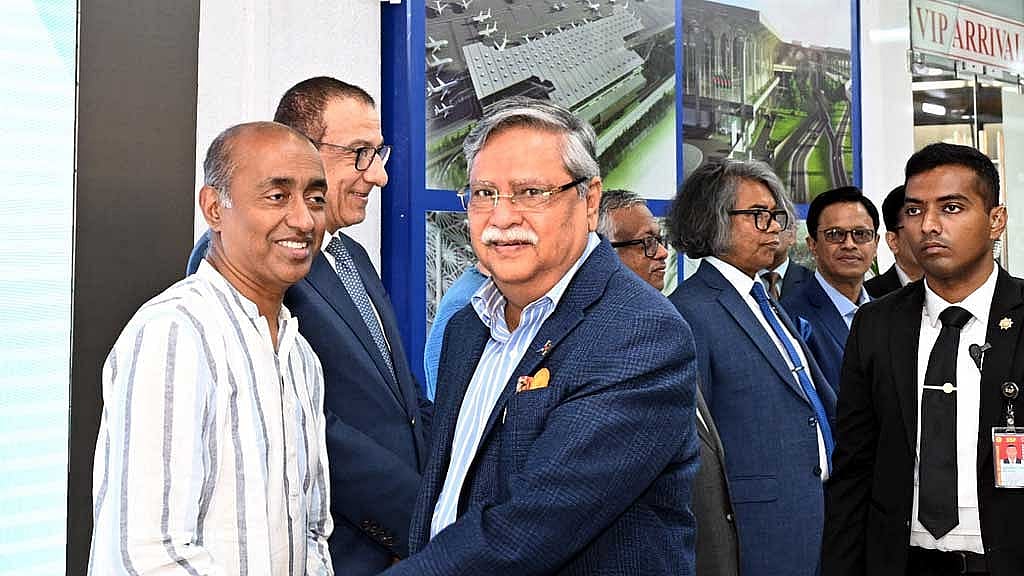
He leaves as a president whose 39 months in office were shaped less by the powers he possessed than by the extraordinary events that unfolded around him -- two elections, three prime ministers, a student-led mass uprising that reshaped Bangladesh's politics, and an office that became both the symbol of constitutional continuity and, at times, of profound political isolation.
For a man who once joked during a sudden storm in his hometown, "Let the storm come; I am the one creating the storm here," history delivered a far greater tempest than he could ever have imagined.
[Additional reporting by Jasmin Moli, Kazi Mobarak Hossain and Salman Tareque Sakil]