Published : 18 Sep 2026, 02:54 PM
Updated : 18 Sep 2026, 04:59 PM


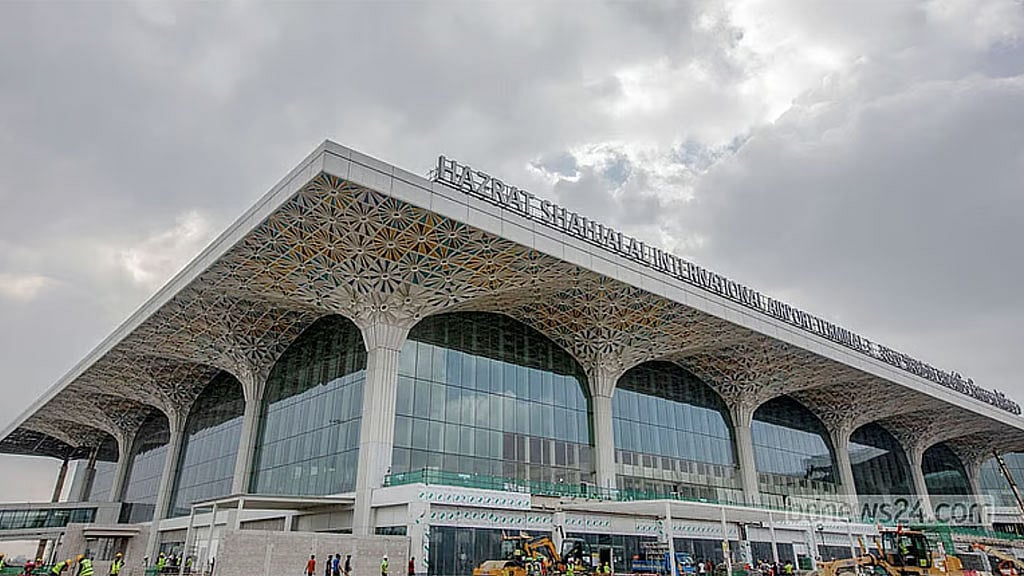
Bangladesh has begun reaping the benefits of a new radar and integrated air traffic management system at Dhaka's Hazrat Shahjalal International Airport, with revenue from foreign aircraft flying through the country's airspace rising significantly.
The government collected around Tk 3.49 billion in overflight fees between January and May, up from Tk 3.21 billion in the same period last year and Tk 2.66 billion in 2024, according to figures from Shahjalal airport.
That represents an increase of about 31 percent in two years.
Airport and civil aviation officials say the new radar has improved surveillance of Bangladesh’s airspace, allowing the government to collect fees from flights that previously went unaccounted for.
An increase in international flights and foreign airlines operating in Bangladesh has also contributed to the growth, they say.
Overflight fees are paid by foreign aircraft for using a country’s airspace without necessarily landing there.
Revenue Keeps Climbing
The increase is also evident in the monthly figures.
Overflight revenue rose from Tk 530.5 million in January 2024 to Tk 679.3 million a year later and more than Tk 801.6 million in January 2026.
February revenue climbed from Tk 474.4 million in 2024 to Tk 583 million in 2025 and Tk 695.8 million this year.
In March, earnings increased from Tk 560.1 million in 2024 to Tk 583 million in 2025 and Tk 621.8 million in 2026.
The same trend continued in May, when revenue reached Tk 704.8 million, compared with Tk 682.2 million a year earlier and Tk 552.1 million in 2024.
For the full 2025-26 fiscal year, Shahjalal airport generated more than Tk 8.05 billion in overflight fees.
Around Tk 3.88 billion was collected between July and December 2025, rising to about Tk 4.17 billion in the following six months.
New Radar Expands Surveillance
The government approved a project in April 2021 to install a new radar and Communication, Navigation and Surveillance-Air Traffic Management (CNS-ATM) system at Shahjalal airport.
Installation was completed in December 2025 and the system subsequently began operating on an informal basis. It was formally inaugurated on Apr 20 by former civil aviation and tourism minister Afroza Khanam.
Group Captain SM Ragib Samad, executive director of Shahjalal airport, said the radar was the main reason behind the increase in overflight revenue.
“On a month-to-month comparison, revenue from overflights has increased. The main reason is the new radar system,” he told bdnews24.com.
“The system has enabled us to increase surveillance of our airspace, which has also increased revenue. Previously, we were missing out on this income.”
The Civil Aviation Authority of Bangladesh (CAAB), which oversees air traffic management, offered a similar assessment.
“The new radar system has increased airspace surveillance. As a result, the government is now collecting overflight revenue that we previously missed out on,” CAAB spokesman Muhammad Kawsar Mahmud told bdnews24.com.
He said an increase in airlines operating flights to Bangladesh, including Ethiopian Airlines, FitsAir and Riyadh Air, had also contributed to higher revenue.
Could Bangladesh Earn More?
Despite the increase, aviation expert Kazi Wahidul Alam said Bangladesh was not yet getting the full benefit of the new radar.
He said the previous system was outdated, while the new Thales radar had substantially expanded Bangladesh’s surveillance capabilities.
“The radar system we had been using was a very old manual system. The new Thales radar is state-of-the-art and allows us to extend surveillance much further,” Alam said.
But he said regional arrangements and other limitations meant Bangladesh was still unable to use the radar to its full potential.
Alam called for diplomatic efforts involving neighbouring countries and the International Civil Aviation Organization (ICAO) to address the issue.
“What is needed is the involvement of the three countries concerned, along with ICAO, and their approval. We have not yet been able to secure those,” he said.
“As a result, we are not getting the full benefit of the radar for the airspace within our country. If we could, our revenue could increase many times over.”
He said CAAB should work with the government to pursue the necessary diplomatic arrangements.
“The increase in revenue is a positive sign,” Alam said. “To raise it further, the Civil Aviation Authority should coordinate with the government and pursue diplomatic initiatives so that we can fully monitor our airspace.”