Published : 29 May 2026, 04:31 PM
Updated : 21 Aug 2026, 03:48 PM


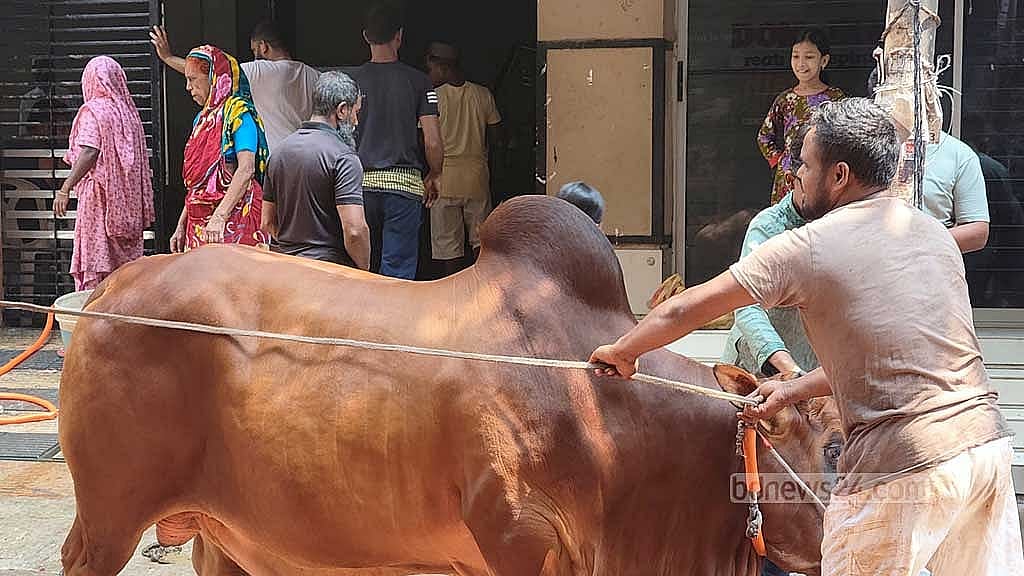
The second day of Eid-ul-Azha sacrifices have begun in Dhaka with the break of dawn on Friday.
Animals were being sacrificed in different parts of the capital, including Shantibagh, Malibagh, and Mouchak. Afterwards, they were skinned and their meat was processed.
According to Islamic Shariah, the ritual sacrifices can be done on three days - the 10th, 11th and 12th of the Islamic calendar month of Zilhajj, depending on a devotee’s ability.
As a result, if devotees cannot make a sacrifice on Eid day, animals can be sacrificed on the two days following Eid.
In the Islamic calendar, a day ends with sunset and a new day begins. Therefore, sunset on the 12th of Zilhajj means the start of the 13th day.
Some devotees conduct the sacrifice on the second day of Eid because they cannot find a butcher, some are waiting for their relatives to arrive, and some have other family matters influencing the decision.
According to sources from the two city corporations of Dhaka, the Dhaka South City Corporation (DSCC) has set a target of removing more than 11,000 tonnes of manure and Dhaka North City Corporation (DNCC) has set a target of removing more than 7,000 tonnes of waste on the second day of the sacrifice.
Malibagh resident Md Hasan told bdnews24.com, "[On Thursday] I sacrificed a cow. I am sacrificing another [on Friday]."
Shantinagar resident Fahim Hossain said, "For many years, we have not sacrificed a cow on the first day of Eid due to family sensitivities and personal reasons. We usually sacrifice on the second day of Eid."
Butchers are also very busy during Eid. A butcher named Hafiz Ali said, "I work on all three days of Eid-ul-Azha every year. During this time, I earn a fair amount of income."
Shantibagh resident Md Salahuddin said, “As a family, we have always sacrificed on the second day of Eid-ul-Azha. In line with that, we sacrificed a buffalo this morning.”